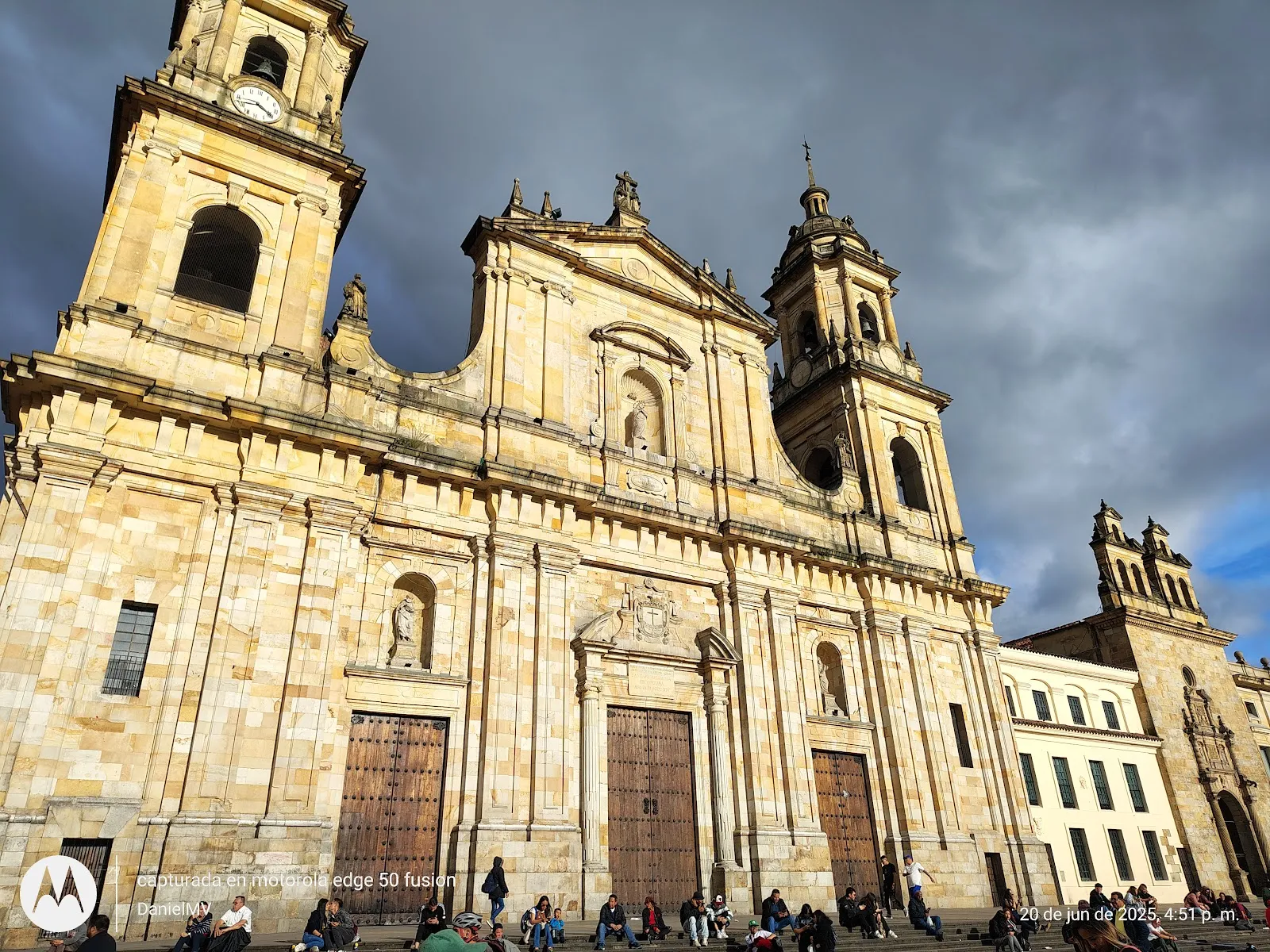
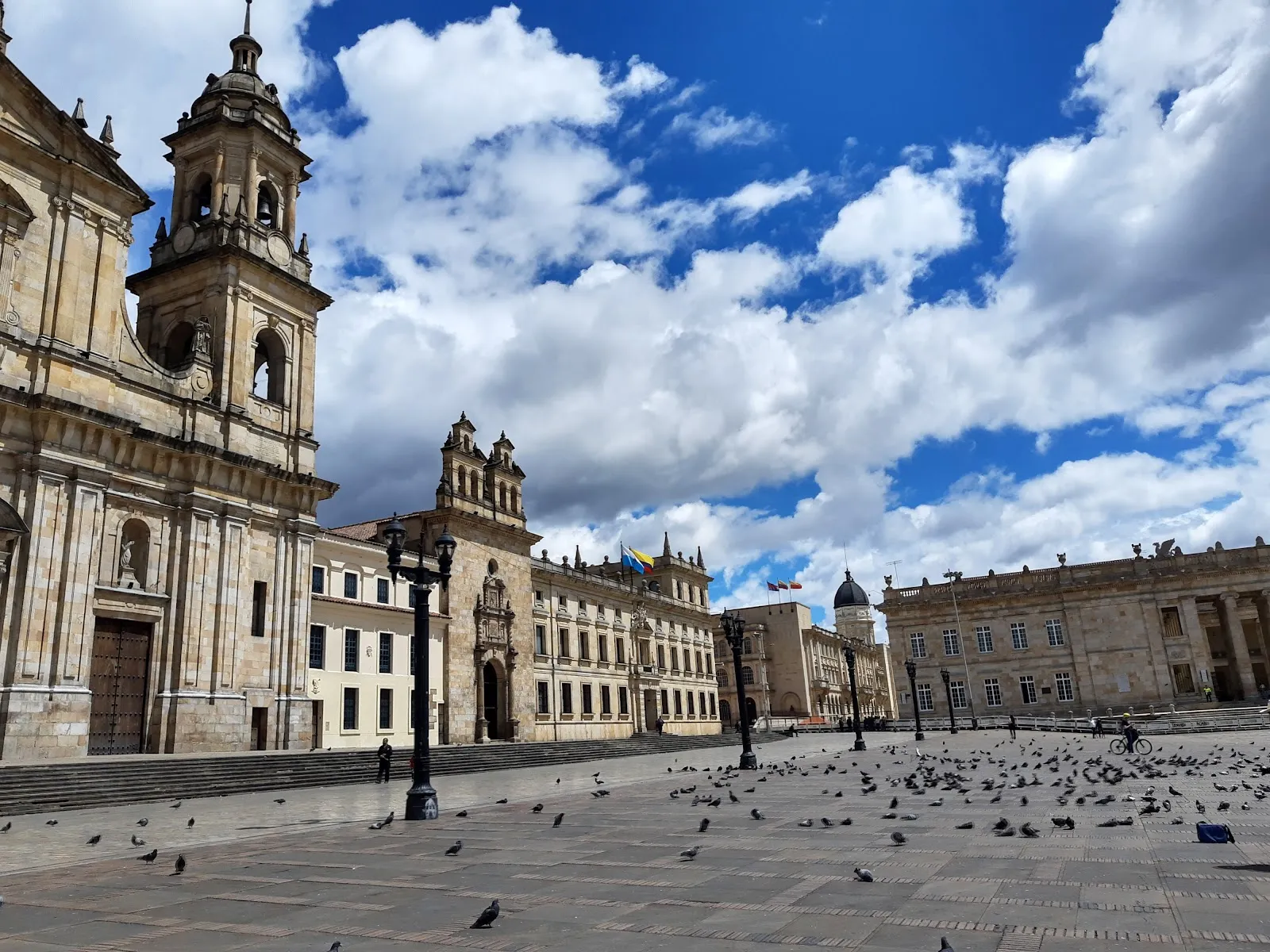
Plaza de Bolívar is Bogotá’s main square, in the historic La Candelaria district. Its central statue of Simón Bolívar stands among major civic and religious buildings: the National Capitol, Palace of Justice, Liévano Palace and Catedral Primada de Colombia. Walk the square to take in the different façades, then follow the nearby streets for cafés, small eateries and market stalls. Street performers and demonstrations sometimes bring activity to the plaza, so it is also a good place to pause and watch the city.
The square and its history
Plaza de Bolívar is the main square in Bogotá’s La Candelaria district and a longstanding center of the country’s political and public life. Spanish authorities declared Bogotá the seat of the colonial government here in the 16th century. The square was founded in 1539 and was once known as Plaza Mayor; it later took the name of Simón Bolívar, the military and political leader associated with South American independence.
In 1819, Bolívar and the Liberating Army arrived in the city after their victory at the Battle of Boyacá. A statue of Bolívar now stands at the center of the plaza. Created by Italian sculptor Pietro Tenerani and erected in 1846, it was Bogotá’s first public monument.
Markets and public gatherings have long been part of the square’s life. It has hosted political demonstrations, cultural events and performances, and remains a place to observe the city in motion. The surrounding streets connect the plaza to the wider historic district.
Buildings around Plaza de Bolívar
Four prominent buildings frame the square: the National Capitol, the Palace of Justice, Liévano Palace and Catedral Primada de Colombia. Together, they bring government, civic life and the Catholic church into view from the plaza. The Capitol is neoclassical; the cathedral and Liévano Palace represent other periods and architectural styles.
The cathedral, also known as the Primatial Cathedral of Bogotá, is one of the square’s most prominent landmarks. Nearby, the Capilla del Sagrario holds colonial artworks, including works by painter Gregorio Vásquez de Arce y Ceballos. The Palace of Justice, the Capitol and Liévano Palace are important sights from the outside, but the buildings are not open to the public.
The square itself is open, so you can walk around and look at the façades from different angles. The statue provides a central point from which to orient yourself, while the surrounding buildings make the plaza a useful starting place for exploring La Candelaria.
Street life and nearby walks
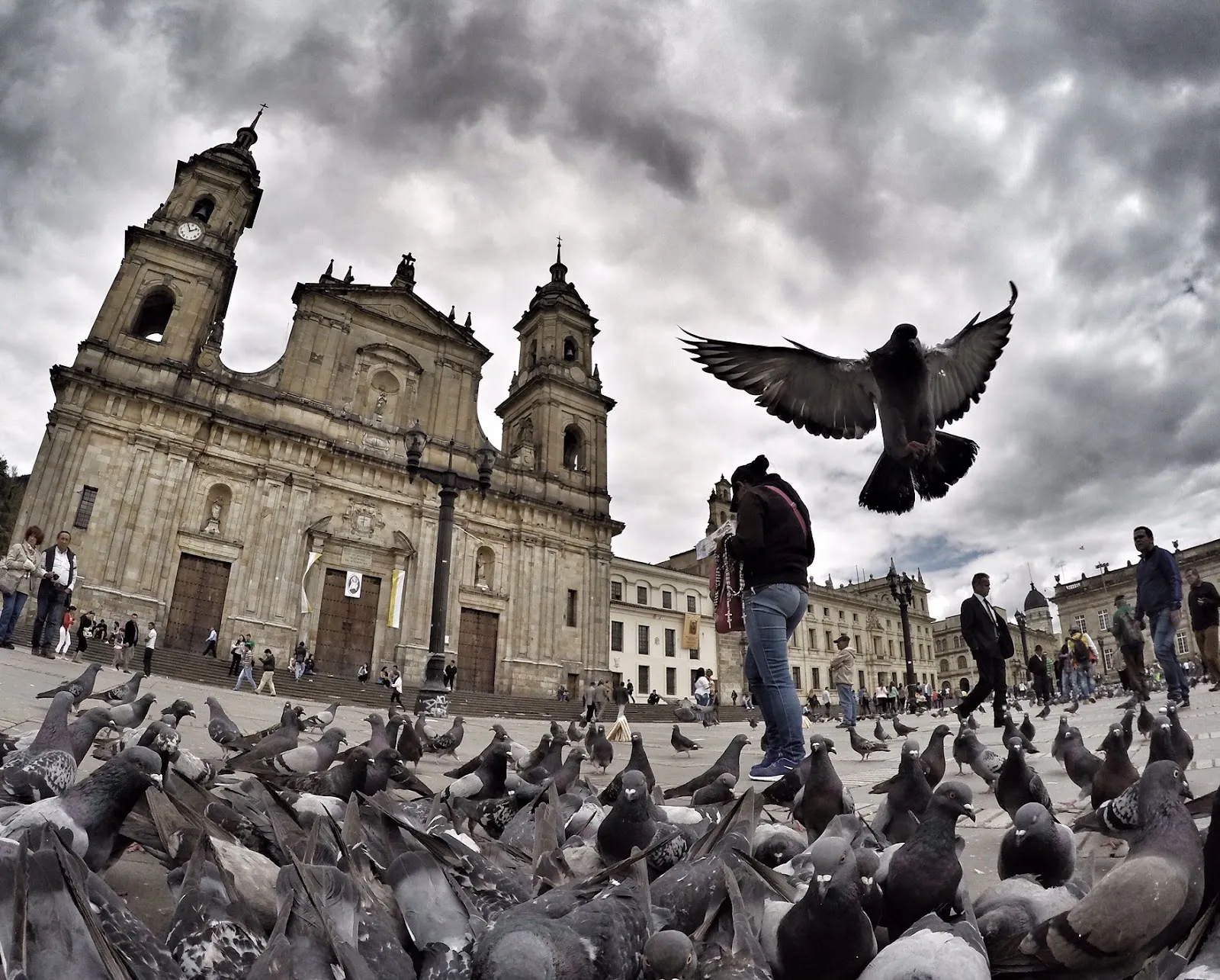
The plaza is also a public gathering place. Street performers, including musicians and dance groups, may appear, and demonstrations or cultural events can take place here. The square’s pigeons and vendors are part of its everyday scene. On some weekends, activity spills into nearby markets and food stalls.
For a longer walk, follow Calle 10 or Calle 11, which run alongside the square, or continue into La Candelaria’s narrow streets. The neighborhood has small restaurants, cafés and shops, as well as street art that can be explored on a guided walk. A stop at Plaza de Bolívar works well as part of a wider visit to the historic center, rather than as a full day’s activity on its own.
Häufige Fragen
Is Plaza de Bolívar free to visit?
The square is a public space and can be visited without an entry ticket.
What can you see at Plaza de Bolívar?
The square’s central statue of Simón Bolívar is surrounded by the National Capitol, Palace of Justice, Liévano Palace and Catedral Primada de Colombia.
How long should you spend at Plaza de Bolívar?
Allow around 30 to 60 minutes to walk around the square and view the surrounding buildings.
Are the buildings around the square open to visitors?
The National Capitol, Liévano Palace and Palace of Justice are not open to the public. You can view their façades from the plaza.