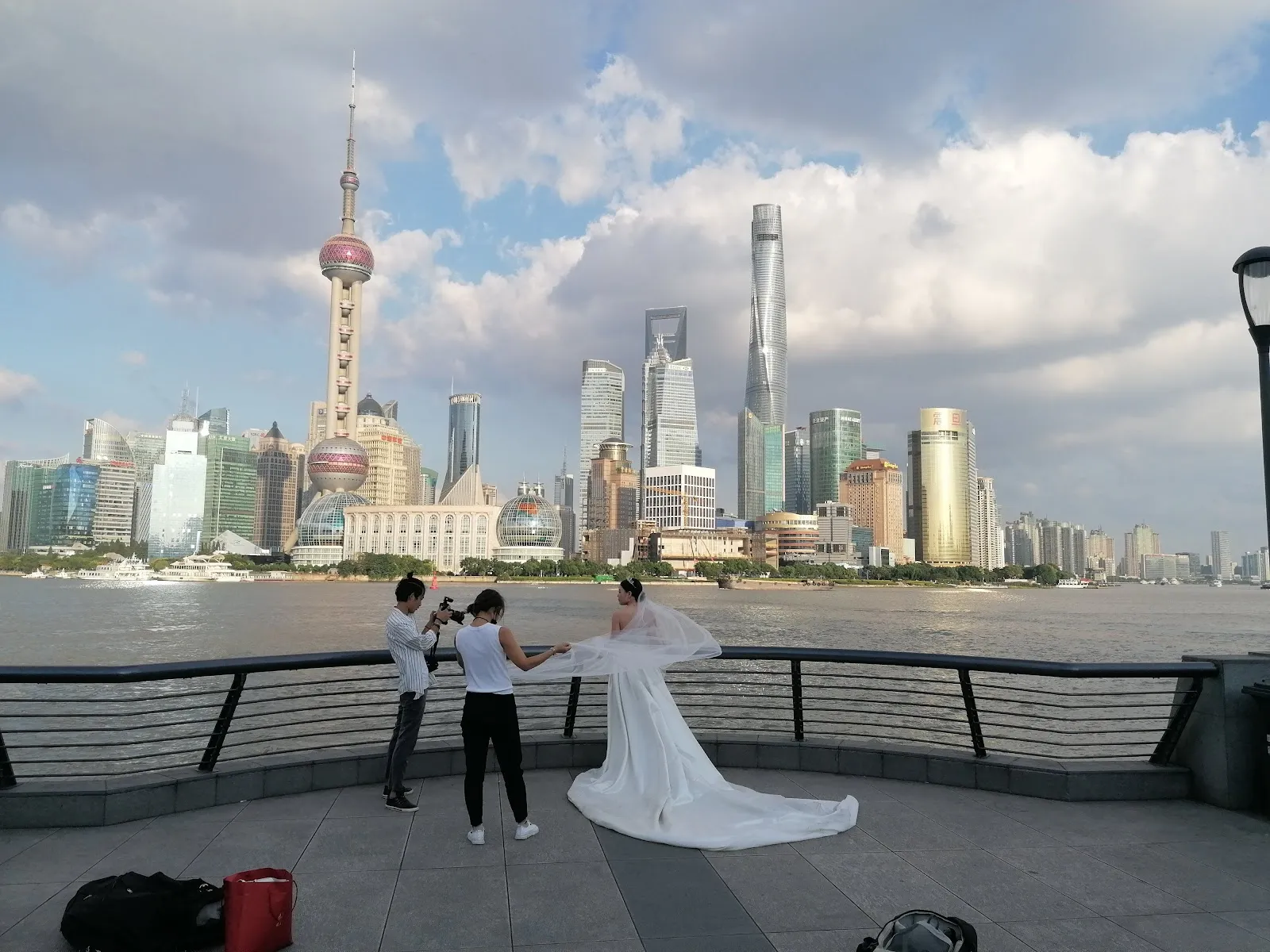
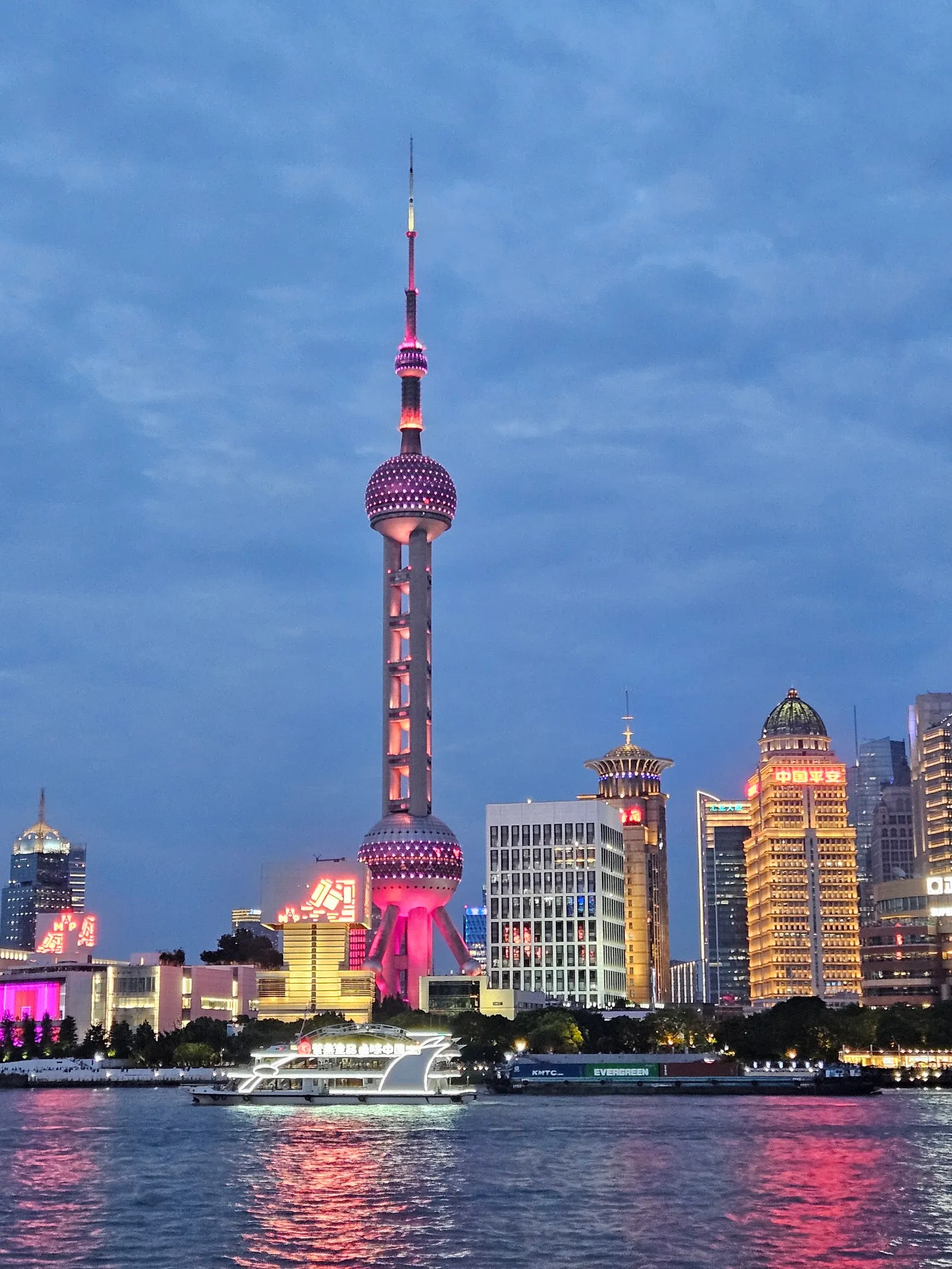
The Bund is a waterfront promenade on the western bank of the Huangpu River in central Shanghai. Walk beside the river for views across to Pudong’s high-rise skyline, then turn inland to see historic European-style buildings in Gothic, Baroque, Neoclassical and Art Deco styles. The contrast is especially clear around sunset, as the city’s lights come on across the water. You can also take a local ferry for a river-level view. The open promenade has little shade, and the main stretch can get crowded, so an early morning visit is a quieter option.
A riverfront shaped by trade
The Bund runs along the western bank of the Huangpu River, in the part of Shanghai once known as the British Concession. Its name is associated with the embankment beside the river, which began as a path for moving barges carrying rice. From 1843, the area developed as a foreign settlement and, in time, became a centre for international trade and finance.
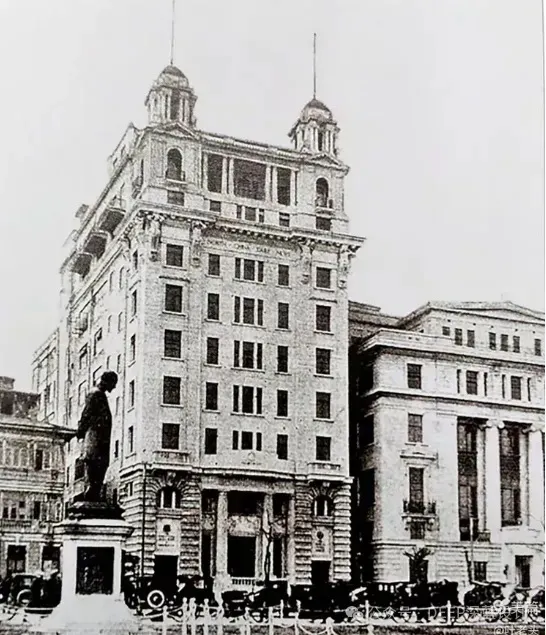
Banks, trading companies and consulates established themselves along the waterfront. The buildings left behind offer a view of Shanghai’s role as a commercial port in the 19th and early 20th centuries. The district’s appearance changed as the city’s economy grew, with a major building boom in the 1920s and 1930s. Many former financial and business premises now have other uses, including hotels, shops and restaurants.
Architecture along Zhongshan Road
The promenade is lined with historic buildings in styles that include Gothic, Baroque, Romanesque, Renaissance, Neoclassical and Art Deco. Some combine Chinese and Western influences. Together, they form a striking contrast with the modern towers of Pudong across the river.
Look for the former HSBC headquarters and the Customs House, whose clock tower is inspired by London’s Big Ben. The Peace Hotel is another notable landmark, with its Art Deco character. These buildings are not all open to visitors, so much of the architectural experience comes from seeing their façades as you walk along the riverfront.
Walking the riverfront
A stroll is the simplest way to take in the area. The wide promenade follows the river, with the historic buildings on one side and the water and Pudong skyline on the other. The view changes as you move along the embankment: passing boats add movement to the river, while the towers across it become more prominent as evening approaches.
For a view from the water, take a local ferry across to Pudong. It costs less than a sightseeing cruise, according to the available information, though no fare is specified here. The northern end near Waibaidu Bridge is a useful spot for skyline photographs. The main waterfront can be crowded, particularly in the evening, and there is little shade during the day.
Choosing when to visit
The Bund is worth seeing in daylight as well as after dark. Daytime makes it easier to notice details on the older buildings; after sunset, the illuminated skyline across the river becomes the focus. Arriving before sunset lets you watch the change without making a separate visit.
Early morning is another option for a quieter walk and cooler conditions. Locals practise tai chi along the waterfront, and the promenade also serves as a place for morning exercise. If you prefer evening views, allow for crowds and go before the lights are switched off for the night.
Häufige Fragen
Is The Bund free to visit?
The waterfront promenade is free to visit. Some individual buildings in the area may charge admission.
How long should you spend at The Bund?
Allow about 30 to 60 minutes for a walk along the waterfront. Add time if you plan to take a ferry or stop to photograph the skyline.
When is the best time to visit The Bund?
Go just before sunset to see the skyline shift from daylight to evening lights. Early morning is a quieter, cooler time for a walk.
Can you cross the Huangpu River from The Bund?
Yes. A local ferry crosses to Pudong and gives you a view from the water. It is a lower-cost alternative to a sightseeing cruise.