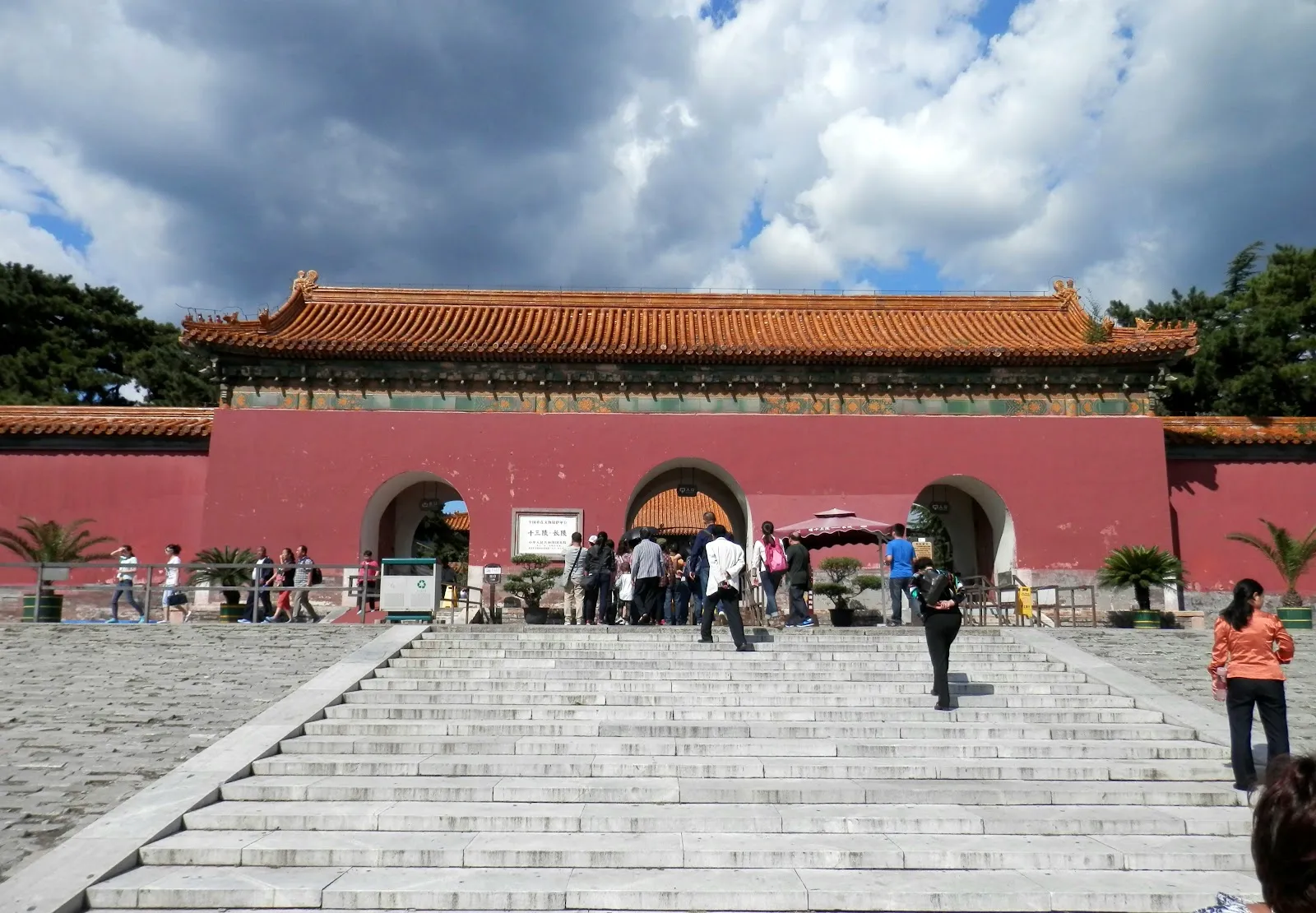
About 50 kilometres northwest of Beijing, the Ming Dynasty Tombs are the burial grounds of 13 Ming emperors, set among the mountains and forests of Changping District. The vast complex includes tombs, associated buildings and the Sacred Way, an approach lined with carved stone animals and figures. Three tombs are open to the public: Changling, Dingling and Zhaoling. At Dingling, you can descend into an excavated underground tomb; Changling is known for its impressive hall. Allow time to walk between sites, which are spread across the valley.
How the tomb complex was formed
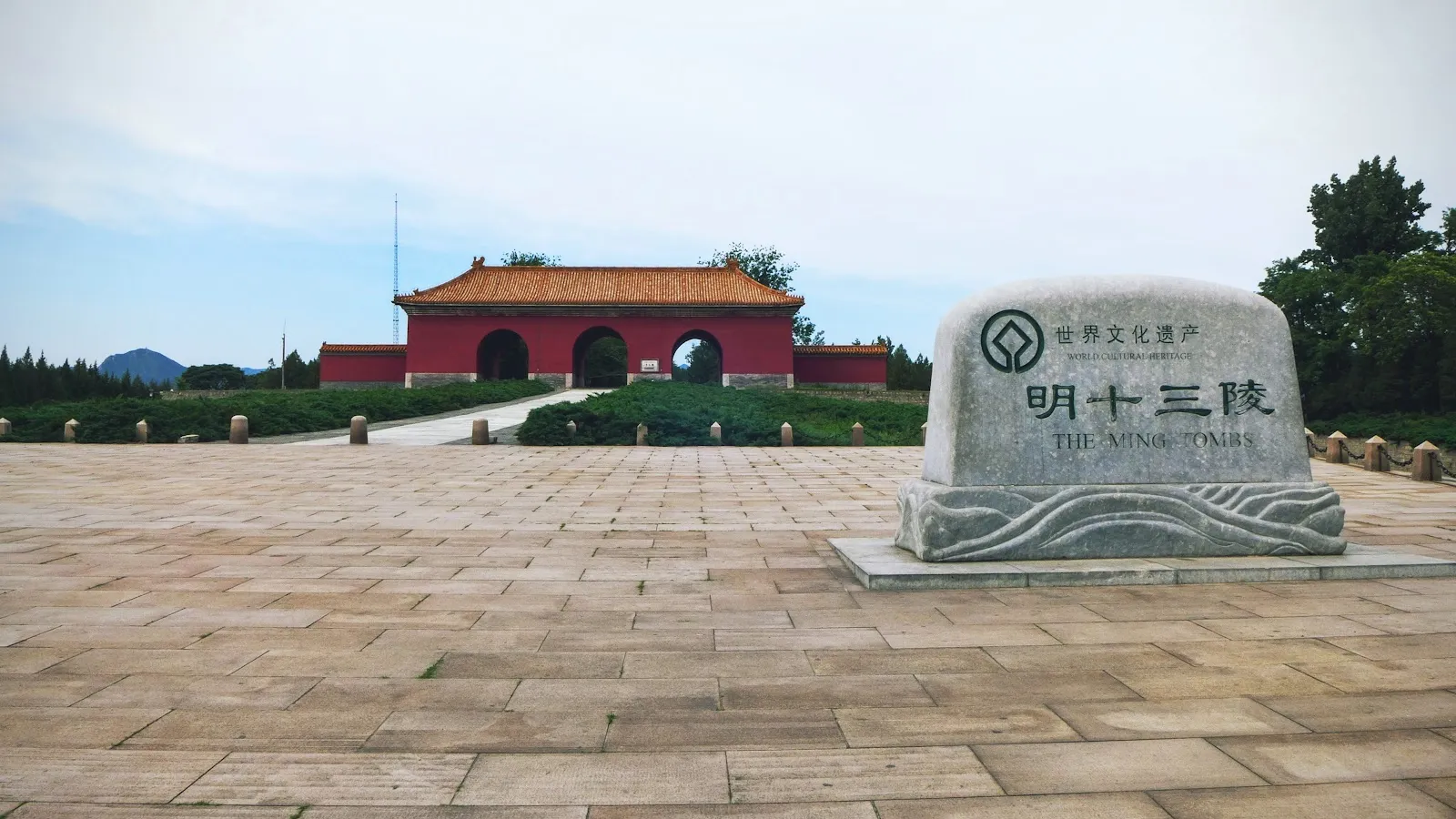
The Ming Tombs are in Changping District, about 50 kilometres northwest of Beijing, at the foot of Tianshou Mountain. They hold the mausoleums of 13 Ming emperors, along with burials of empresses and other members of the imperial household. The Ming dynasty ruled from 1368 to 1644.
The first tomb here was built for the Yongle emperor in 1409. The succeeding 12 emperors chose burial places nearby, creating a group of separate mausoleums across a broad valley. Each has its own layout and buildings, though the tombs share a similar overall arrangement. Their position in the mountain setting reflects the geomancy principles used in choosing the site.
The complex is large, and the tombs are separated by significant distances. The Sacred Way leads toward Changling, the first imperial mausoleum built here. Its stone figures and animals line the route, forming a ceremonial approach as well as a striking part of the visit.
The Sacred Way and its stone figures
The Sacred Way is one of the clearest places to see the scale and formal design of the burial grounds. The route passes stone animals, mythical creatures and figures of officials. A large stone stele carried by a carved bixi stands along the way; the creature is reported to weigh 50 tonnes, and the stele rises more than six metres.
Take time to look closely at the carvings as you walk. The route is long, and its uneven surfaces call for sturdy footwear. The Sacred Way can be visited as a separate area from the individual tombs, so check how you will travel between sites before setting out.
What to expect at the open tombs
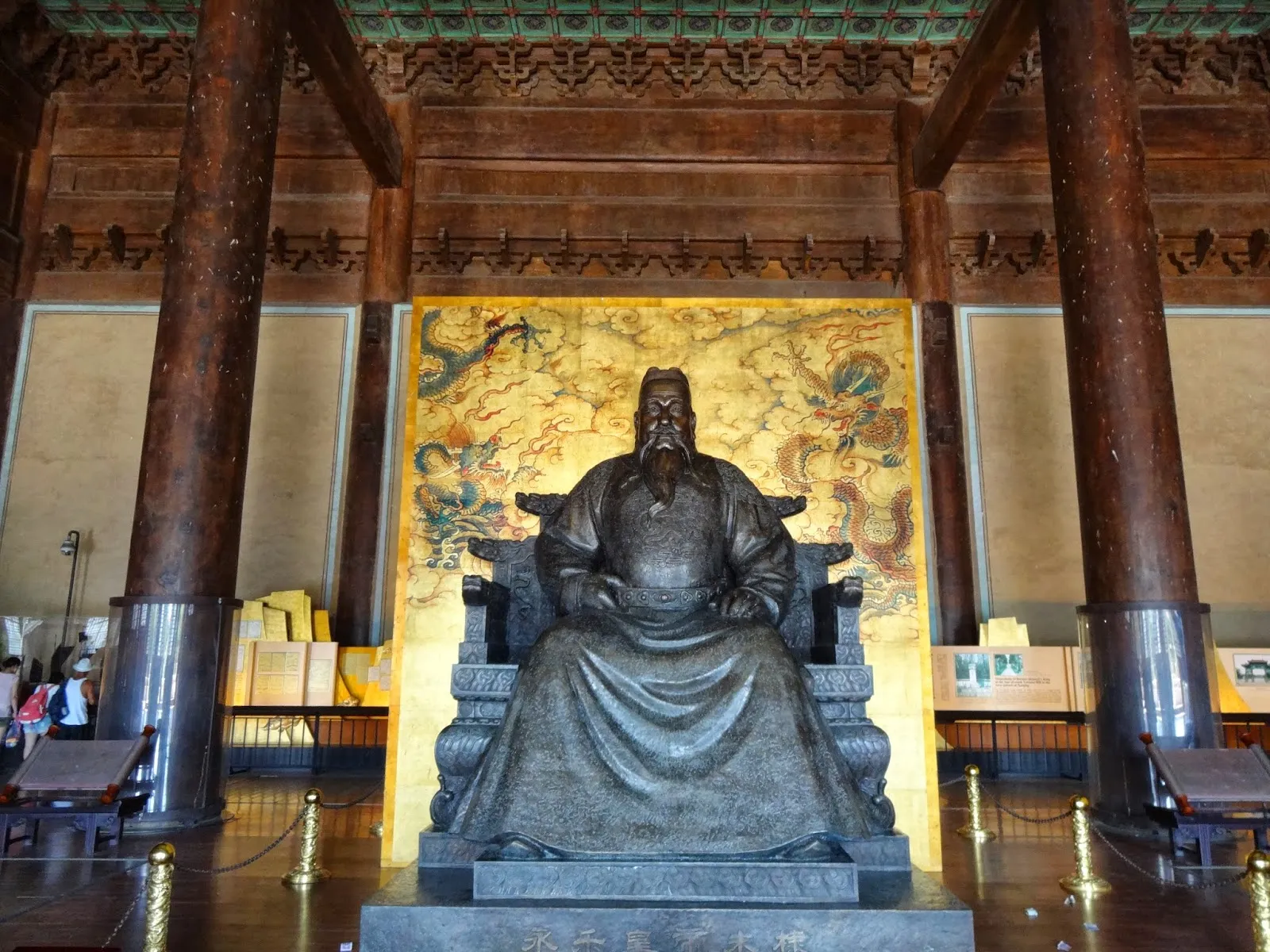
Changling, Dingling and Zhaoling are the three tombs open to the public. Changling is the mausoleum of the Yongle emperor and has an impressive hall. Dingling is the only one of the three that has been fully excavated. Its underground chambers give a sense of the tomb’s scale, but the original valuable objects have been moved to museums, and visitors should not expect a room filled with its original treasures.
The underground visit involves stairs. There are no lifts or escalators, and the climb back up can be demanding. Paths elsewhere in the complex can also be uneven, so comfortable shoes make a difference across the day. The tombs and Sacred Way cover a broad area rather than one compact site; local buses and taxis can help with the distances between them.
A visit can be paired with a trip to the Great Wall, as both lie outside central Beijing. If you are planning the journey independently, allow enough time for transport as well as walking. The valley is quieter during colder months, and weekdays are another option for a less crowded visit.
Häufige Fragen
How many Ming tombs are open to the public?
Three are open: Changling, Dingling and Zhaoling.
How long should I allow for the Ming Tombs?
Plan for at least half a day. The complex covers a large area, and the individual sites are separated by significant distances.
Can you go inside an underground tomb?
Dingling is open to visitors and has an underground area. It has stairs, with no lift or escalator.
How far are the Ming Tombs from Beijing?
They are about 50 kilometres northwest of Beijing, in Changping District.