Just north of the Forbidden City, Jingshan Park is a former imperial garden built around a hill made from earth excavated for the palace moat. A gentle climb leads to Wanchun Pavilion, where you can look across the Forbidden City’s red walls and golden roofs toward Beijing’s modern skyline. The garden paths, trees and traditional pavilions make a quieter pause after time among the city’s historic sights. Come near dusk for changing light on the palace rooftops, or visit in the morning to see locals gathering in the park.
The hill built from palace earth
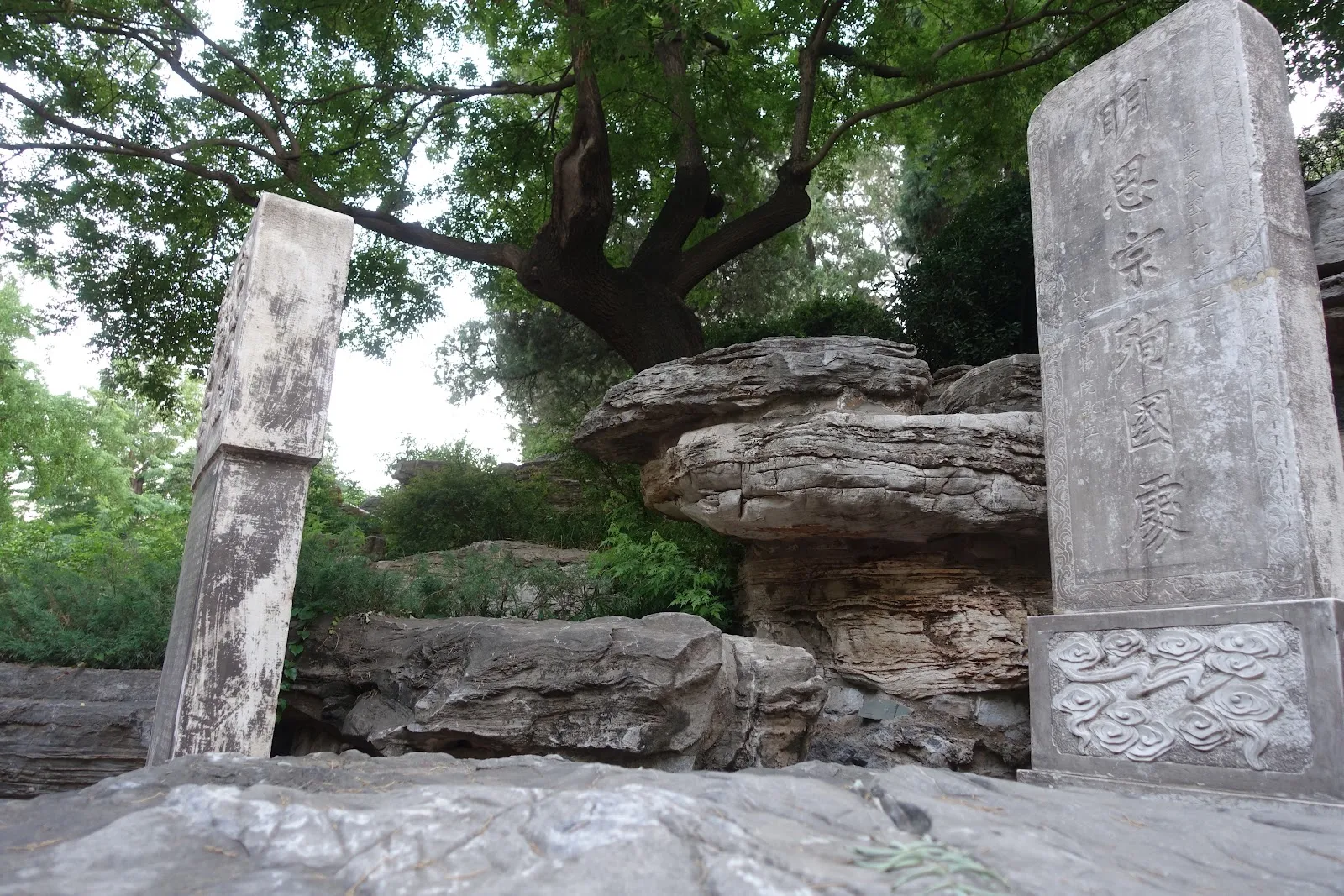
Jingshan Park lies immediately north of the Forbidden City, within Beijing’s former imperial city. Its central hill is artificial: soil excavated while digging the palace moat was piled here. The hill also formed part of the palace’s feng shui planning, acting as a barrier on its northern side.
The park was once a royal garden and hunting ground. Its landscaped grounds include trees, paths and traditional pavilions. It opened to the public in 1928, giving visitors access to a garden that had belonged to the imperial landscape.
Climb to Wanchun Pavilion
A path and stone steps lead up the hill to Wanchun Pavilion, the park’s best-known viewpoint. The ascent is relatively gentle, and the summit gives a broad view over the Forbidden City and Beijing. Looking south, you can trace the palace’s red walls and rows of golden roofs; views in other directions take in the city’s older buildings and newer skyline.
The elevated position makes the pavilion a useful stop for seeing how the former palace sits within central Beijing. On a clear day, the view reaches farther across the city. The garden paths below provide a slower route through the park if you want to spend time among the trees as well as at the top.
A place in the city’s history
Jingshan was part of the imperial city for centuries. The hill is also associated with the fall of the Ming dynasty: in 1644, the last Ming emperor died here as rebel forces entered Beijing. This history gives the park a connection to events beyond its role as a royal garden.
Today, the park is also part of everyday life in Beijing. Local people gather for activities including Tai chi, singing and music. An early visit may offer a chance to see these gatherings alongside the gardens and historic pavilions.
Planning your visit
The park is directly north of the Forbidden City, making it a natural continuation after a visit to the palace. If you leave through the Forbidden City’s north gate, Jingshan is across the road. You can also walk north from Tiananmen Square, passing the palace on the way.
Allow around 30 to 45 minutes for the park and hilltop viewpoint. Go near sunset for warm light over the palace roofs, or choose an early morning visit if you are interested in local gatherings. Weather affects how far you can see, so the clearest conditions are best for taking in the wider city.
Häufige Fragen
What is the best view from Jingshan Park?
Wanchun Pavilion at the top of the hill looks south over the Forbidden City and across central Beijing.
How long do you need at Jingshan Park?
Allow about 30 to 45 minutes for the garden and the climb to the pavilion.
Can you visit Jingshan Park after the Forbidden City?
Yes. The park is directly north of the Forbidden City, across the road from its north gate.
When is a good time to visit Jingshan Park?
Near sunset for warm light on the palace rooftops, or early in the morning to see local Tai chi and singing gatherings.