Queen Elizabeth Park sits on Little Mountain, at Vancouver’s highest point, with views over the city and the North Shore mountains. Its landscaped grounds include the Quarry Garden, rose garden, arboretum, public art and winding walking paths. Stop at the Bloedel Conservatory for tropical and subtropical plants and free-flying birds, or find a bench among the flower beds for a quieter pause. The park is free to enter, and its open lawns and picnic areas make it easy to spend anything from a short walk to an afternoon here.
Gardens in the former quarries
Queen Elizabeth Park was shaped from the site of two former quarries. Their sunken spaces now hold landscaped gardens, where paths wind between trees, shrubs and flower beds. The Quarry Garden is a natural place to begin: its planted beds change with the seasons, and the paths lead through a setting quite different from the park’s open lawns.
The rose garden adds another stop among the formal plantings. Across the grounds, seasonal displays include roses and other flowering plants, with spring and summer bringing especially vivid colour. An arboretum holds native and exotic trees, and public art appears along the paths. Henry Moore’s sculpture Knife Edge, Two Piece is near the conservatory and Dancing Waters fountain.
Views from Little Mountain
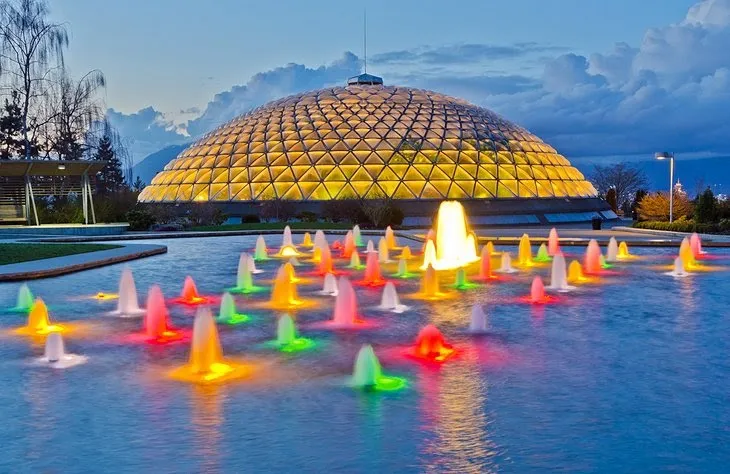
The park occupies Little Mountain, Vancouver’s highest point, and overlooks the downtown skyline and the North Shore mountains. Several spots across the grounds give you a view, including the area around the conservatory. On a clear day, the elevated setting makes a walk through the gardens a chance to look out over the city as well as at the plants.
The paths connect the gardens, lawns and viewpoints, with some routes crossing sloped ground and steps. Take your time if you want to explore both quarries and the upper areas. The grounds are also used for picnics and outdoor recreation, and you can find tennis courts, a pitch-and-putt course, lawn bowling and an off-leash dog area.
Inside the Bloedel Conservatory
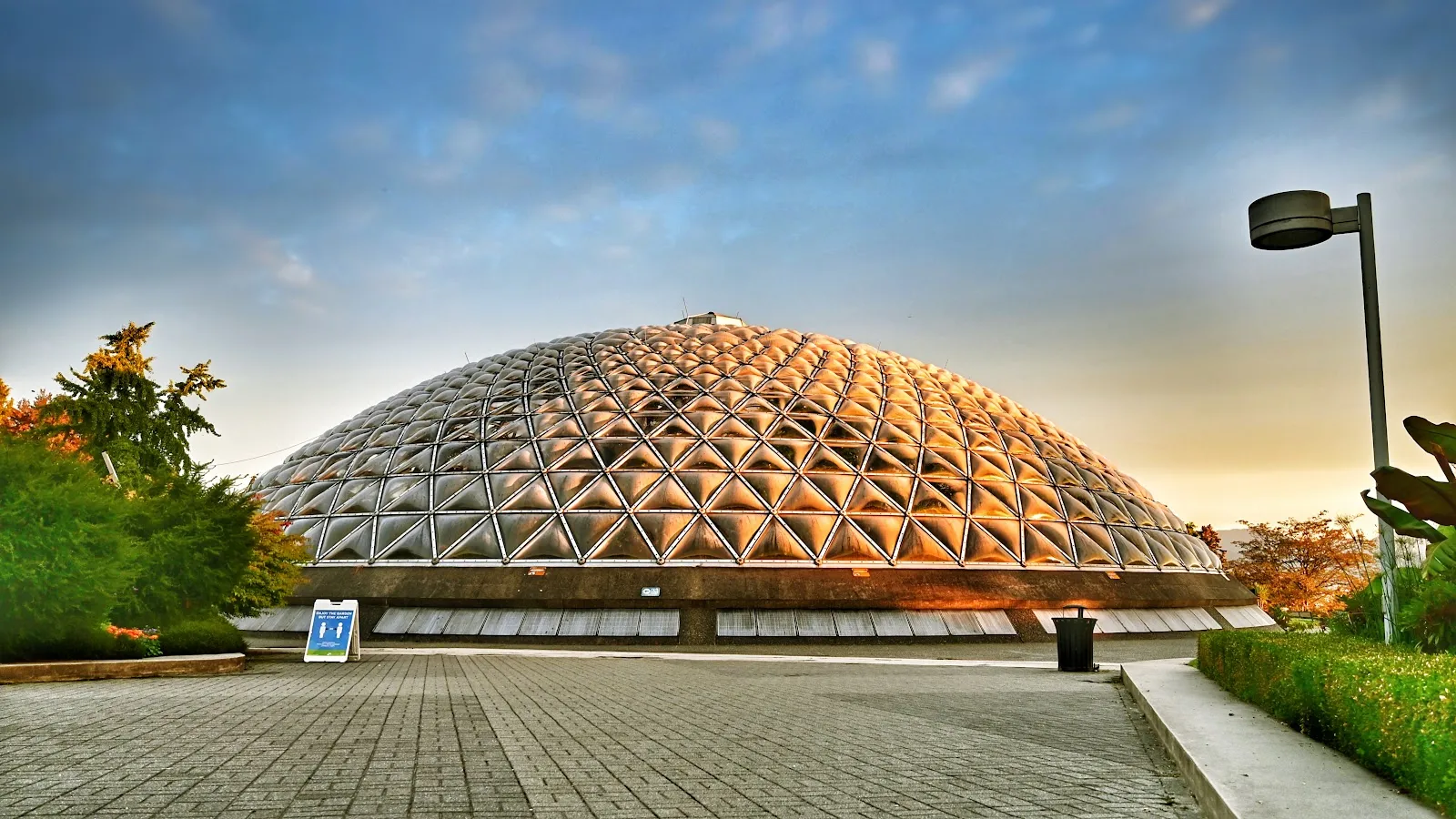
The Bloedel Conservatory is an indoor garden beneath a geodesic dome. Its tropical and subtropical plants grow alongside free-flying birds, including parrots and finches. The warm indoor setting gives the visit a different pace from the open paths and flower beds outside, and provides a place to see plant life from different climates in one stop.
Allow time to look around the plants and watch for birds moving through the conservatory. The entrance is separate from the park grounds; the park itself has no admission charge. If the conservatory is a priority, check its current visitor information before setting out, as the collected material does not establish current entry details.
Planning a walk or picnic
You can make a short visit to see the gardens and viewpoint, or bring a picnic and spend longer on the grounds. There are open grassy areas, picnic tables and public washrooms. The park also has a restaurant, Seasons in the Park, with views over Vancouver; check its current details separately if you plan to dine there.
The park is exposed in places, and shade is limited, so carry water and sun protection on bright days. Early or late visits can help you avoid the busiest periods. Drivers can use paid parking, while the paths offer a way to explore the park on foot.
Häufige Fragen
Is Queen Elizabeth Park free to enter?
Yes. The park grounds are free to enter. The Bloedel Conservatory has a separate admission charge.
How long should you spend at Queen Elizabeth Park?
Allow about 2 to 3 hours to explore the gardens, viewpoint and conservatory. A picnic or a longer walk can extend your visit.
What can you see at the Bloedel Conservatory?
The indoor conservatory has tropical and subtropical plants and free-flying birds, including parrots and finches.
When is a good time to visit Queen Elizabeth Park?
Spring and summer are good seasons for the flower displays. Go early or later in the day to avoid busier periods.