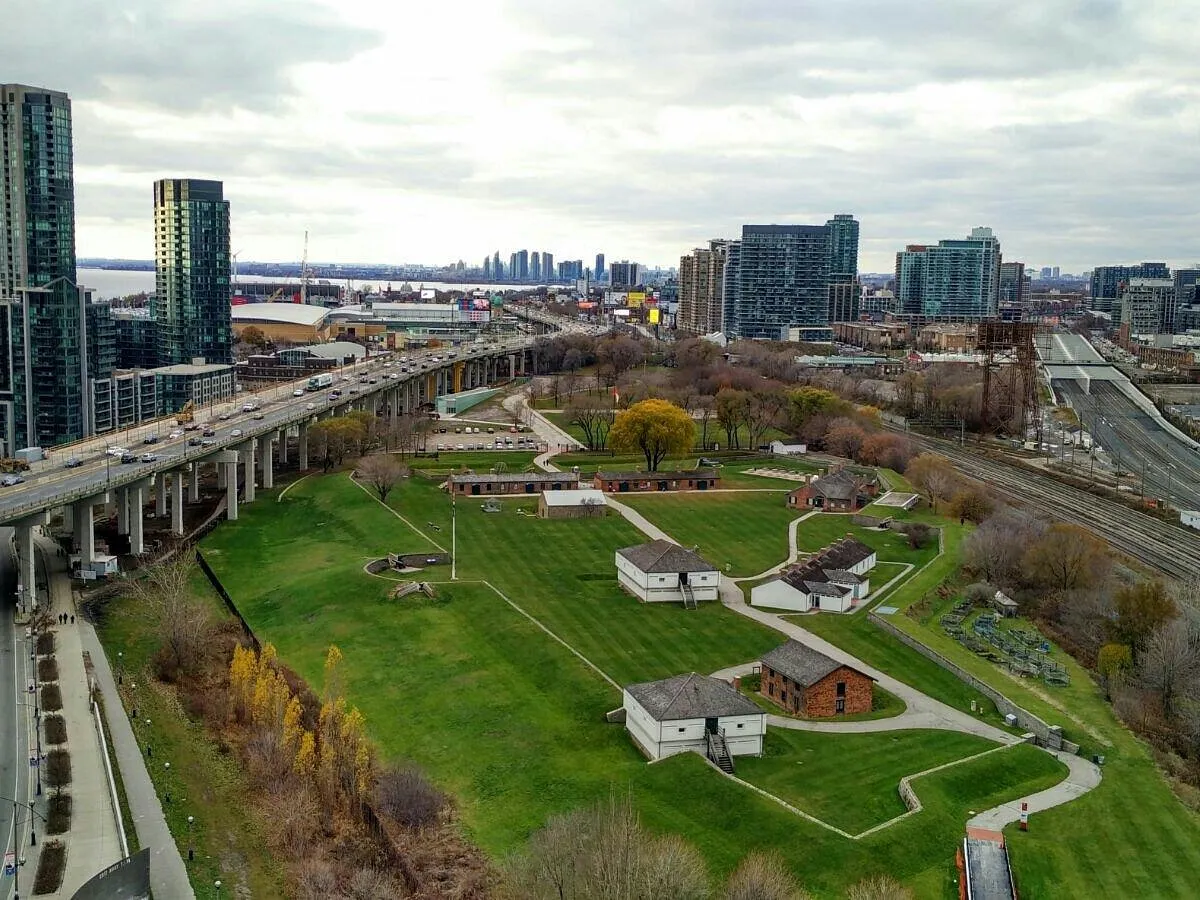
Fort York National Historic Site is a 43-acre archaeological park just west of downtown Toronto, at 250 Fort York Blvd. Its original War of 1812 buildings, including barracks and officers’ quarters, give the site a close-up view of military life in the early 19th century. Explore the historic grounds, then visit the exhibition gallery for displays and a multimedia account of the Battle of York in 1813. The fort’s low historic buildings and surrounding ramparts sit against Toronto’s modern skyline, placing the city’s early history in view of its present-day centre.
A fort at the edge of modern Toronto
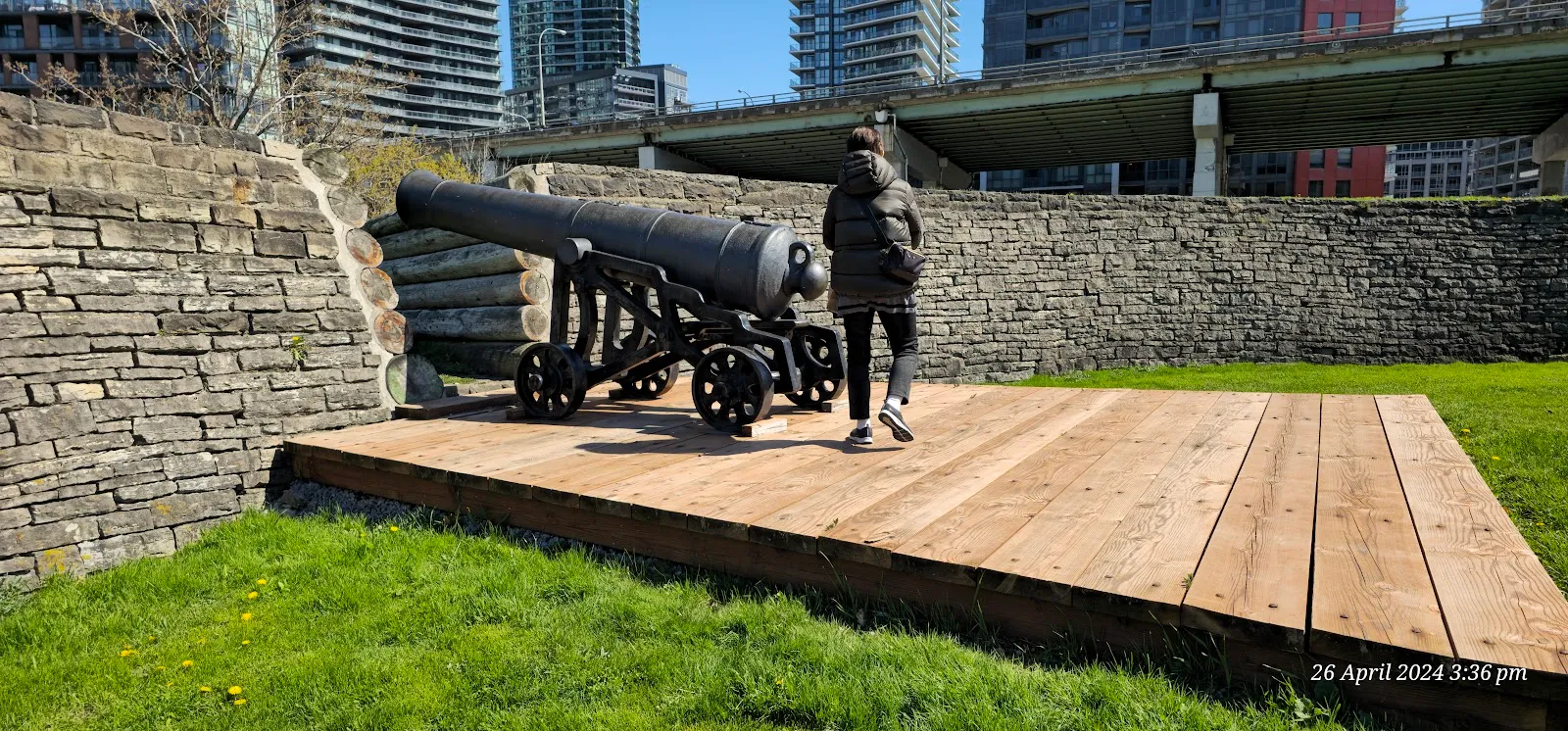
Fort York was established in 1793 to defend the settlement of York, which later became Toronto. Its military role grew after York became the capital of Upper Canada. The fort stands on ground tied to the city’s early history, but the downtown skyline now frames the site from all sides.
During the War of 1812, British soldiers, First Nations warriors and Upper Canadian militiamen defended York here. In 1813, American forces captured the town during the Battle of York, and important structures at the fort were destroyed. The fort was rebuilt, and several historic buildings from the period remain on the grounds. Walking between them gives you a sense of the scale and layout of a military post, beyond what an exhibit label can convey.
Buildings and exhibits
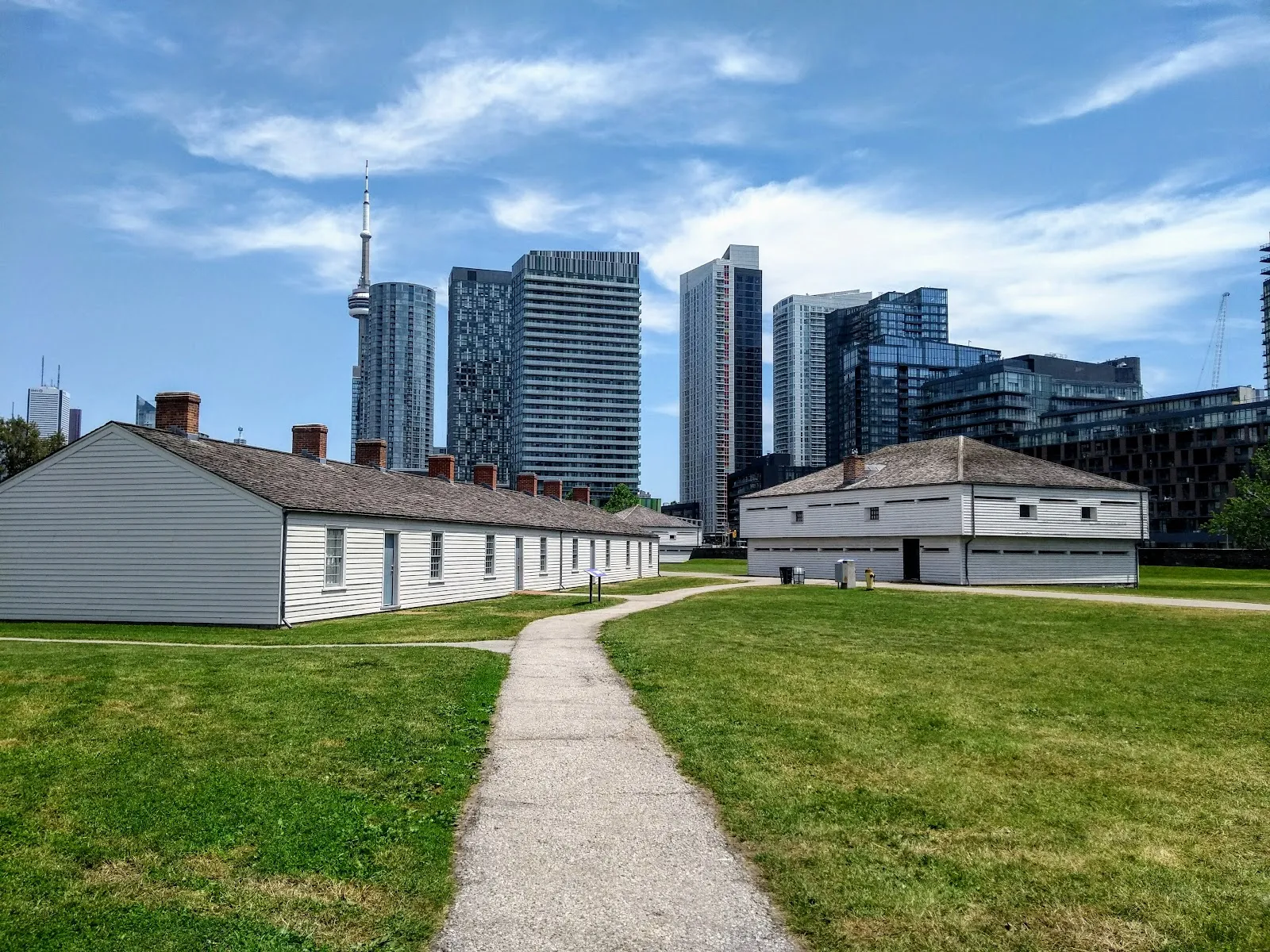
The archaeological park covers 43 acres and contains original War of 1812 buildings, including barracks and officers’ quarters. The historic structures are the main reason to allow time to explore outside as well as inside. Military buildings such as the Stone Magazine and Brick Magazine are part of the site, though access to some areas can be difficult for wheelchair users. Portable ramps can be requested.
The Visitor Centre has an exhibition gallery and a multimedia experience about the events leading up to the Battle of York and the explosion of the fort’s Grand Magazine. Displays draw on military records, letters, memoirs and oral accounts. They also bring Indigenous stories and the experiences of people from historically marginalized communities into the account of the fort and its wartime history.
Tours and planning your visit
Free guided tours run hourly from 11 a.m., with the last tour starting one hour before closing. A guide can add context about military life and the site’s buildings, so consider joining before exploring the grounds on your own. The site is open Wednesday through Sunday, from 11 a.m. to 4 p.m., and closed on Mondays and Tuesdays.
Fort York is designated scent-sensitive; leave scented products at home as a courtesy to other visitors. If you use a wheelchair, ask about portable ramps for the Stone Magazine and Brick Magazine, as those areas may not be accessible. The site’s historic setting and its proximity to downtown make the contrast between early York and present-day Toronto especially clear.
Häufige Fragen
When is Fort York open?
Fort York is open Wednesday to Sunday, 11 a.m. to 4 p.m. It is closed on Mondays and Tuesdays.
Are guided tours available at Fort York?
Yes. Free guided tours start hourly from 11 a.m. The last tour begins one hour before closing.
Is Fort York wheelchair accessible?
Some areas, including Stone Magazine and Brick Magazine, may not be wheelchair accessible. Portable ramps can be provided on request.