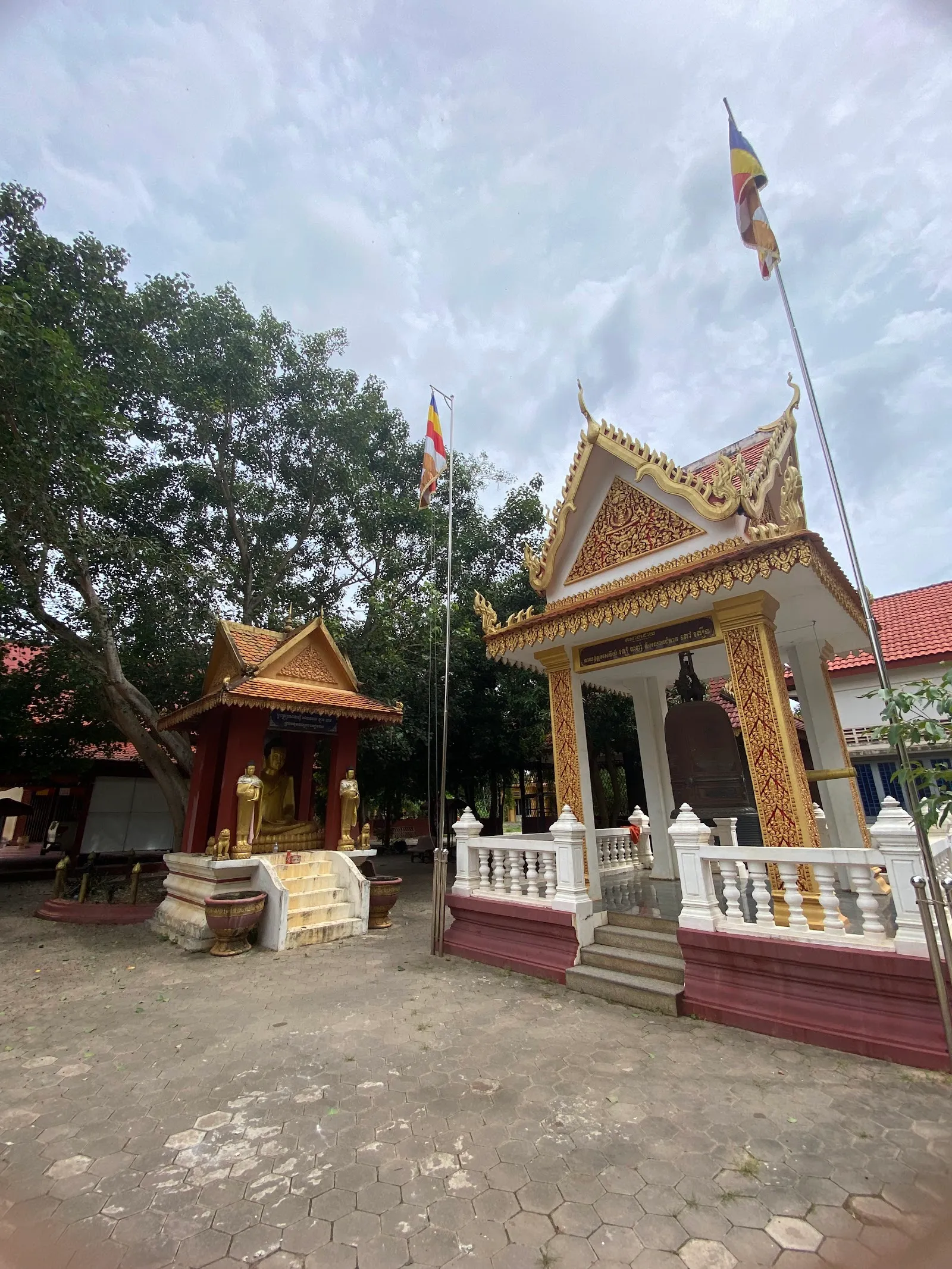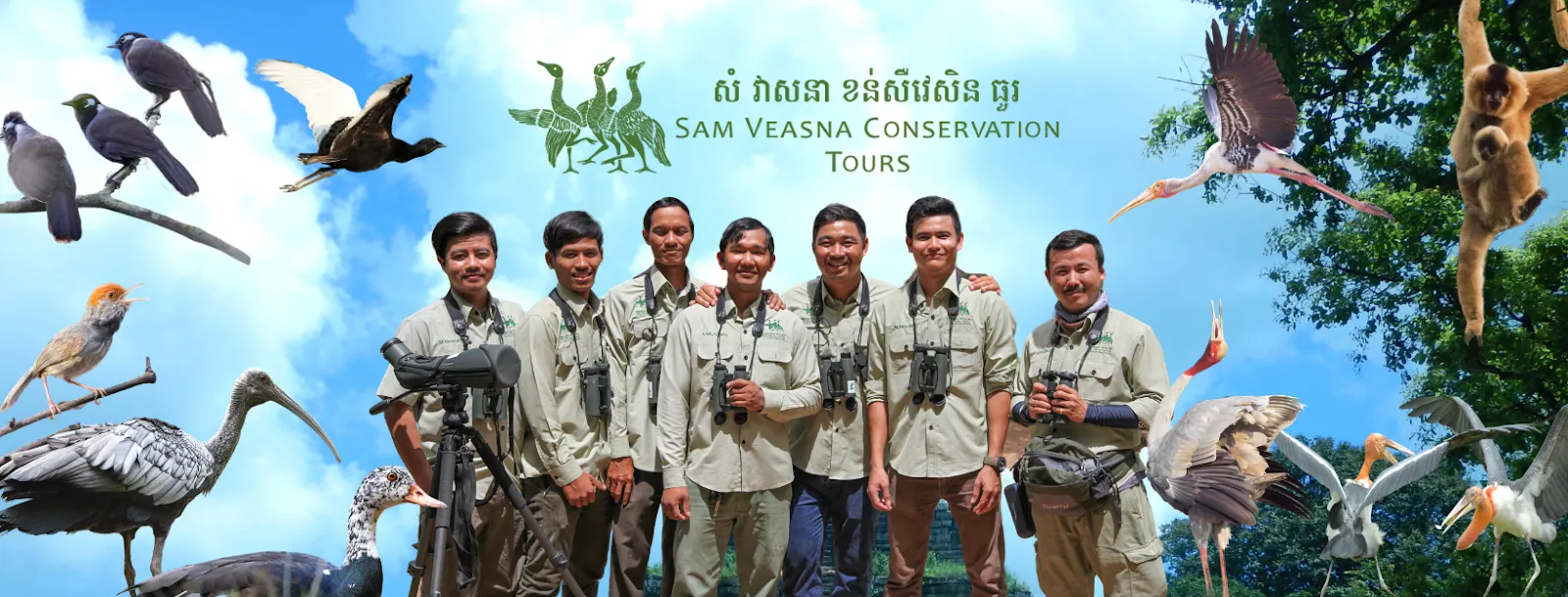
Sam Veasna Conservation Tours (SVC), at 88 Street 26 in Siem Reap, arranges guided birding trips to wetlands, forests, temples and other wildlife sites in Cambodia. Local guides help you identify birds by sight and call, explain migration patterns, and use spotting scopes to bring distant species into view. Depending on the itinerary, you might combine birdwatching with Angkor temples or travel by boat through Tonle Sap and Prek Toal. SVC also works with local communities through ecotourism and wildlife conservation.
Birding with a local guide
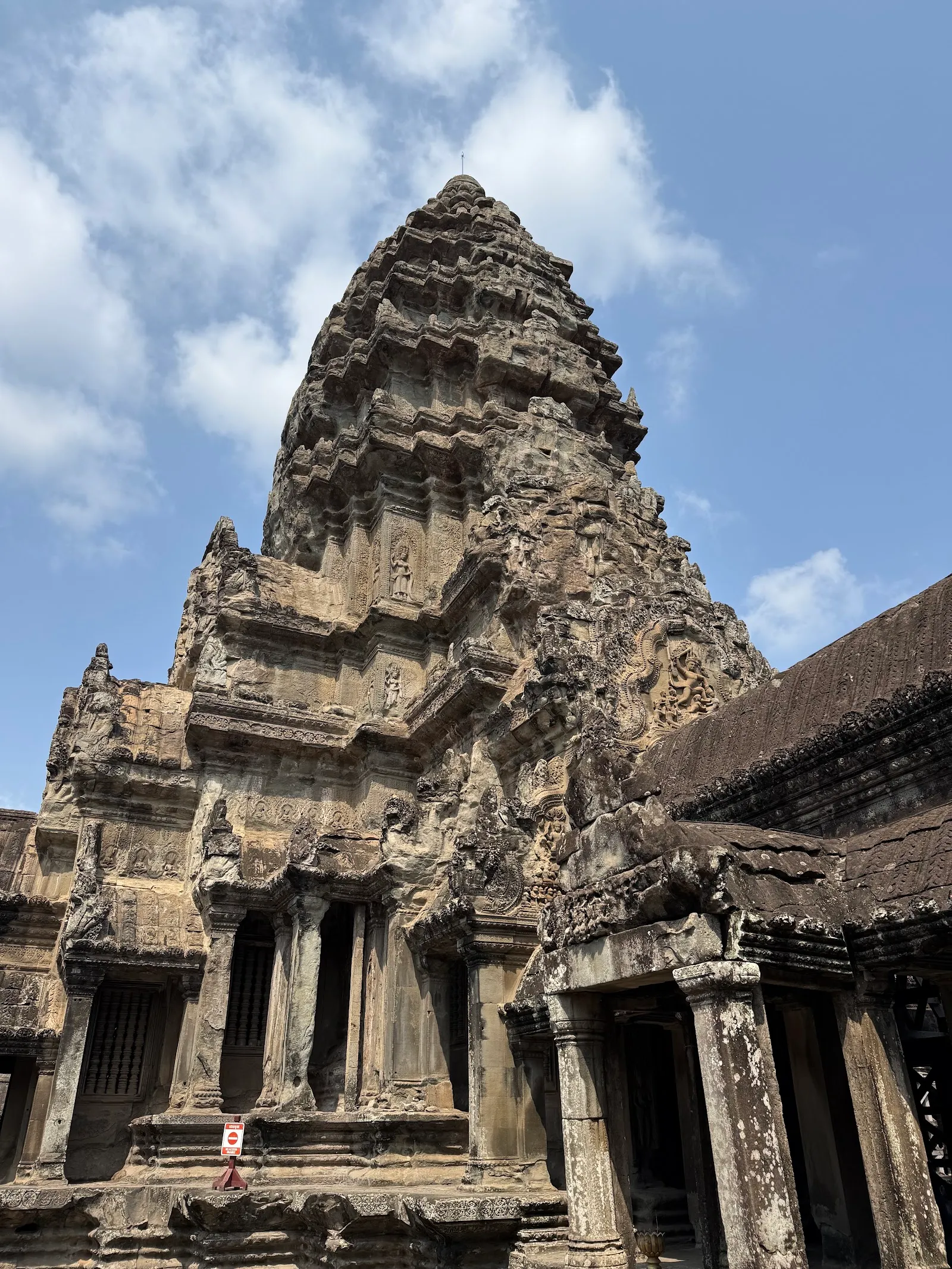
SVC arranges guided birding trips around Siem Reap and to wildlife sites elsewhere in Cambodia. Guides help identify birds by their calls and appearance, and share information about migration patterns. Their spotting scopes bring birds into closer view, including species that are hard to pick out in forest. On some trips, guides can also photograph birds through the scope using a phone.
The trips suit beginners as well as people with more birding experience. You do not need to know bird names before setting out: a guide can point out what to look for and help you follow birds by sound as well as sight. Ask before departure what equipment to bring for your particular route.
Choose a route around your interests
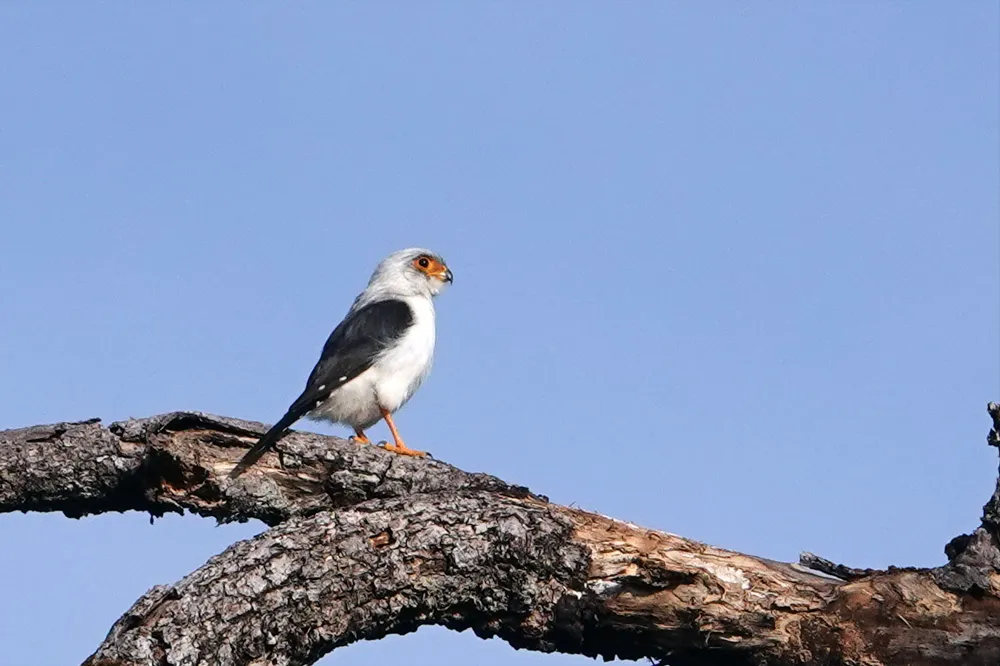
Itineraries range from half-day birding near Siem Reap to trips lasting several days. Some combine wildlife watching with Angkor sites. A Temple and Birds day tour, for example, can include sunrise at Angkor Wat, birding around Ta Prohm and Preah Khan, and waterbirds near the moats at Angkor Thom.
For wetland birding, trips to Tonle Sap and Prek Toal travel by boat through riverways and a floating village. The area is known for large waterbirds, including storks, egrets, pelicans and kingfishers. More experienced birders may want to look for rarer species such as the milky stork.
Other itineraries reach conservation areas beyond Siem Reap. A two-day, one-night Giant Ibis trip has included sightings of Giant Ibis and White-shouldered Ibis. Longer journeys can combine birding with visits to temples and other sites in northeastern Cambodia. Ask SVC which route fits your available time and interests.
Conservation and local communities
SVC’s trips connect wildlife watching with conservation and community-based ecotourism. In Chhaeb Wildlife Sanctuary, one itinerary includes a camp at Dang Phlet, known as the vulture restaurant. Local community members help provide the camp, where visitors can walk through forest to a bird hide and observe endangered vultures.
At Ang Trapeng Thmor, a reservoir rebuilt for irrigation and water storage during the Khmer Rouge period now supports wetland, grassland, forest and paddy-field habitats. Sarus Cranes feed there in the dry season, alongside many other bird species. These examples show how SVC itineraries can take you beyond the city while linking birdwatching with the places and communities that support conservation.
Häufige Fragen
Does Sam Veasna Conservation Tours run trips for beginner birders?
Yes. The guided trips can suit people new to birding as well as experienced birders. Guides help identify birds by sight and sound.
Can I combine birding with Angkor temples?
Yes. Some itineraries pair birdwatching with Angkor sites, including Angkor Wat, Ta Prohm, Preah Khan and the moats around Angkor Thom.
Do tours start early?
Some do. Sunrise trips to temples or Tonle Sap require an early start.
What should I bring on a birding tour?
Ask SVC for advice based on your itinerary. Binoculars or a camera can be useful, and guides may provide spotting scopes.