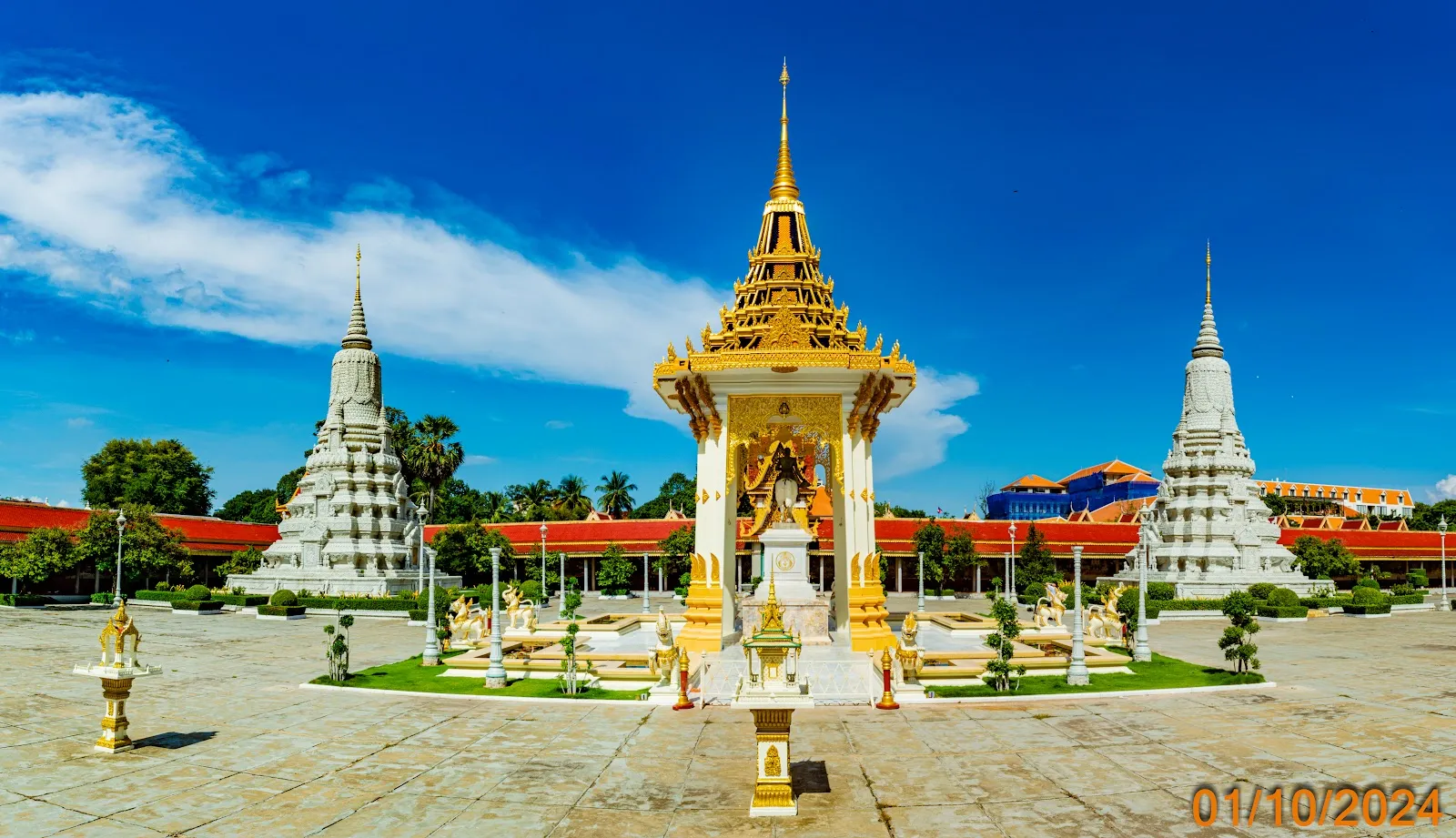
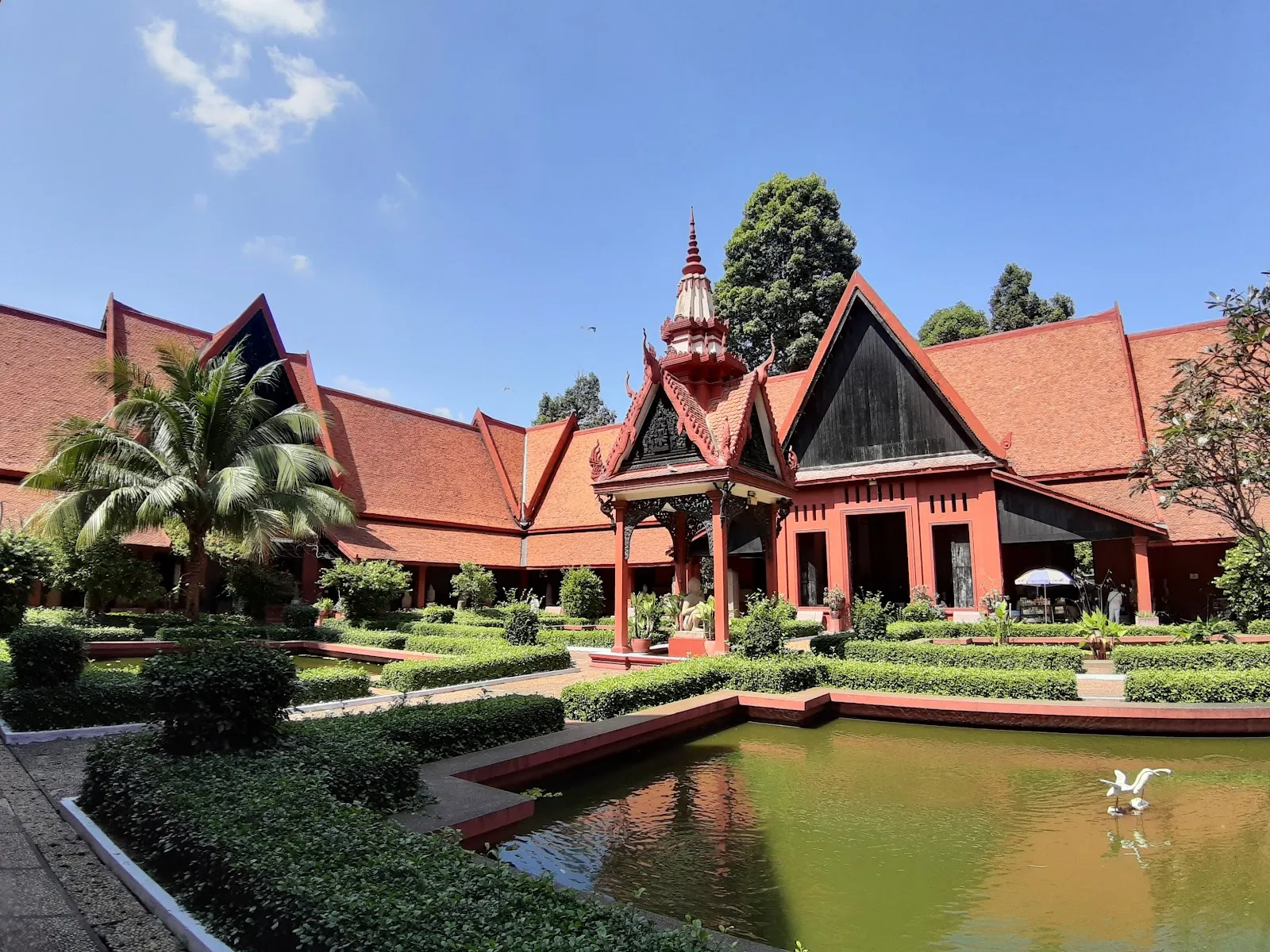
Just north of Phnom Penh’s Royal Palace, the National Museum of Cambodia brings Khmer art and history into focus through sculptures, ceramics, bronzes and other objects from different periods. Its terracotta-red Khmer-style building surrounds a quiet courtyard garden, giving you room to pause between galleries. Look for the striking Vishnu sculptures and compare how the style of the statues changes over time. It is a useful stop before visiting Angkor’s temples, where you can see more of the art and architecture in context.
Khmer art across the galleries
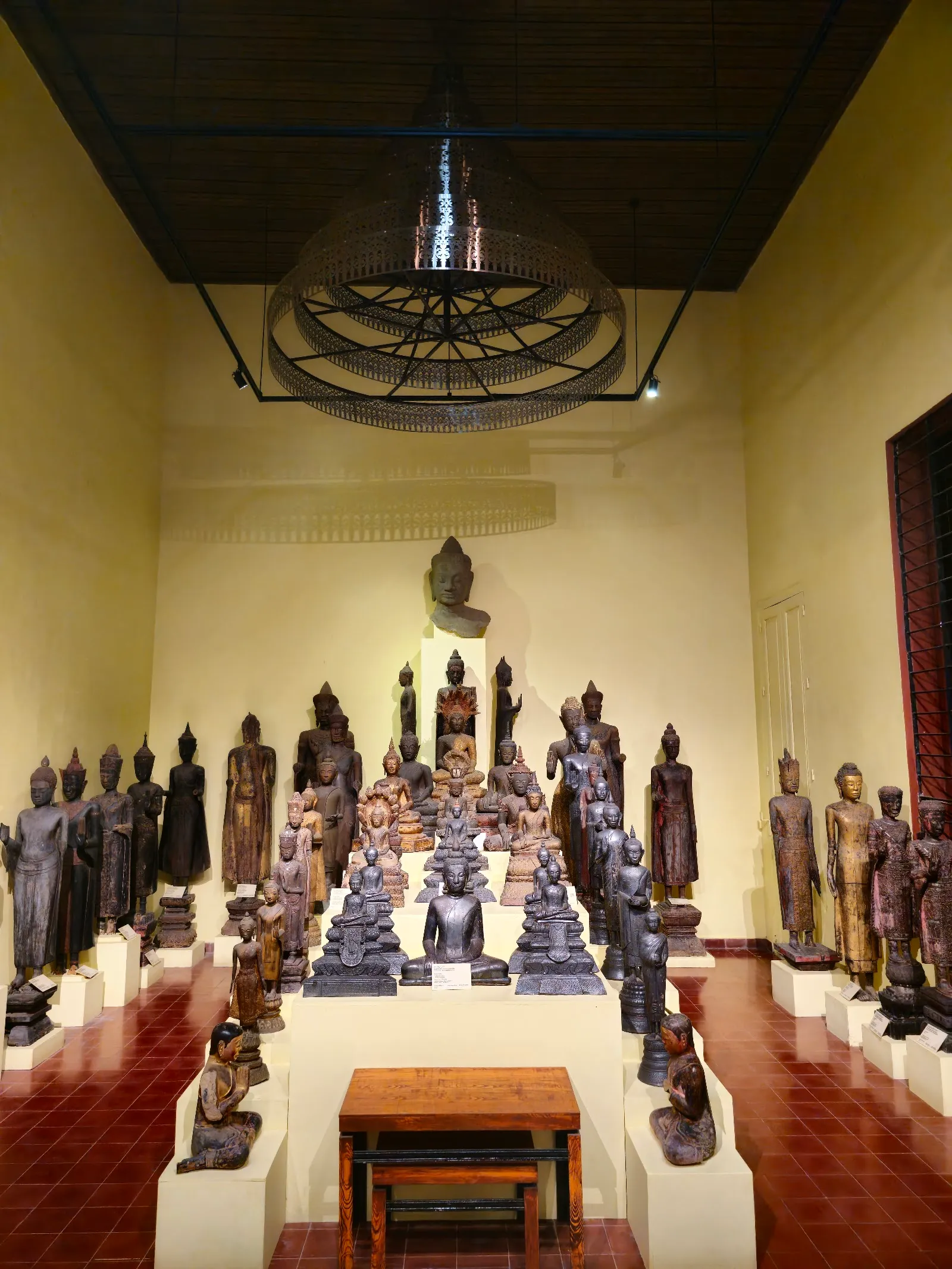
The museum’s collection covers a long span of Cambodian history, from pre-Angkorian eras through the Angkorian period and beyond. Sculptures form a major part of the displays, alongside ceramics, bronzes and other objects. The range gives you a chance to notice changes in artistic style and religious imagery across different periods.
Among the works to look for are the Vishnu sculptures. Hindu and Buddhist figures appear across the collection, offering a view of the religious traditions represented in Khmer art. Some artifacts were once kept at temples, and the museum preserves objects that are no longer displayed at their original sites.
Exhibit labels can provide limited context, so an audio tour or a guide can help explain what you are seeing. If you use the audio guide, set aside extra time: listening to every clip can take around an hour and a half. The galleries are not air-conditioned, another reason to pace your visit and take breaks in the courtyard.
The building and courtyard
The museum’s terracotta-colored structure draws on Khmer temple and wat architecture. George Groslier designed the building, combining traditional architectural elements with the needs of a museum. Carved woodwork on doors and windows, along with painted shutters in the entrance galleries, was made by students of the Ecole des Arts Cambodgiens.
The galleries extend around a central garden, where trees and fountains create a calm break from the indoor displays. Take time to look at the building as well as the collection: the roofline, carved details and courtyard are part of the visit. Outdoor displays add another stop between the rooms.
The museum sits next to the Royal Palace, making it easy to combine the two on a Phnom Penh sightseeing day. Visiting before Angkor can give you helpful context for the sculptures and architectural details you will encounter at the archaeological sites; visiting afterward can help you recognize more of what you have seen.
Planning your visit
The museum is on Preah Ang Eng Street, near the Royal Palace. You can visit independently, use an audio tour or hire a guide. A guide who speaks French or Khmer may be useful if you want more explanation of the collection. Ticket prices and audio-tour costs are not included here, so check the museum’s official website when planning.
Some evenings, Cambodian Living Arts presents Plae Pakaa performances in the garden. The performances include Cambodian song and dance, with performers in ornate costumes and makeup. Check the museum or organizer’s current information before arranging your visit around a show.
Häufige Fragen
Where is the National Museum of Cambodia?
It is on Preah Ang Eng Street in Phnom Penh, next to the Royal Palace.
How long should I spend at the National Museum of Cambodia?
Plan for about one to one and a half hours. Listening to every audio-guide clip can take around an hour and a half on its own.
What can you see at the National Museum of Cambodia?
The collection includes Khmer sculptures, ceramics, bronzes and other objects from pre-Angkorian, Angkorian and later periods. Look for the Vishnu sculptures and compare works from different eras.
Is there an audio tour at the National Museum of Cambodia?
An audio tour is available. Allow extra time if you want to listen to every clip, and check the museum’s official website for current details.