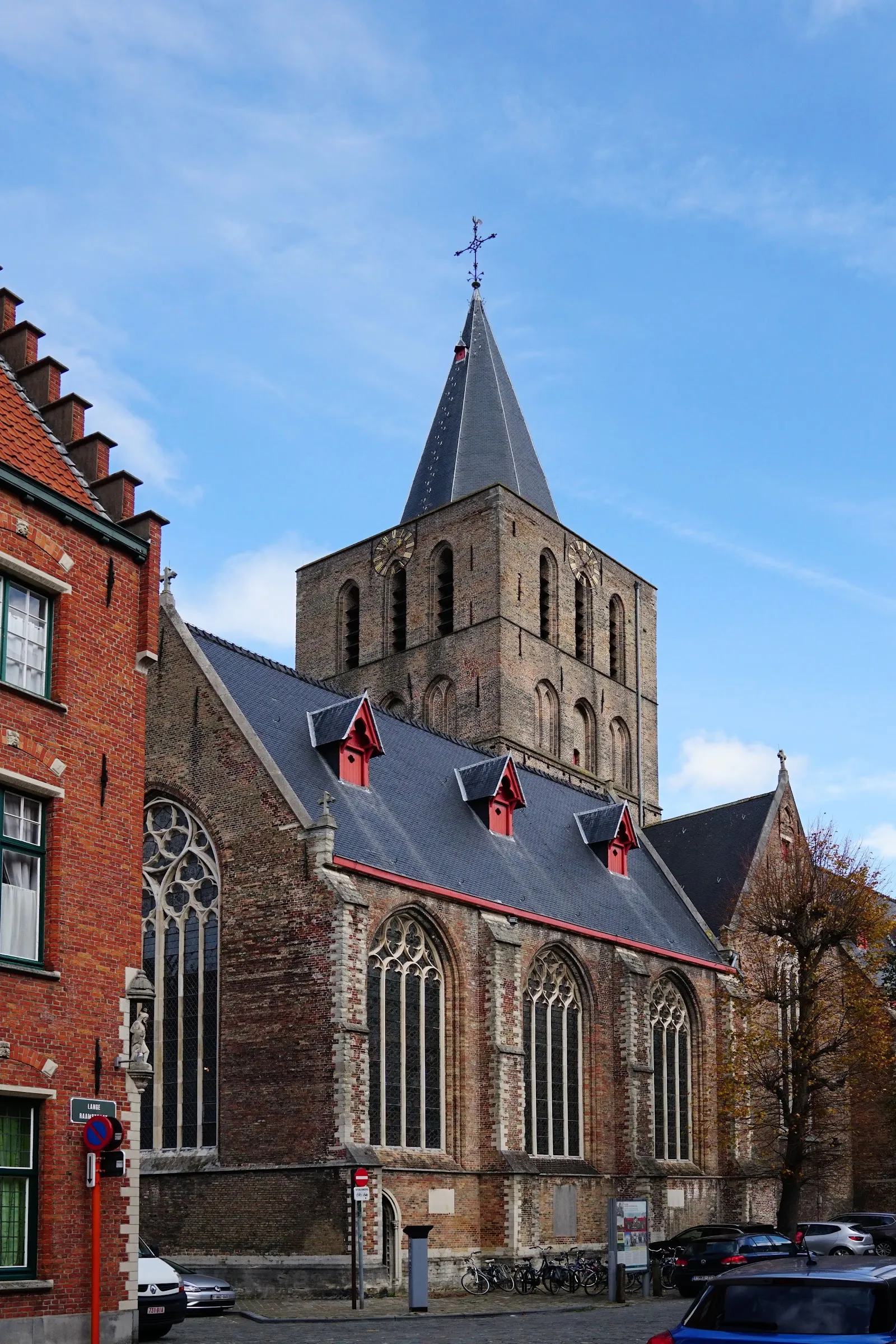
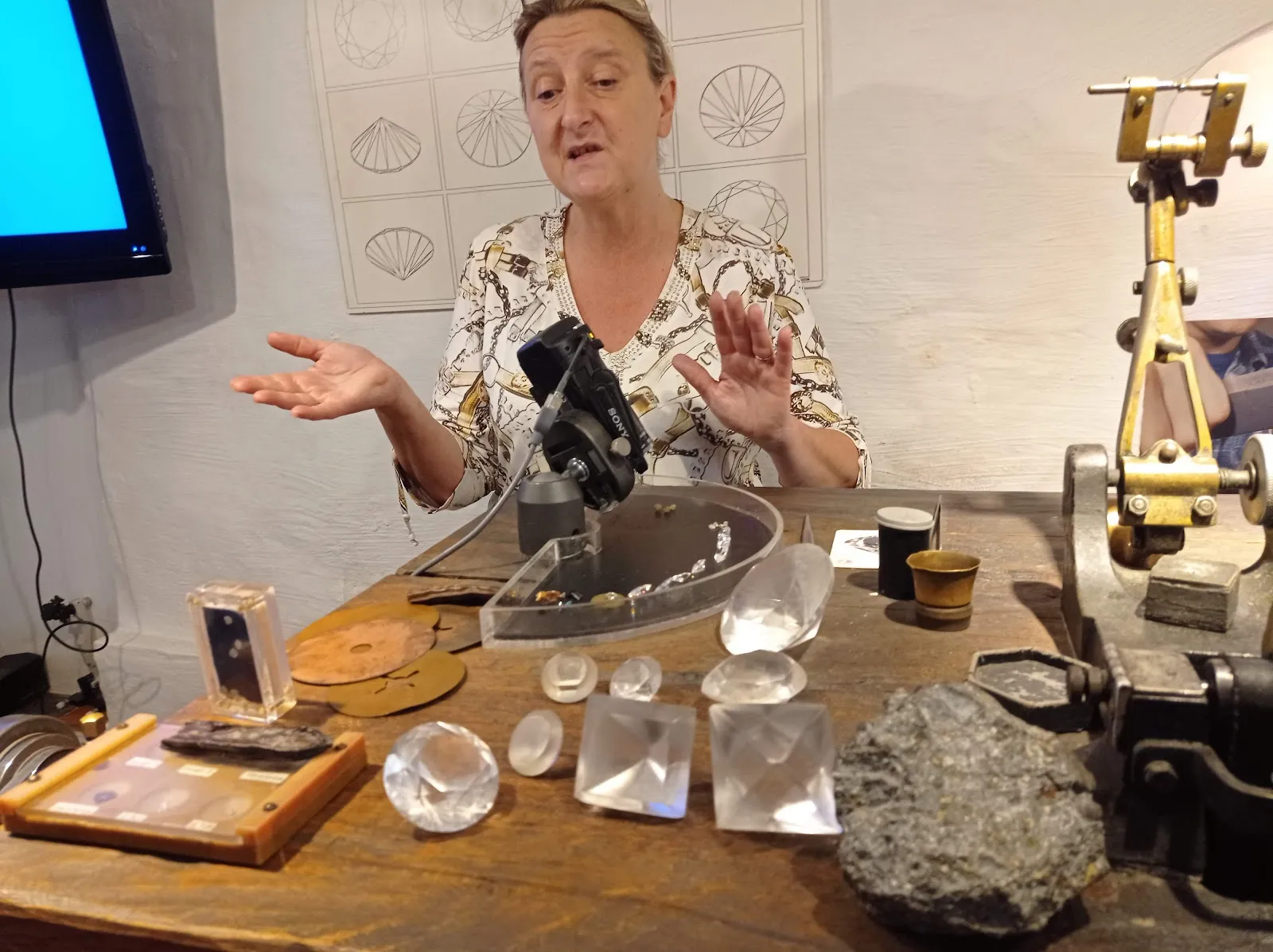
Beguinage Ten Wijngaerde, at Begijnhof 30 in Bruges, is a quiet enclosed complex of whitewashed houses, a green courtyard and a church. Founded in 1245, it was home to beguines, laywomen who shared a religious life without taking formal vows. Benedictine nuns live here today. Walk the garden and cobbled paths, and look for the former beguine house now used as a small museum. This is a good stop near Minnewater when you want a pause from the busy streets; visitors are asked to keep the grounds quiet.
A community founded for beguines
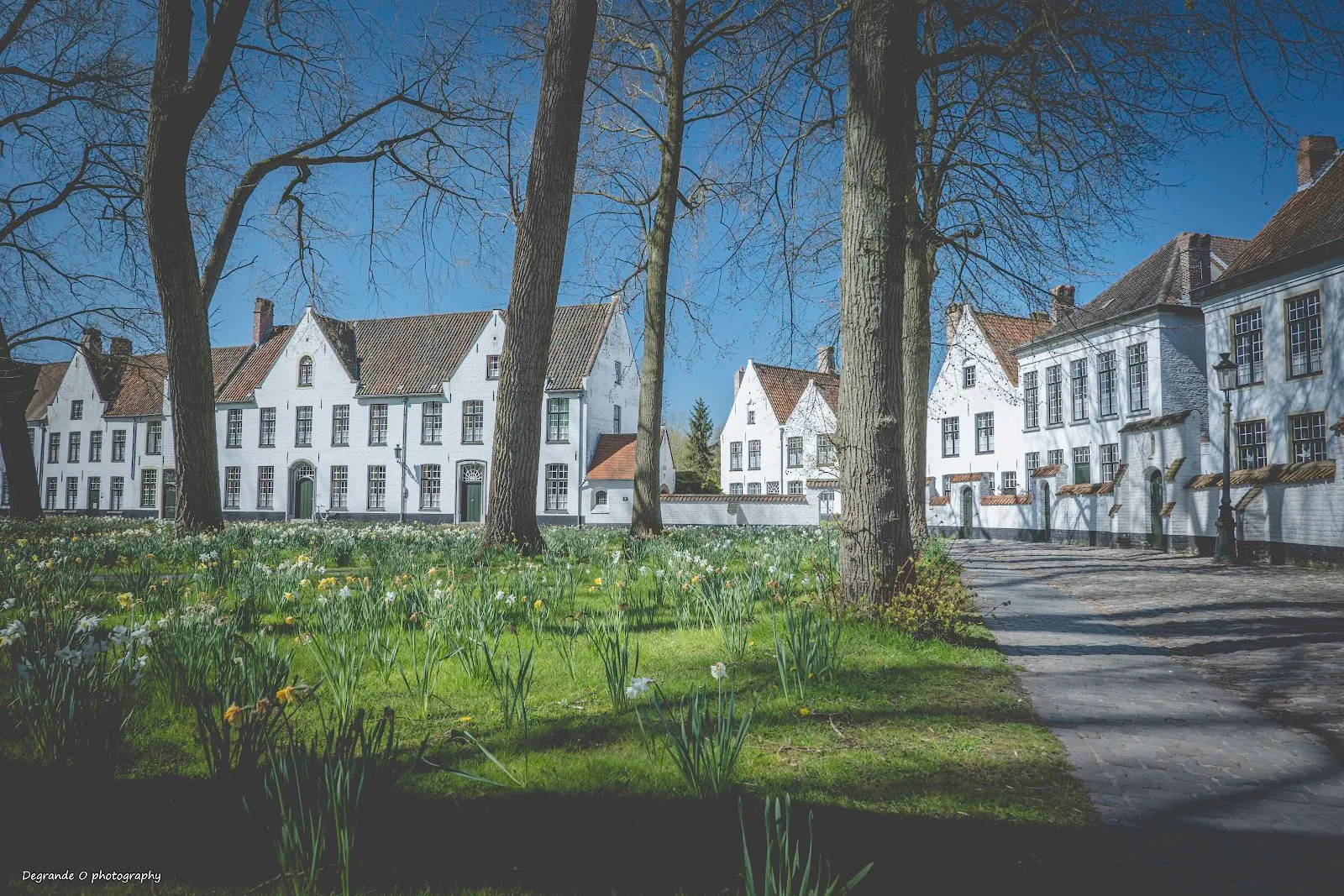
Ten Wijngaerde was founded in 1245. It belonged to a tradition of communities where laywomen lived together in a religious way without taking the formal vows required of nuns. Beguines formed stable, shared households, devoted to prayer and good works while retaining a life outside a convent’s rules. Their communities gave women a way to live independently and in company with one another.
The Bruges beguinage is the city’s only preserved example. Its name, Princely Beguinage Ten Wijngaerde, refers to its connection with King Philip the Fair, under whose authority it came in 1299. The site is part of the UNESCO-listed Flemish beguinages.
Houses, courtyard and church
The complex is arranged around a broad green space, with whitewashed houses along its edges and tall trees providing shade. The present houses date largely from the 17th century. Their plain façades and the open courtyard give the site a residential scale: it feels like a small community enclosed within the city rather than a single monument.
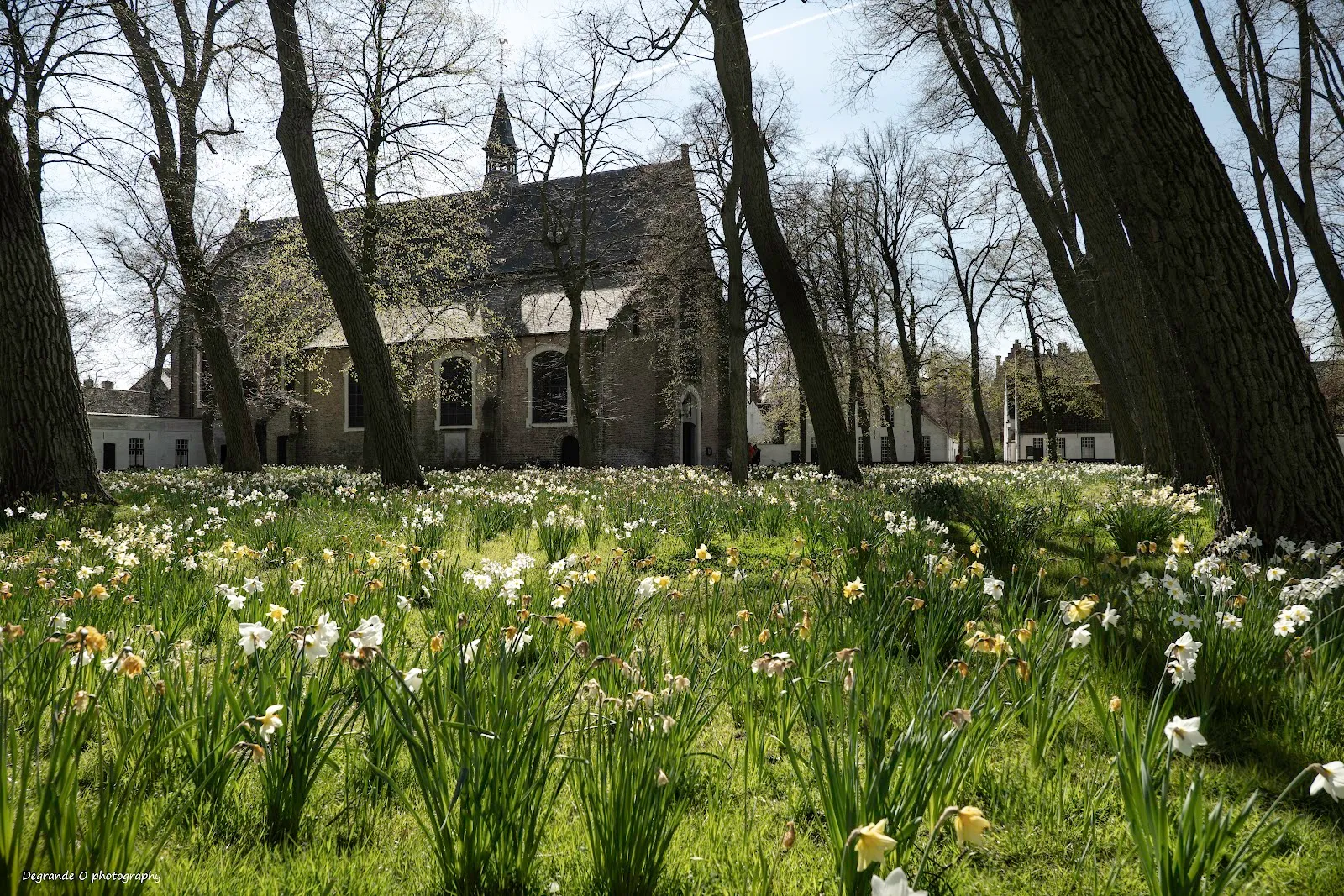
A church stands within the grounds, with origins in the 13th century. As you walk, take in the contrast between the white buildings, the grass and the tree-lined paths. A bridge and gate mark the entrance to the enclosed precinct. The quiet setting is part of its character, so speak softly and respect the signs around the garden.
From beguines to Benedictine sisters
Beguines no longer live at Ten Wijngaerde. The complex became a Benedictine convent, and sisters of the Order of Saint Benedict live there today. The buildings therefore remain a lived-in religious community, not simply a historic display.
One former beguine house has been turned into a small museum, giving visitors a way to learn about domestic life in the beguinage. Allow time to explore the courtyard and its historic structures as well as the museum. The site is close to Minnewater, making it an easy stop to pair with a walk by the lake. Spring is a particularly colourful time in the garden, when daffodils bloom.
Häufige Fragen
How long do you need at Beguinage Ten Wijngaerde?
About 30 minutes is enough for a walk through the courtyard and a look at the historic buildings.
Is Beguinage Ten Wijngaerde free to enter?
Entry to the grounds is free.
What is a beguinage?
It is a community where laywomen lived together in a religious way without taking formal vows as nuns.
Who lives at Ten Wijngaerde today?
Benedictine nuns live in the complex.
When is a good time to visit?
Arrive before 9am to avoid some tour-group traffic. Daffodils bloom in the garden in spring.