Quan Thanh Temple is an 11th-century Taoist sanctuary in Hanoi’s Ba Đình District, near West Lake. Dedicated to Trấn Vũ, the God of the North, it is one of the Four Sacred Temples associated with protecting the old capital. Inside, a large black bronze statue of the deity draws the eye; wooden carvings, carved roof details and sacred-animal sculptures reward a slower look. Come for a quiet pause among the temple’s trees, or visit on a lunar worship day to see the site in active use.
A northern guardian in Hanoi
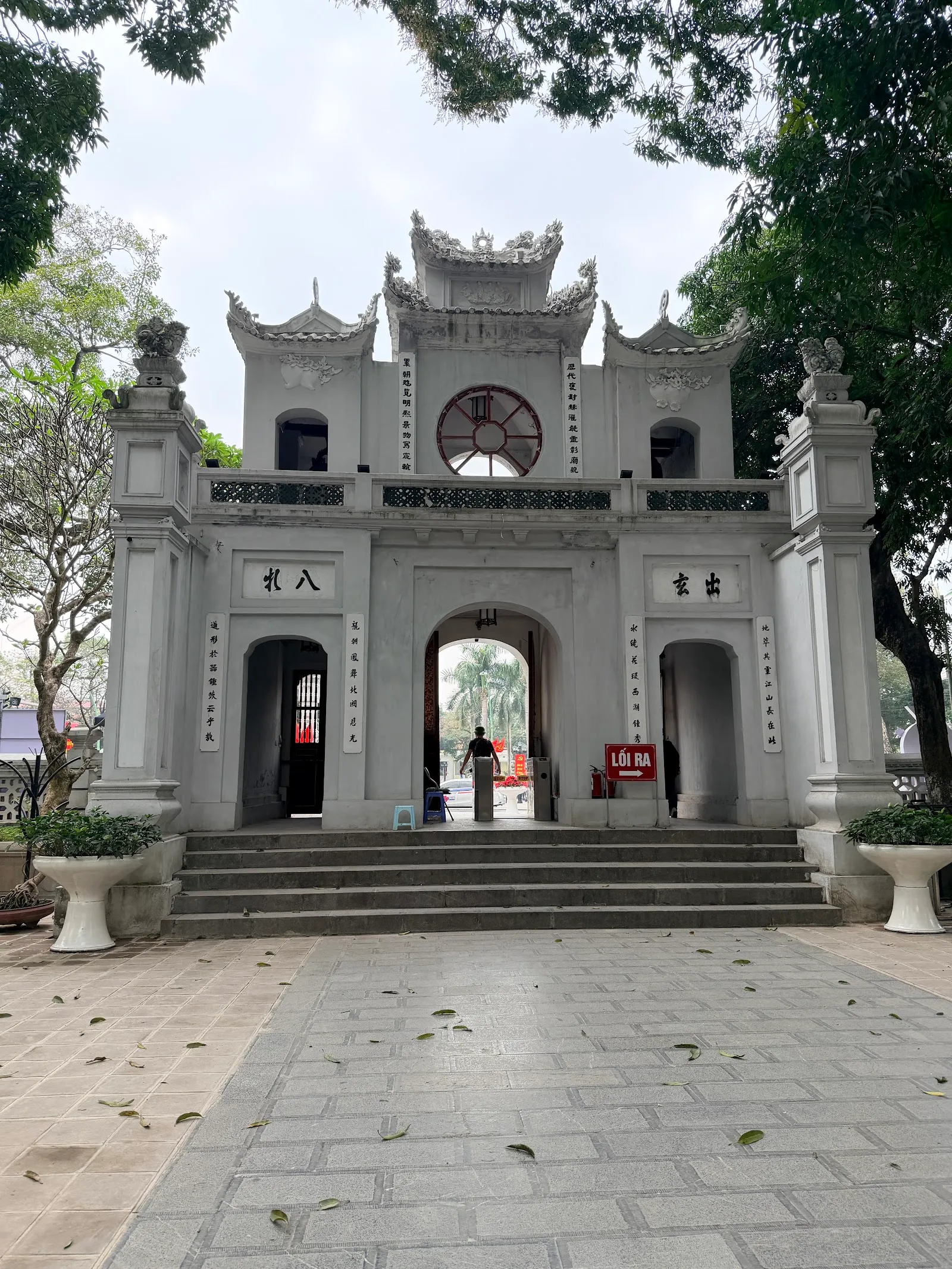
Quan Thanh Temple, also known as Trấn Vũ Temple, honours the Taoist deity of the North. It is one of four temples associated with guarding Thăng Long, the former name of Hanoi, from harmful spirits. The other three are Bach Ma in the east, Kim Liên in the south and Thần Linh Lang in the west.
The temple was established under the Lý dynasty in the 11th century, during the reign of Lý Thái Tổ. Accounts place its construction around the time the capital moved to Thăng Long. The sanctuary stands near West Lake, on the corner of Thanh Niên and Quán Thánh streets. Its setting, once described as facing the lake, is now close to busy city streets.
The statue and shrine room
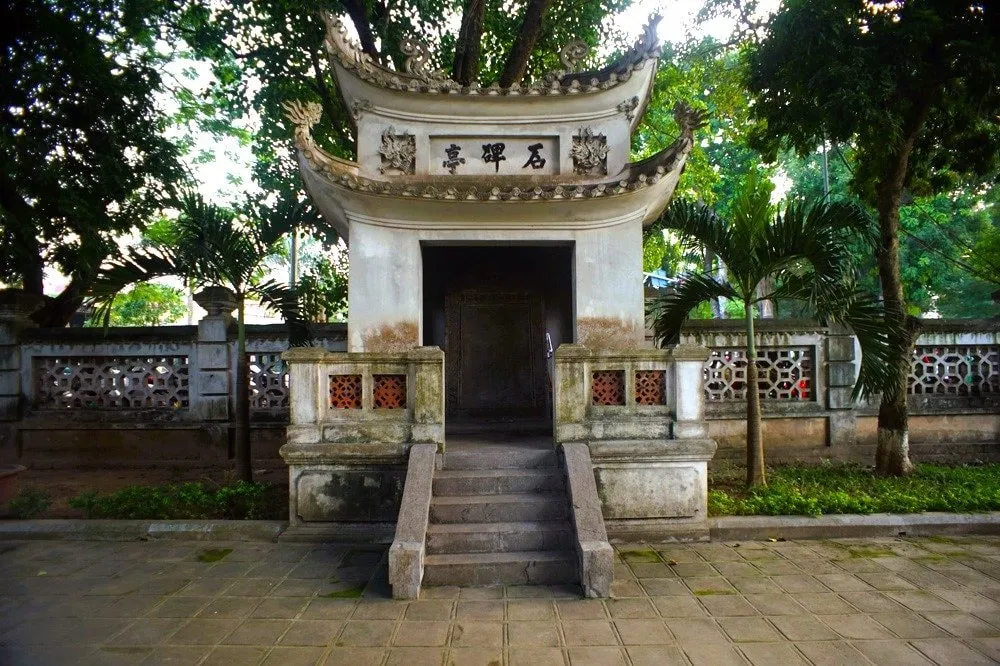
The main focus inside is a large black bronze statue of Trấn Vũ. Made in 1677, it is protected by wooden figures of civil and military mandarins. The temple also has a bell from the 17th century and an important group of poems from that period, displayed in the shrine room.
On one side of the room, an altar honours Trum Trong, the master bronze caster who oversaw the making of the statue. Give the interior time: the smaller details include carved woodwork, roof ornaments and sculptures of sacred animals. The temple has been renovated over the centuries, so its present appearance reflects those later changes as well as its early origins.
The temple layout and worship
The grounds include a three-entrance gate, a front palace, a middle palace, a worship yard and a rear palace. Four pillars mark the outer gate. The sequence of spaces leads visitors from the entrance towards the inner areas of worship, where the statue and other religious features are found.
Local worshippers come on special days in the lunar calendar, particularly the first and fifteenth. These dates can give a visit a more devotional atmosphere. The temple remains a place of worship as well as a historic site, so move calmly through the grounds and be considerate of people there to pray. Its shaded trees offer a quieter place to pause before or after exploring the nearby lake area.
Perguntas frequentes
Who is Quan Thanh Temple dedicated to?
It is dedicated to Trấn Vũ, the Taoist God of the North.
What is the main thing to see inside Quan Thanh Temple?
The main sight is a large black bronze statue of Trấn Vũ, made in 1677. Wooden figures of civil and military mandarins stand beside it.
When is Quan Thanh Temple busiest with worshippers?
The first and fifteenth days of the lunar month are special worship days, when local devotees visit.
Where is Quan Thanh Temple in Hanoi?
It is in Ba Đình District, near West Lake, at the corner of Thanh Niên and Quán Thánh streets.