At Mammoth Hot Springs in Yellowstone, the Albright Visitor Center is a useful first stop near the park’s North Entrance. Its exhibits cover Yellowstone’s wildlife, geology and history, with taxidermy animals and historical photographs to explore. Ask a ranger for help planning hikes or finding current wildlife activity, then visit the lower-level display on Fort Yellowstone. The 1909 stone building once served as Army officers’ quarters. Families can also pick up information about the Junior Ranger program; restrooms and a small gift shop are inside.
A 1909 Army building at Mammoth
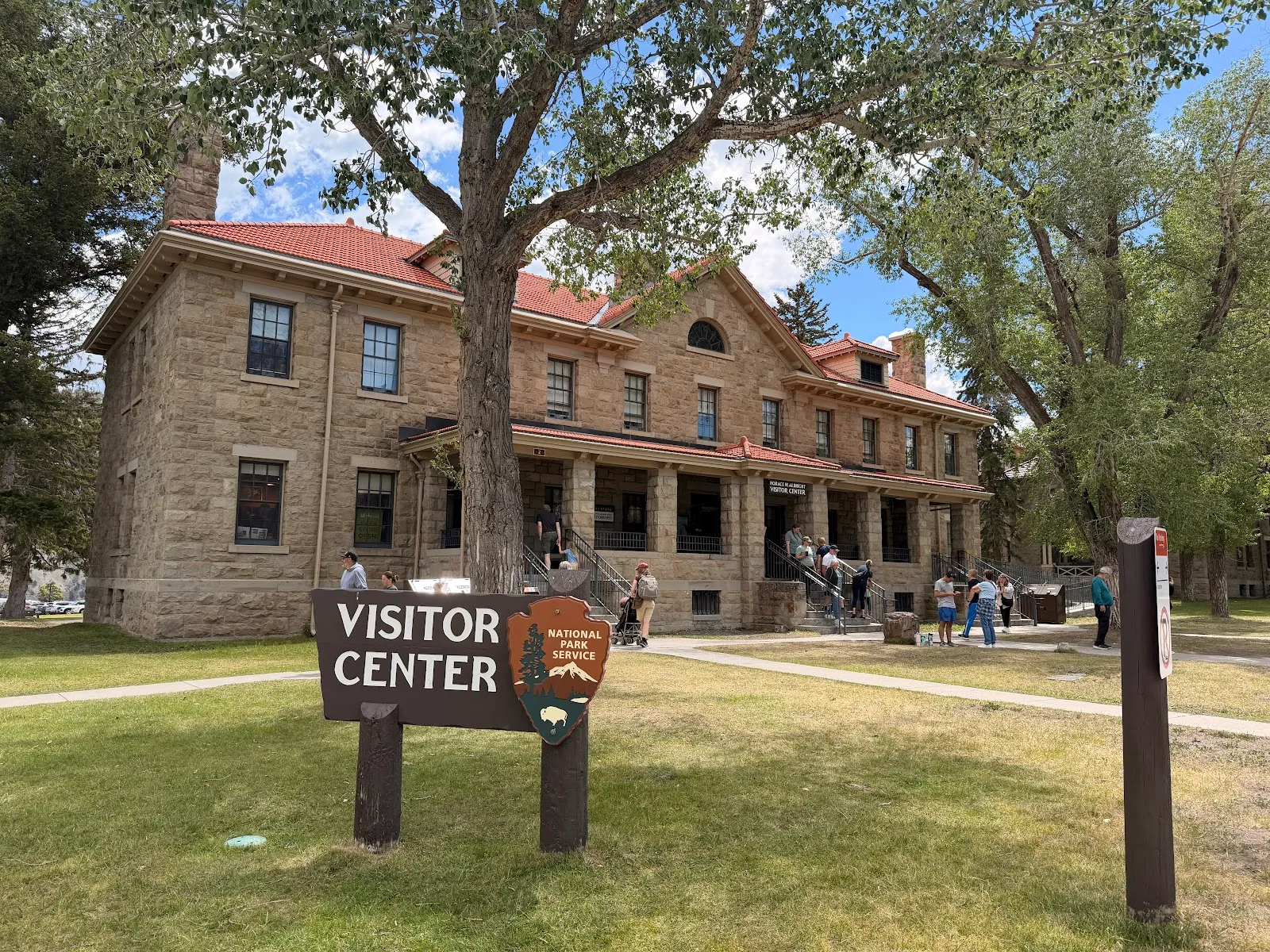
The Albright Visitor Center stands in Mammoth, close to Mammoth Hot Springs and Yellowstone’s North Entrance. The stone building dates to 1909, when Scottish masons began constructing several sandstone buildings for the Army at Mammoth. It was built as Bachelor Officers’ Quarters, housing cavalry officers who served in the park before the National Park Service was established.
The building is part of the former Fort Yellowstone complex. Other structures built during the Army’s time here included an administration building and a chapel, both made from local sandstone. The stone came from a quarry between the Gardner River and Mammoth Campground. The Albright building later became a visitor center, bringing park information and exhibits into a place closely tied to Yellowstone’s early administration.
Wildlife, geology and park history
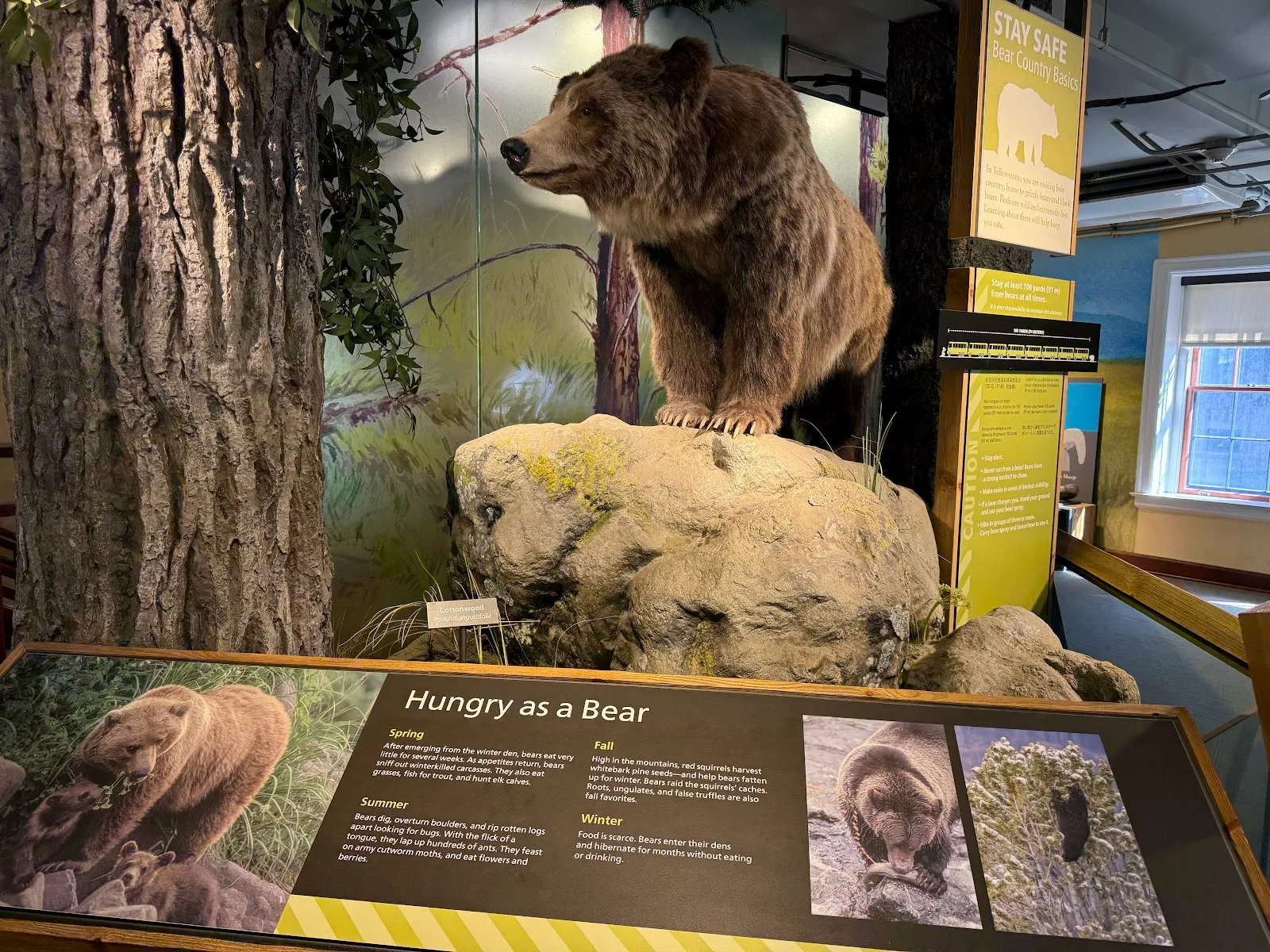
Exhibits introduce Yellowstone’s wildlife, geothermal features and history. Upstairs, displays include taxidermy animals that help with identifying wildlife seen around the park. Historical photographs and artifacts add context to the people and events connected with Yellowstone. The geology displays provide background on the park’s geothermal landscape, including the area around Mammoth Hot Springs.
The lower-level exhibit focuses on Fort Yellowstone and the building’s military past. It traces how the Army’s presence at Mammoth connected with the park’s development and administration. The center also covers the history of settlement and the National Park Service. It includes some information about Indigenous tribes, though the displays on that subject are limited; museums outside the park have more extensive coverage.
There is no film screening among the exhibits, so plan on exploring the displays rather than watching a presentation. The center also has a bookstore and a small gift shop, along with restrooms and drinking fountains.
Getting advice and planning a family visit
Rangers can help with questions about park routes, hikes and wildlife viewing. If you are heading toward Lamar Valley or planning a walk, ask about current road and trail conditions and recent animal activity. The center is also a place to pick up a park map or a self-guided trail book for Mammoth Terraces and Fort Yellowstone.
Families can ask about the Junior Ranger program. Children can follow a self-guided program using a booklet; those who complete it receive a Yellowstone Junior Ranger patch. The exhibits also give children a chance to look closely at animal displays before heading back outdoors.
The center is busiest in summer, and parking near Mammoth can be difficult. An early visit can help with both. In winter, it provides an indoor place to warm up and learn more about wildlife seen along the park’s north side. Free Wi-Fi is also available here.
Perguntas frequentes
Where is the Albright Visitor Center?
It is in Mammoth, near Mammoth Hot Springs and Yellowstone’s North Entrance.
What can you see inside the visitor center?
Exhibits cover Yellowstone’s wildlife, geology and history. The lower-level display focuses on Fort Yellowstone.
Is the Albright Visitor Center suitable for children?
Yes. Children can explore the animal displays and take part in the Junior Ranger program. Children who complete the program booklet receive a Yellowstone Junior Ranger patch.
Can a ranger help with trip planning?
Yes. Ask about hikes, road and trail conditions, or current wildlife activity before setting out.