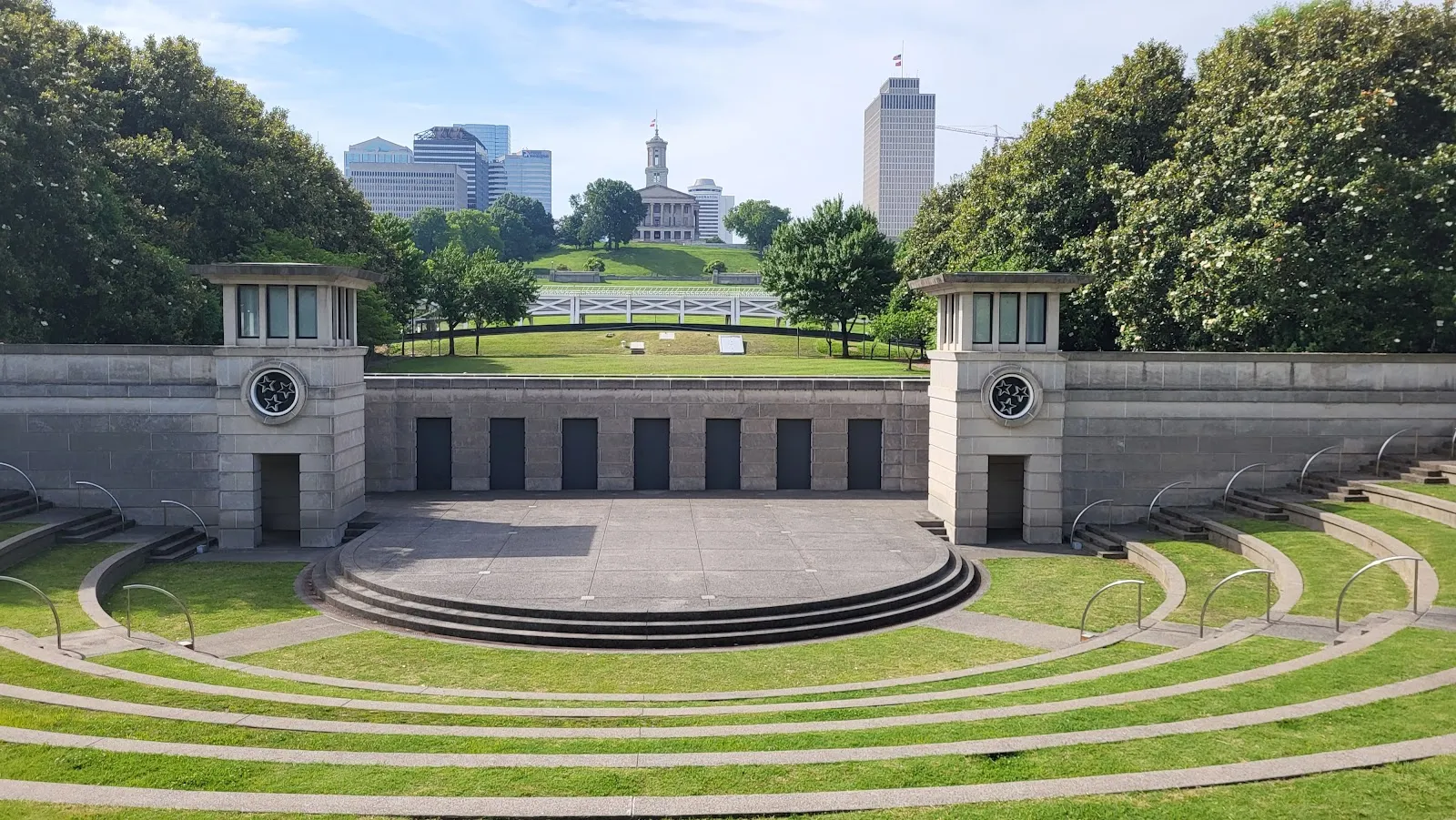
Tennessee’s working statehouse sits on a hill at 600 Dr. M.L.K. Jr Blvd in downtown Nashville. Completed in 1859, it is a Greek Revival building designed by William Strickland, with a temple-like profile and no dome. Inside, look for the Senate Chamber, Legislative Lounge, portraits and historical paintings; guided tours add context about the building and Tennessee’s past. Outside, the grounds include the tomb of President James K. Polk and his wife, terraces with city views, and green space beside Bicentennial Capitol Mall State Park.
A Greek Revival statehouse
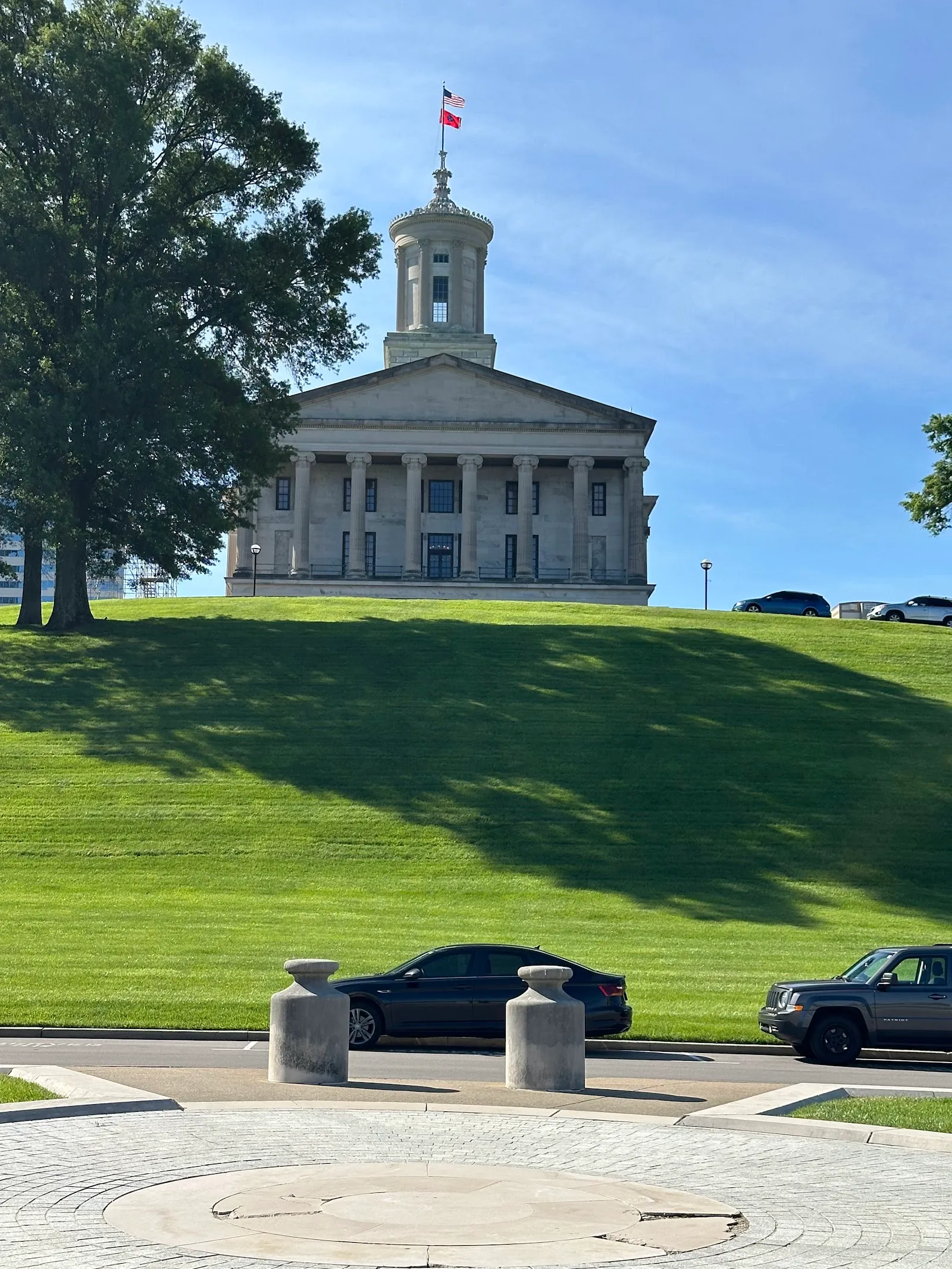
The Tennessee State Capitol has served as the seat of state government since it was completed in 1859. Philadelphia architect William Strickland designed it in the Greek Revival style, drawing on the form of a Greek temple. Its profile is unusual among state capitols because it has no dome.
The building stands on a hill in downtown Nashville. Its limestone and marble construction, classical columns and tower give it a distinct outline against the city. Strickland died in 1854, before construction was finished, and is buried in the building’s north wall. His final project became his burial place.
Inside the chambers

A visit inside brings you to the rooms where state government works. The Senate Chamber is a highlight, with detailed woodwork and a formal interior. The Legislative Lounge and other public areas add a sense of how the building is used beyond its architecture.
Portraits, busts and paintings provide glimpses of Tennessee’s history. In the former state Supreme Court room, look for a painting that represents the state’s three grand divisions. A self-guided visit lets you explore at your own pace; a guided tour gives more background on the rooms and the statehouse.
The grounds and Polk’s tomb
The Capitol grounds are part of the visit, not just the approach to the building. Paths cross landscaped green spaces, and terraces look out over Nashville. The grounds connect with Bicentennial Capitol Mall State Park, making it easy to pair a Capitol visit with a walk through the nearby park.
James K. Polk, the 11th U.S. president and a former Tennessee governor, and his wife are buried on the Capitol grounds. The site also includes statues of presidents Andrew Jackson and Andrew Johnson, along with a World War II memorial nearby. Allow time outdoors if you want to see the memorial and explore beyond the main entrance.
Planning a visit
The Capitol is at 600 Dr. M.L.K. Jr Blvd. It is open to visitors Monday through Friday, 9 a.m. to 4 p.m., and closed on weekends. The supplied visit information describes guided tours lasting about 45 minutes and departing once an hour. A self-guided option suits visitors who want a shorter stop; one account describes walking through in under 30 minutes.
The building remains an active government workplace, so public access can be affected by renovations or activity inside. Check the official Capitol visit page before setting out, particularly if you have a specific area in mind. The grounds and nearby park also make a useful option if you prefer an outdoor visit or arrive when the building is closed.
Perguntas frequentes
Is the Tennessee State Capitol free to visit?
The supplied visit information describes both guided and self-guided visits as free.
How long does a visit take?
A self-guided visit can take under 30 minutes. Allow about 45 minutes for a guided tour, or longer if you want to explore the grounds.
When is the Tennessee State Capitol open?
It is open Monday through Friday, 9 a.m. to 4 p.m., and closed Saturday and Sunday.
Can you take a guided tour?
Yes. Guided tours take about 45 minutes and run once an hour, according to the supplied visit details. A self-guided visit is also available.