Elizabeth Castle stands on a tidal island in St Aubin’s Bay, just off St Helier. The fortress grew from earlier religious sites into a major coastal defence, with a history spanning the English Civil War and German occupation in the Second World War. Cross the causeway when the tide allows, or take the amphibious vehicle. On the island, explore the battlements, bunkers and museums, then climb for views across the bay and St Helier. Live history displays add another reason to check the day’s programme before you go.
A fortress on a tidal island
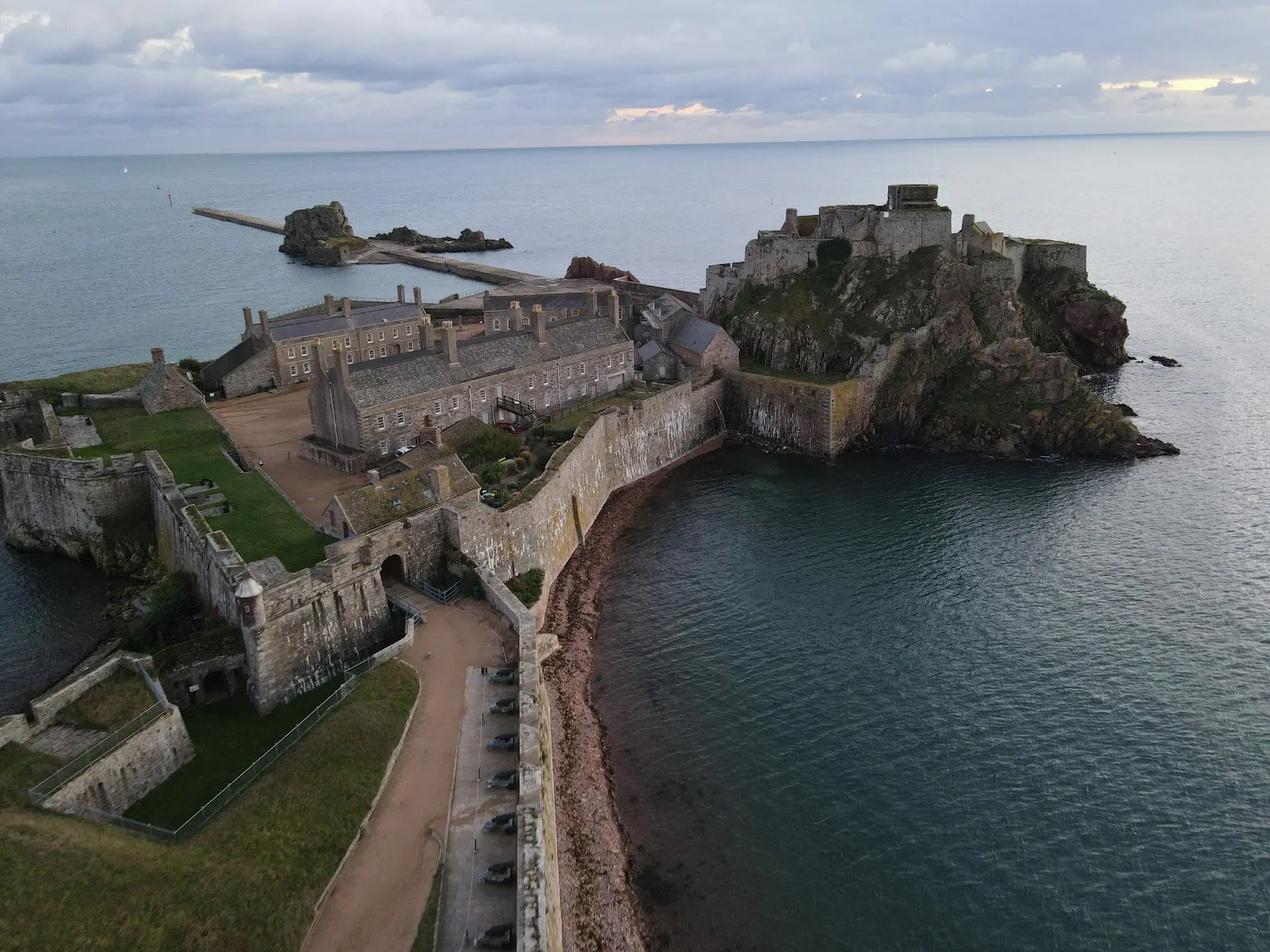
Elizabeth Castle sits on rocky islets in St Aubin’s Bay, close to St Helier. The site’s story reaches back to a hermitage and later an abbey before a castle was built here in the 16th century. Construction began in 1594, as Jersey’s existing stronghold could not withstand cannon fire. Work continued into the early 17th century under Governor Sir Walter Raleigh, who named the castle for Elizabeth I. It later became the Jersey governors’ residence after they left Mont Orgueil Castle.
The fortress guarded the harbour entrance and saw military action across several centuries. Parliamentarian forces bombarded it during the English Civil War. It held French prisoners during the Seven Years War and repelled an invasion led by Baron Philippe de Rullecourt during the Battle of Jersey. During the German occupation in the Second World War, the castle was modernised and used by German forces.
Reaching the castle
The route depends on the tide. At low water, you can walk across the causeway; when the sea covers it, an amphibious vehicle carries visitors to the island. The ticket office can advise on tide times, which is useful if you hope to walk one way and take the vehicle the other. The change in access is part of planning a visit, so check the conditions before setting off.
Once on the island, explore at your own pace or join a guided tour. The grounds include the Upper Ward, battlements, two museums and Hermitage Rock. Allow time to look beyond the main buildings: the site has passageways, corners and military remains spread across the islets.
From the Civil War to German occupation
The castle’s role changed as Jersey’s threats and defences changed. During the English Civil War, it provided sanctuary to Prince Charles, who stayed there for ten weeks in 1645. After his father’s execution, he returned and was crowned Charles II in 1649. The fortress later faced the French during the Battle of Jersey and served as a place of confinement for French prisoners during the Seven Years War.
German forces altered and used Elizabeth Castle during the Second World War. The wartime bunkers are among the remains visitors can explore today, giving the site a visible connection to the island’s occupation. Exhibits and museum displays add context to the structures around the grounds.
Museums and live displays
The castle’s museums cover its history, including an artillery museum, while exhibits and displays give visitors more to look at inside the historic buildings. The site also hosts art exhibitions; one has focused on seaweed collection in the last Georgian hospital in the British Isles.
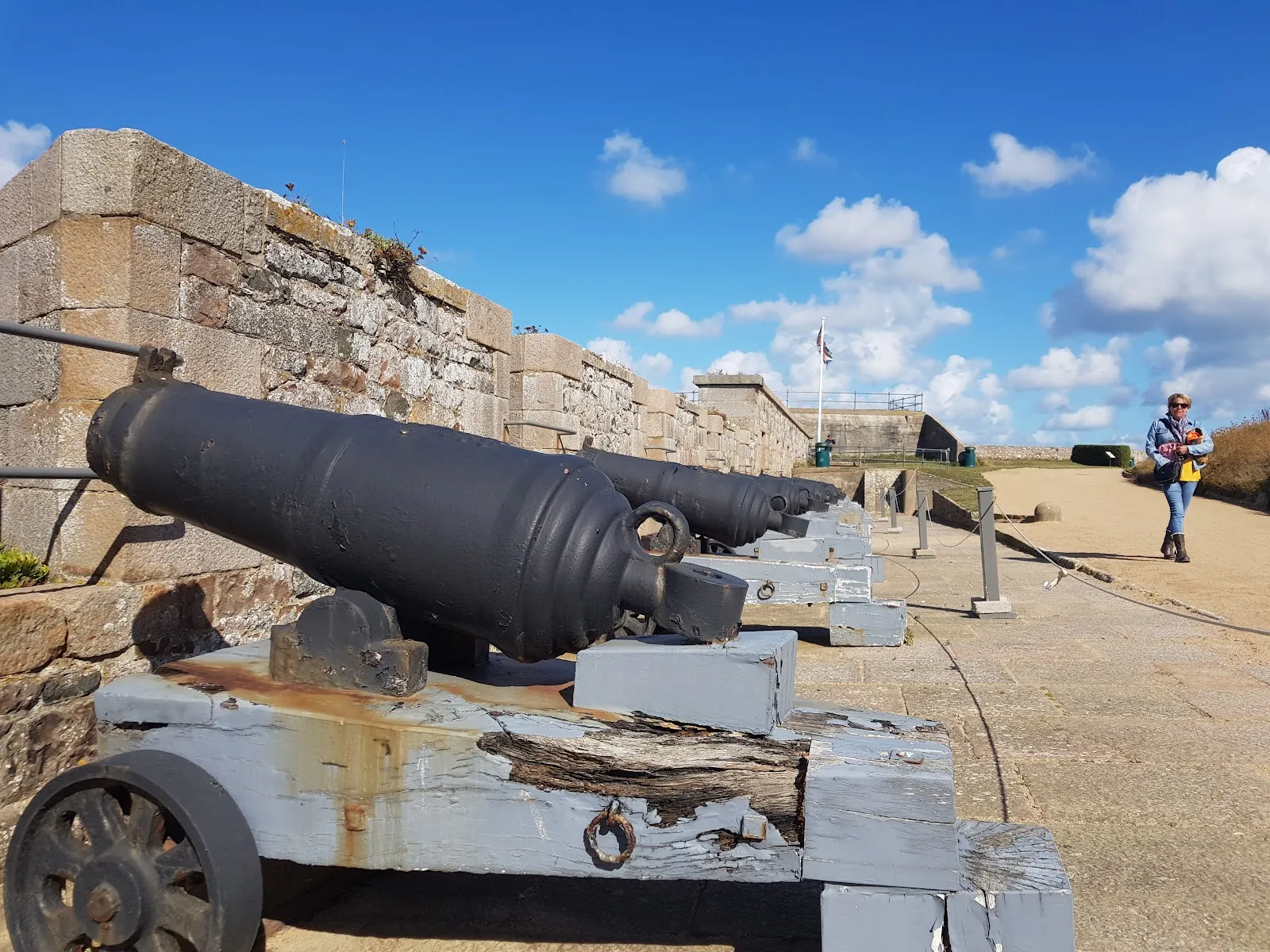
Live history events bring military details into view, with musket demonstrations and cannon firing among the displays held at the castle. Their timing can vary, so check what is scheduled for your visit. Climb the steps to the higher parts of the fortress for views across St Aubin’s Bay and towards St Helier. The grounds also have gardens where visitors can picnic.
Perguntas frequentes
How do you get to Elizabeth Castle?
Walk across the causeway at low tide or take the amphibious vehicle when the tide is high. Check tide times at the ticket office before planning a walk.
What is there to see at Elizabeth Castle?
Explore the battlements, Upper Ward, Hermitage Rock, wartime bunkers and two museums. The castle also has gardens, exhibitions and live history displays.
When is Elizabeth Castle open?
The supplied opening information lists daily hours of 10 a.m. to 5:30 p.m. The castle is closed during winter.
Can you see a musket demonstration at Elizabeth Castle?
Live history displays include musket firing. Check the programme for the day of your visit, as display times are not consistent in the available information.