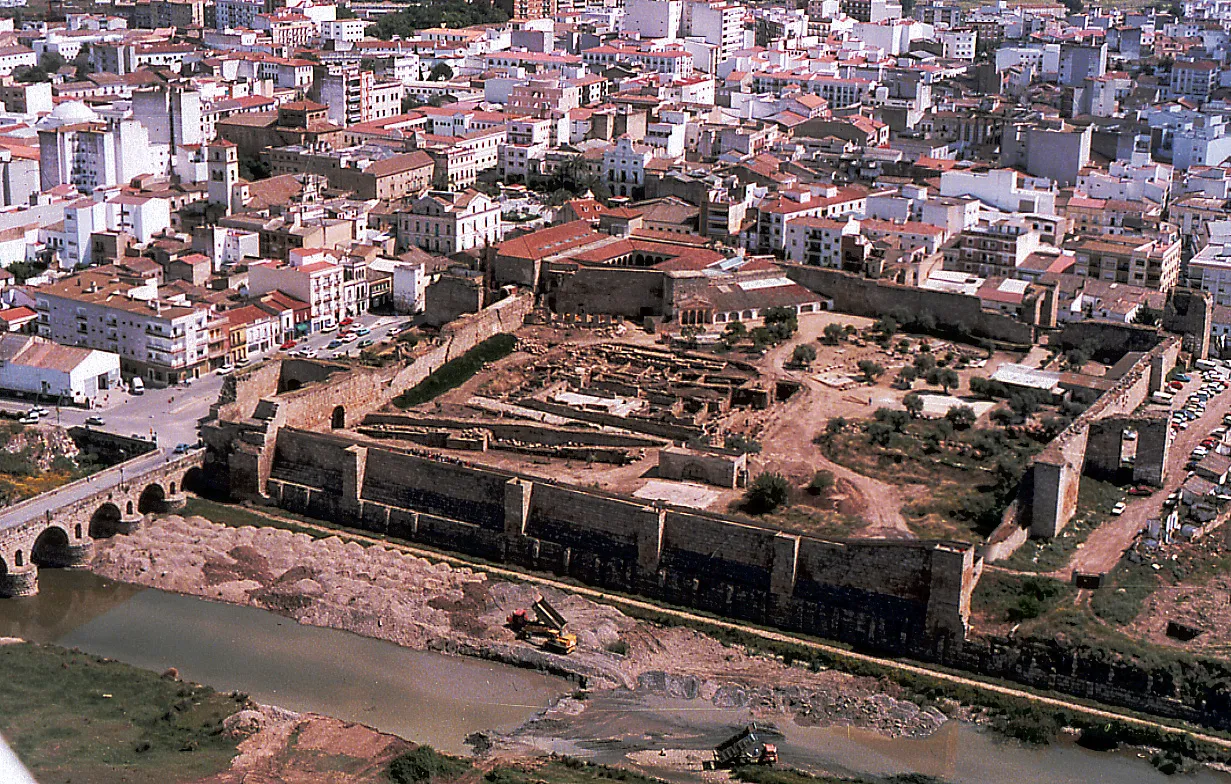
The Teatro Romano is a Roman theatre on Plaza Margarita Xirgu in Mérida, built in 16 to 15 BC under the general Agrippa, son-in-law of Emperor Augustus. It held around 6,000 spectators in Roman times and seats about 3,000 today. The semicircular seating is intact, and the two-storey columned wall behind the stage has been restored. Plays, concerts and ballet are still staged here. Clear paths and information boards lead you around the site, and the stonework rewards a slow walk.
Built under Agrippa, 16 to 15 BC
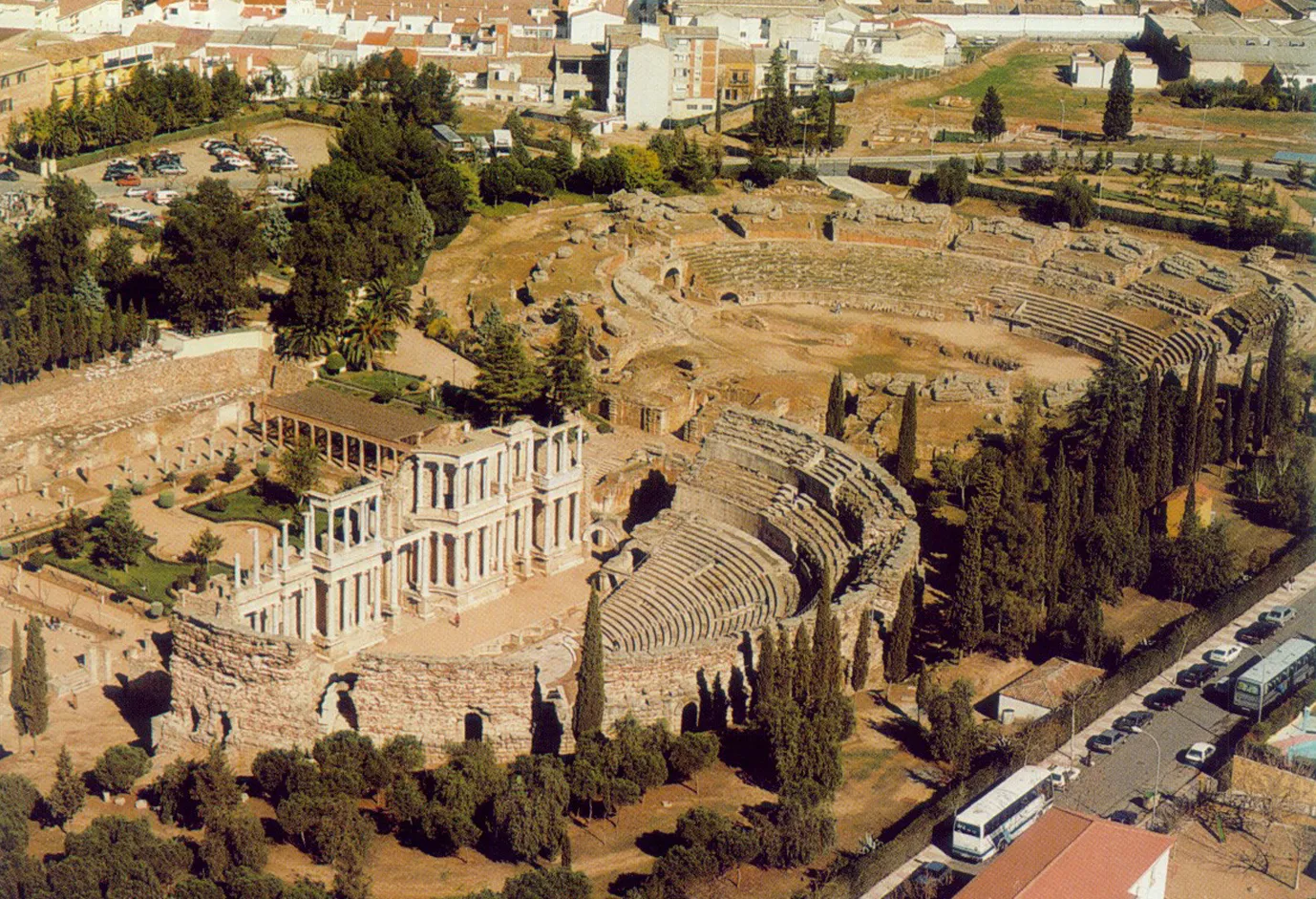
The theatre was commissioned by the consul Vipsanius Agrippa, son-in-law of Emperor Augustus, and built in the years 16 to 15 BC. At the time it could hold around 6,000 people. Today the seating accommodates around 3,000.
It is the most visited monument in Mérida and the most visited sight in Extremadura. It was also chosen as one of the 12 Treasures of Spain.
Rebuilt in Roman times, buried, then excavated
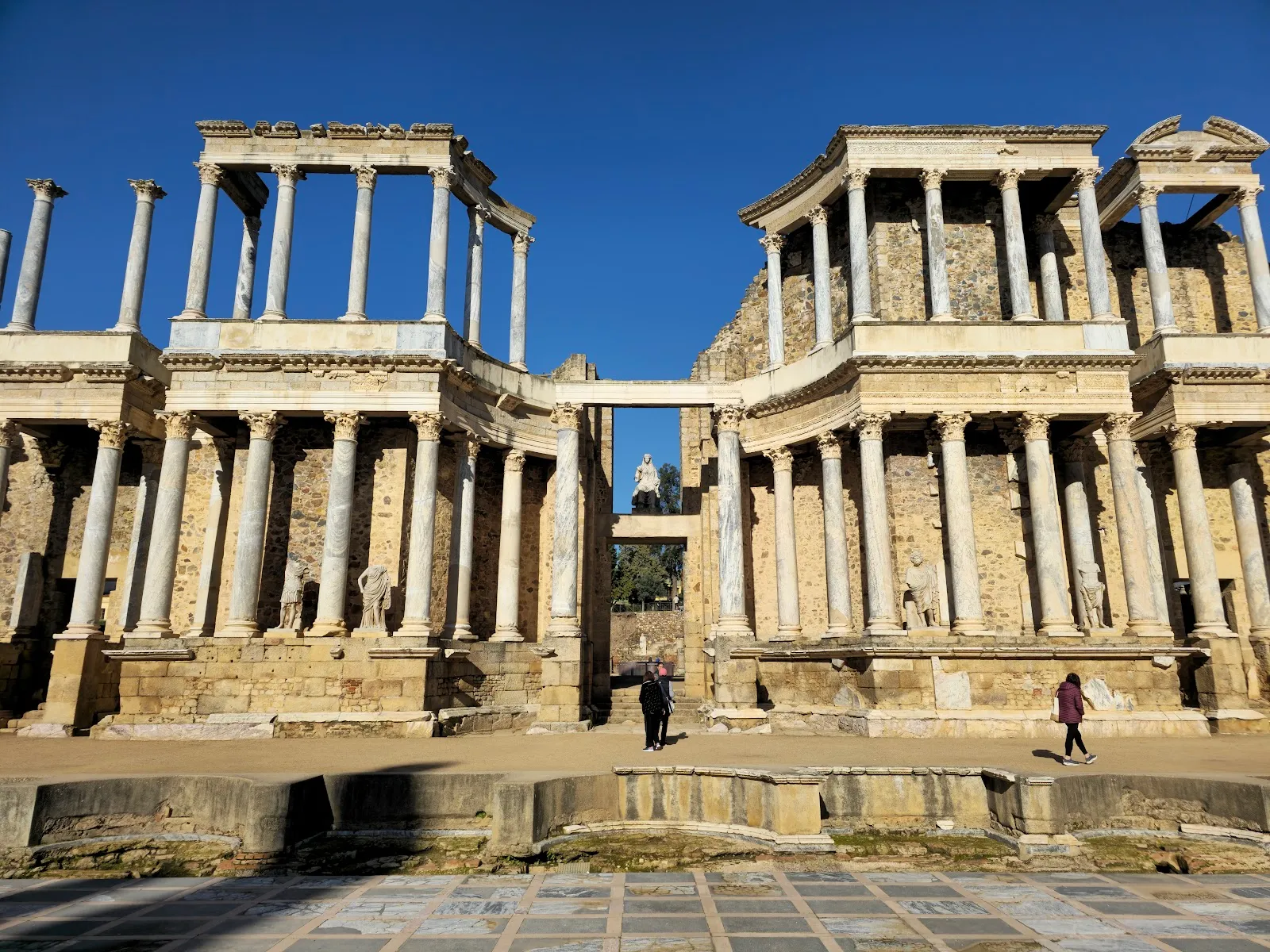
The theatre was renovated more than once in antiquity. At the end of the 1st century or the start of the 2nd, the current scaenae frons, the decorated back wall of the stage, was erected. A later renovation, between 330 and 340 in the time of Constantine I, added new decorative and architectural elements and a walkway around the monument.
The theatre was then buried for centuries. This is the main reason it survives in such good condition: when it was excavated, many of the columns and much of the artwork were still well preserved. Full excavation and restoration were completed in 1933, and the theatre reopened that year.
What to look at inside
Start with the semicircular tiers of seats, which are intact. Then look at the scaenae frons. Its double-tiered columns have been restored, and the wall carries sculptural decoration. Behind it there was once a garden that served as a foyer for the audience.
The site has clear paths and information on the history, so you can follow the layout without a guide. The stonework is worth a close look, since the carved details are among the things visitors remember most.
A theatre that still performs
Since the 1933 reopening the theatre has hosted the Festival de Mérida, the Festival of Classical Theatre. It is the oldest festival of its kind in Spain. Concerts, plays and ballet are staged here each year.
If your visit coincides with local activity, you may see more than ruins. One visitor came across school groups performing short acts in costume, a reminder that the building is used as a theatre.
Planning the visit
The theatre is one of several Roman monuments in Mérida. A combined ticket for the city's monuments is the practical option if you plan to see more than one. Check the consortium's official page for current prices and ticket types before you go.
The site is good for children, and parking is available both free and paid. The entrance is wheelchair accessible, but the ground inside is uneven and the paths could be difficult for visitors with limited mobility.
Perguntas frequentes
Is the Teatro Romano in Mérida still used for performances?
Yes. It hosts the Festival de Mérida, the oldest classical theatre festival in Spain, with plays, concerts and ballet staged each year.
Should I buy tickets in advance?
Yes, online tickets are recommended. The queue at the entrance can take about 30 minutes.
Is there a ticket that covers other monuments in Mérida?
Yes. A combined ticket covers several of the city's Roman monuments. Check the official Consorcio de Mérida page for current prices.
Is the theatre wheelchair accessible?
The entrance is wheelchair accessible, but the ground inside is uneven and the paths may be hard for visitors with mobility difficulties.
How many people did the Roman theatre hold?
It held around 6,000 spectators when it was built in 16 to 15 BC. Today it seats about 3,000.