At the foot of the Alcazaba on Calle Alcazabilla, Málaga’s Roman Theatre preserves stone seating and the remains of a stage built in the Roman period. Dating to the 1st century, it was used for performances until the 3rd century, then its stones were reused during the Moorish period. You can view the ruins from the street or enter the archaeological site and interpretation centre, where a short digital presentation in English and Spanish helps explain what you are seeing. The Roman remains and fortress walls above make this an easy history stop in the old town.
A Roman theatre beneath the Alcazaba
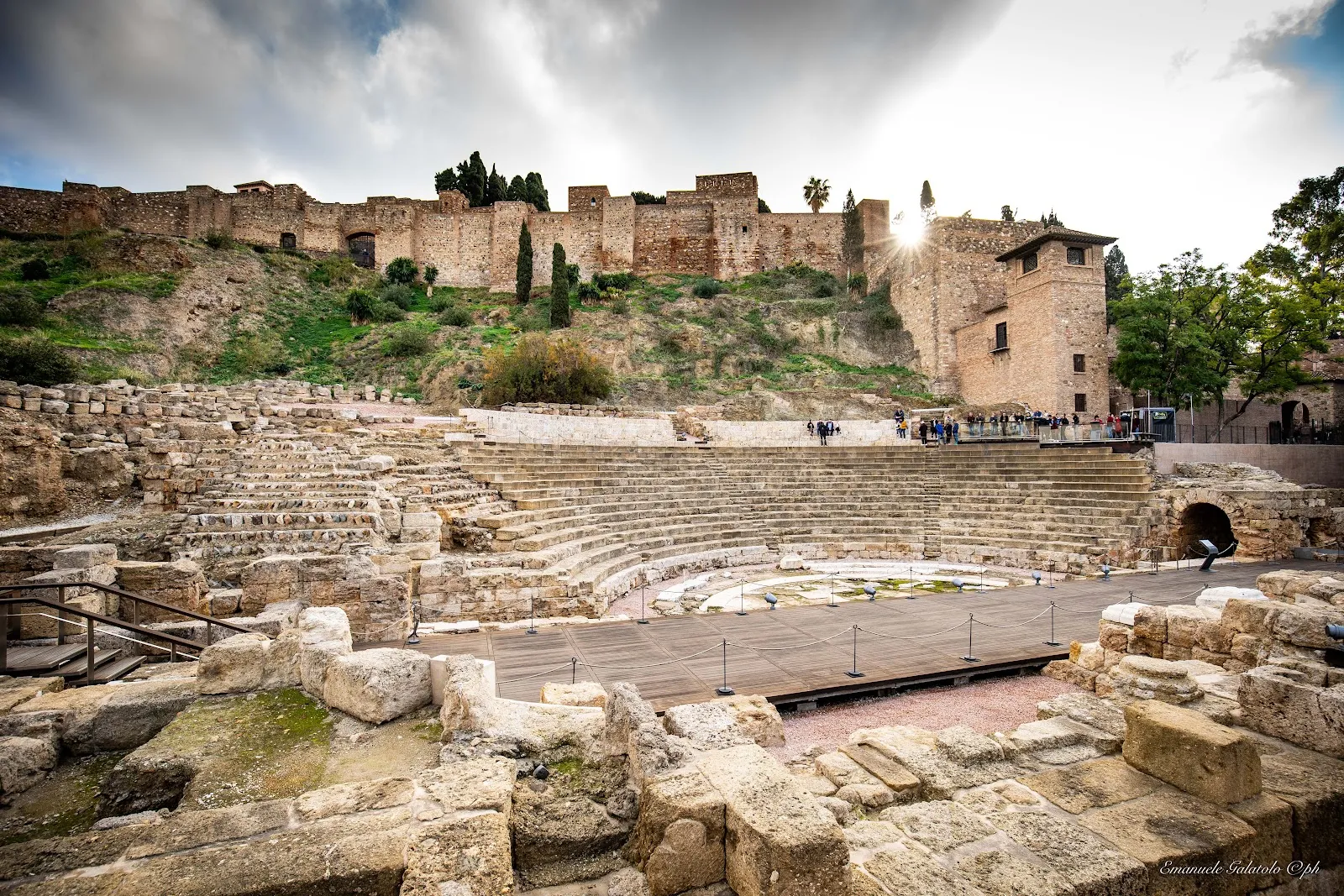
The theatre stands on Calle Alcazabilla, at the base of the Alcazaba. Its setting brings two periods of Málaga’s past into view at once: Roman stonework below and the Moorish fortress rising behind it. The ruins include tiers of stone seating and remains connected with the stage, giving the site the outline of a place built for public performances.
The theatre dates to the 1st century, during the reign of Augustus, and remained in use until the 3rd century. Later, parts of the structure were used as building material during the Moorish period. That reuse links the ruins to the fortress beside them, whose walls incorporate material from the Roman site.
Buried, then uncovered
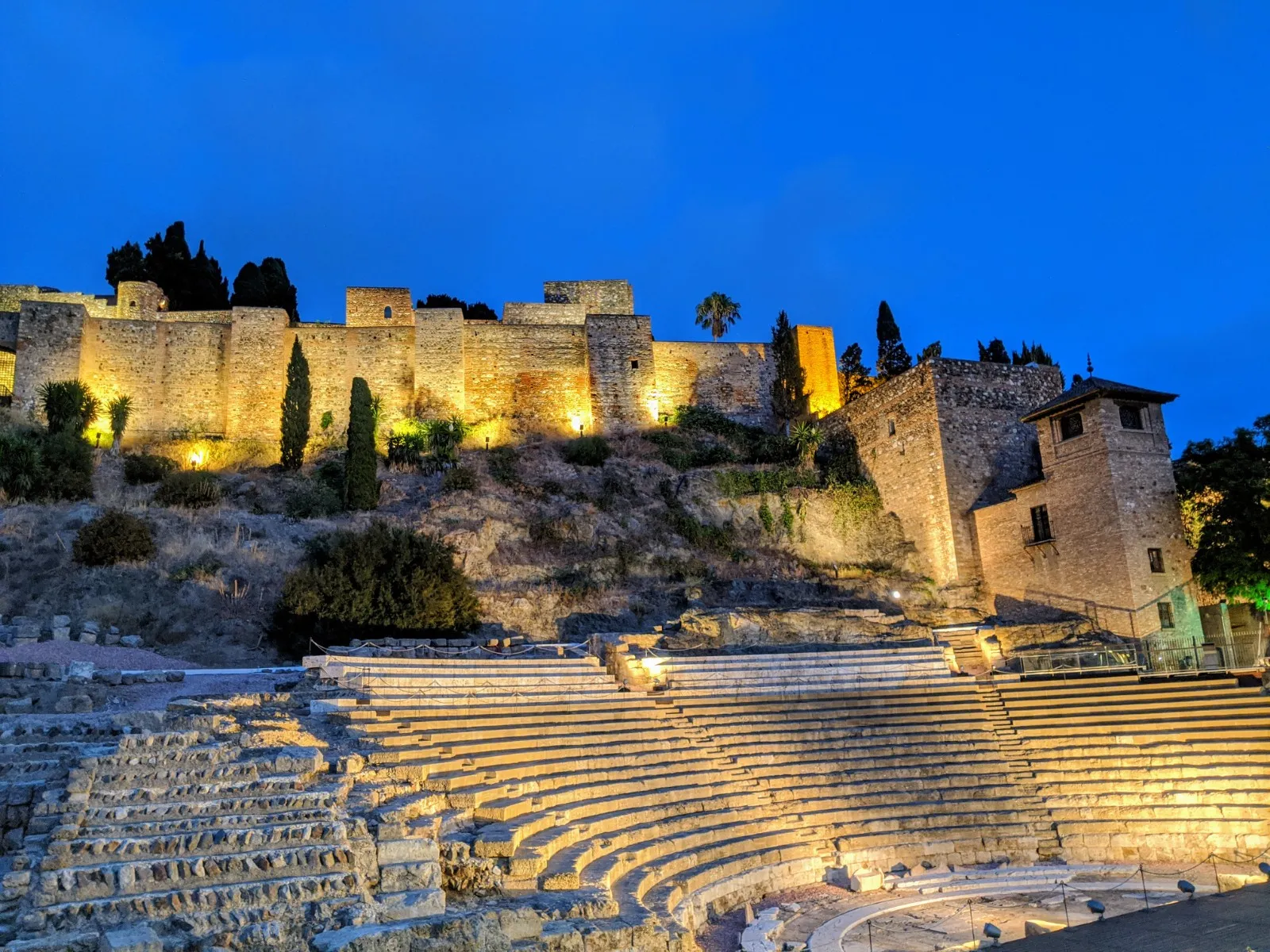
After the theatre fell out of use, it disappeared beneath later layers of the city. It was rediscovered in 1951 during work in the area. A cultural building that covered part of the remains was later removed so the site could be excavated and restored.
The archaeological work brought more than seating to light. The remains include marble flooring, a drainage system and supports associated with performances. These details help explain how the theatre functioned, beyond the view of the surviving stone tiers.
Viewing the ruins and interpretation centre
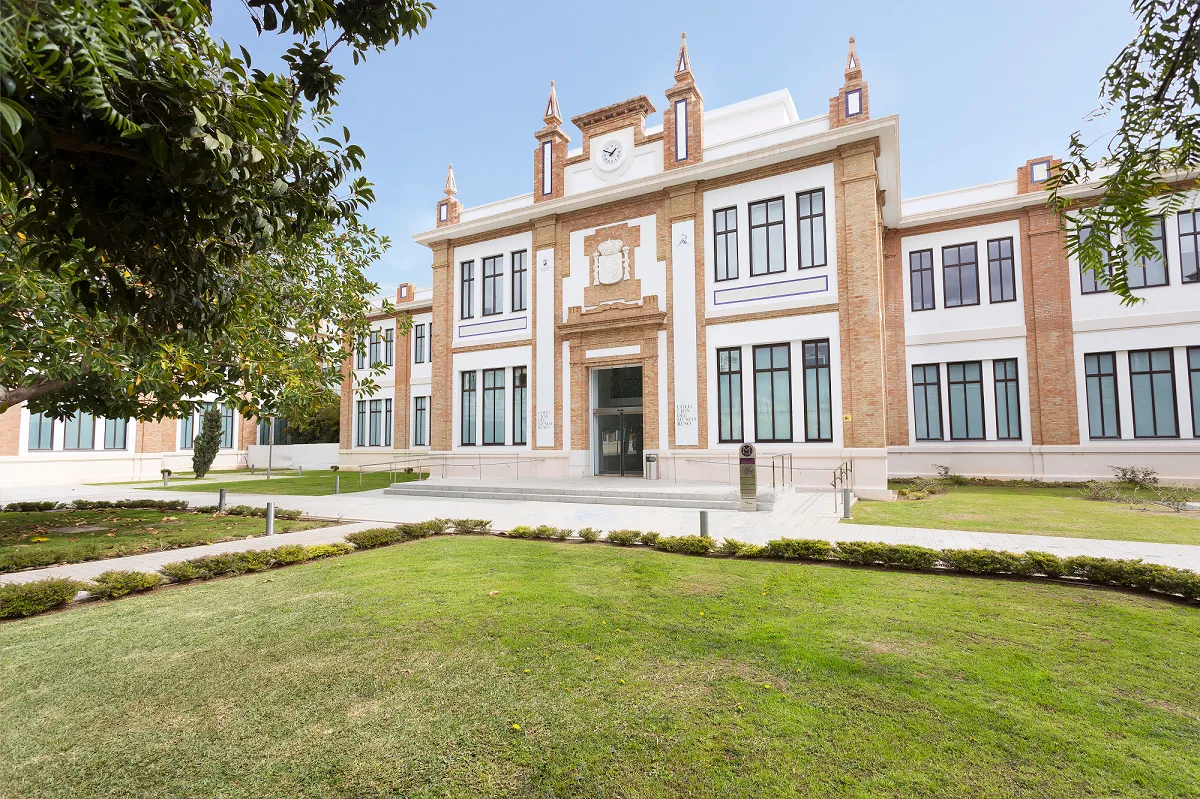
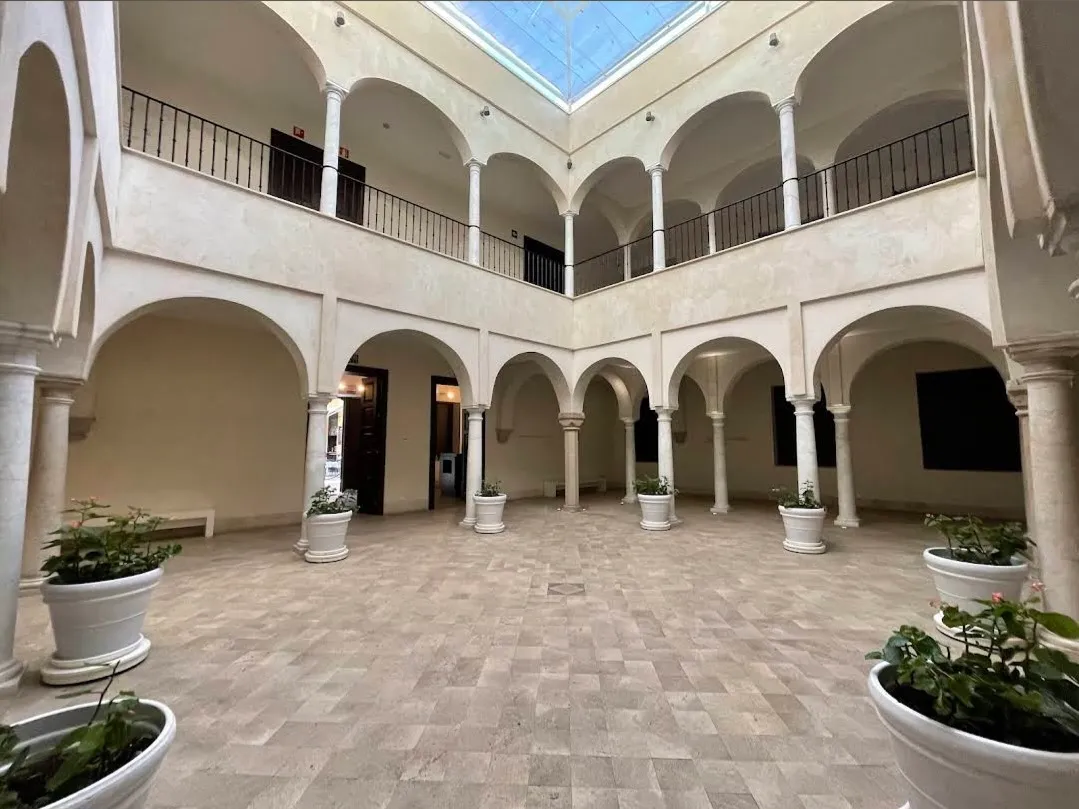
You can see the theatre from the street, but entering the archaeological site brings you closer to the remains. The access building leads down to the theatre level and includes an interpretation centre. A short digital presentation, available in English and Spanish, gives context for the ruins and their original use.
Take a moment to look across the site toward the Alcazaba walls. The close view of the theatre and fortress makes the layers of Málaga’s history especially clear. The ruins are also an easy stop to combine with a visit to the Alcazaba or a walk through the historic centre.
Perguntas frequentes
Is Málaga’s Roman Theatre free to visit?
The site has free admission. You can also view the theatre from the street without entering.
How long do you need at the Roman Theatre?
Allow around 30 to 60 minutes to see the ruins and watch the short digital presentation.
When was the Roman Theatre built?
It dates to the 1st century, during the reign of Augustus, and was used until the 3rd century.
Is the Roman Theatre open on Mondays?
No. It is closed on Mondays. Check the official website for current visitor information.