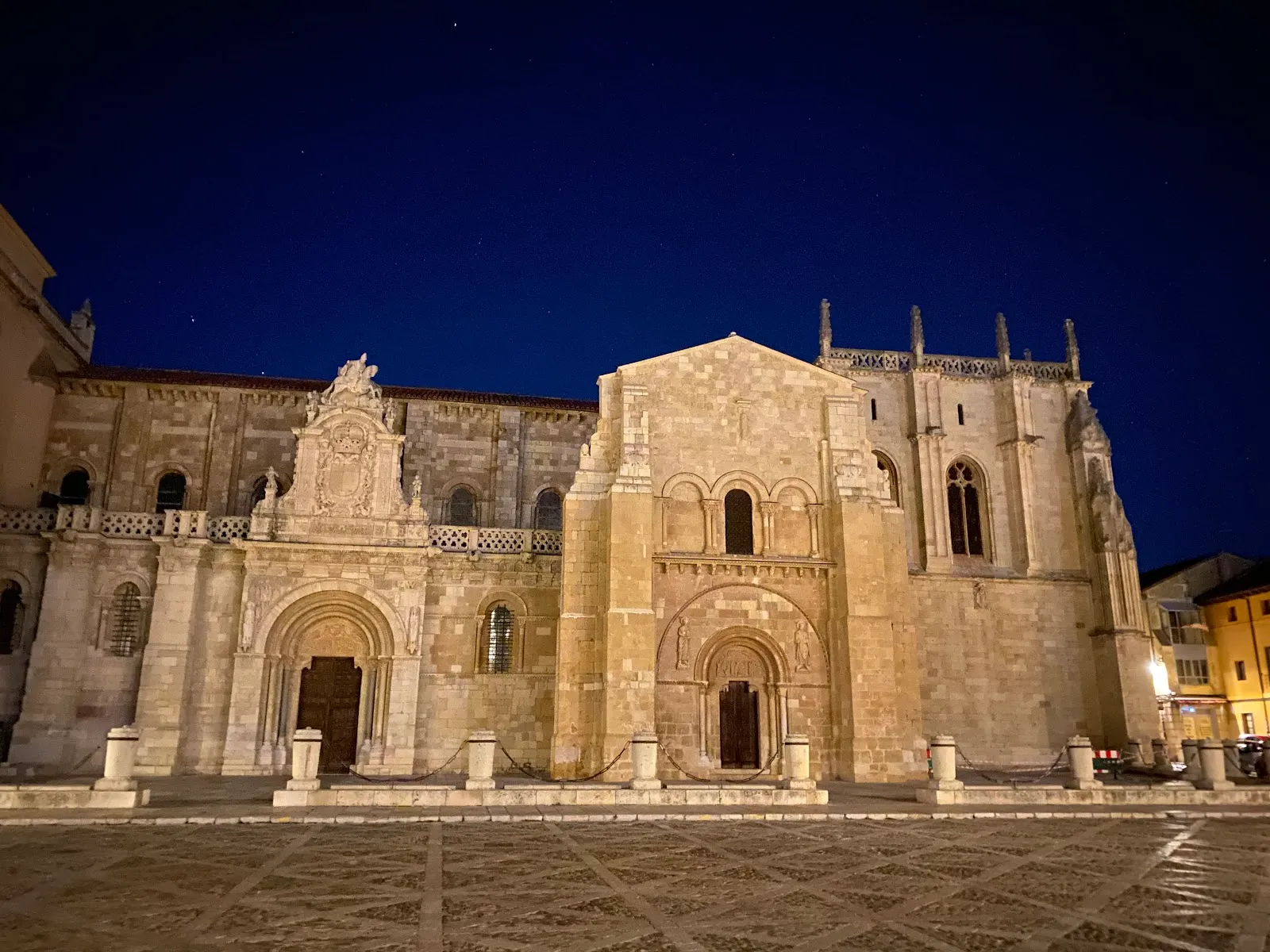
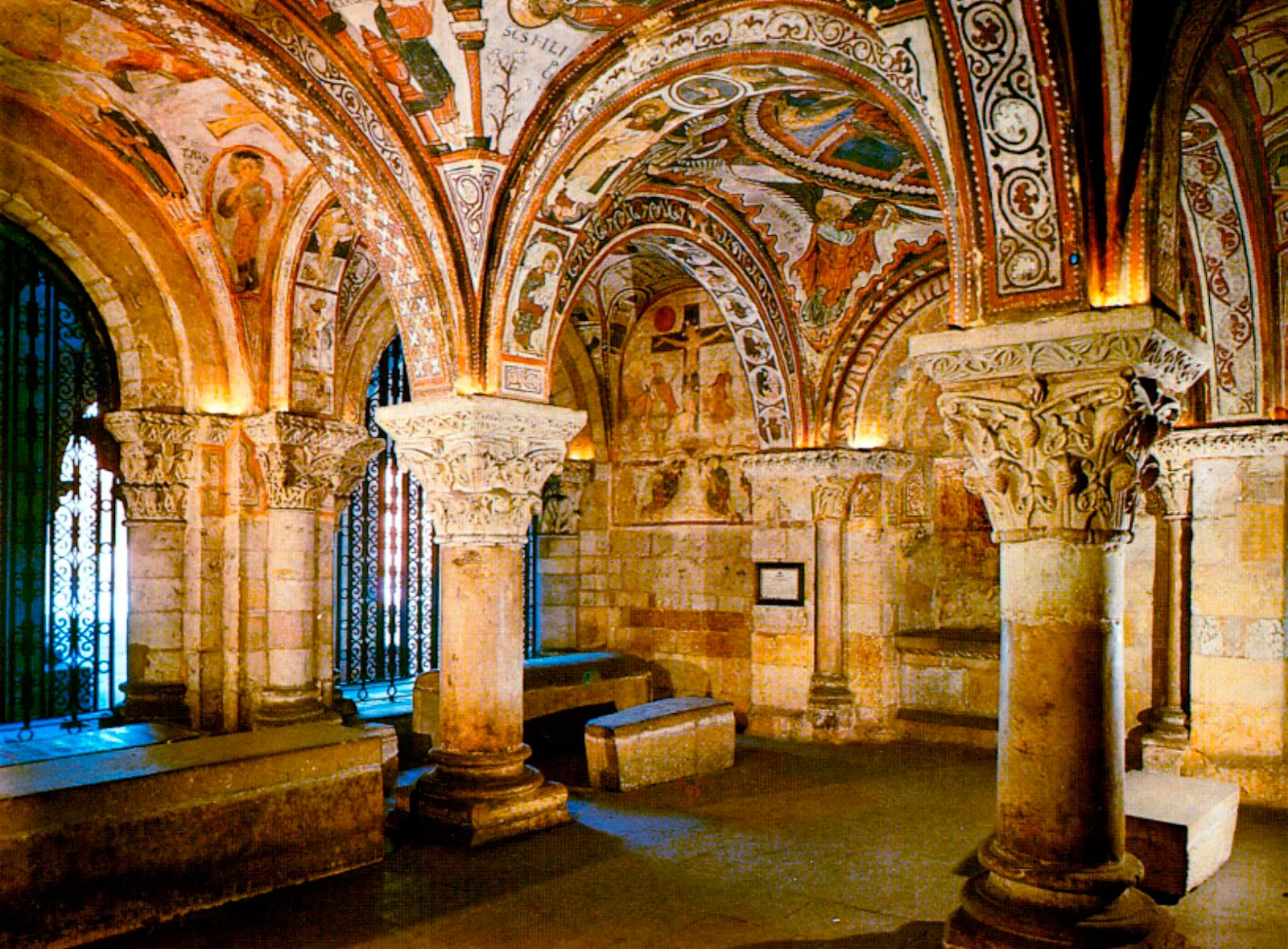
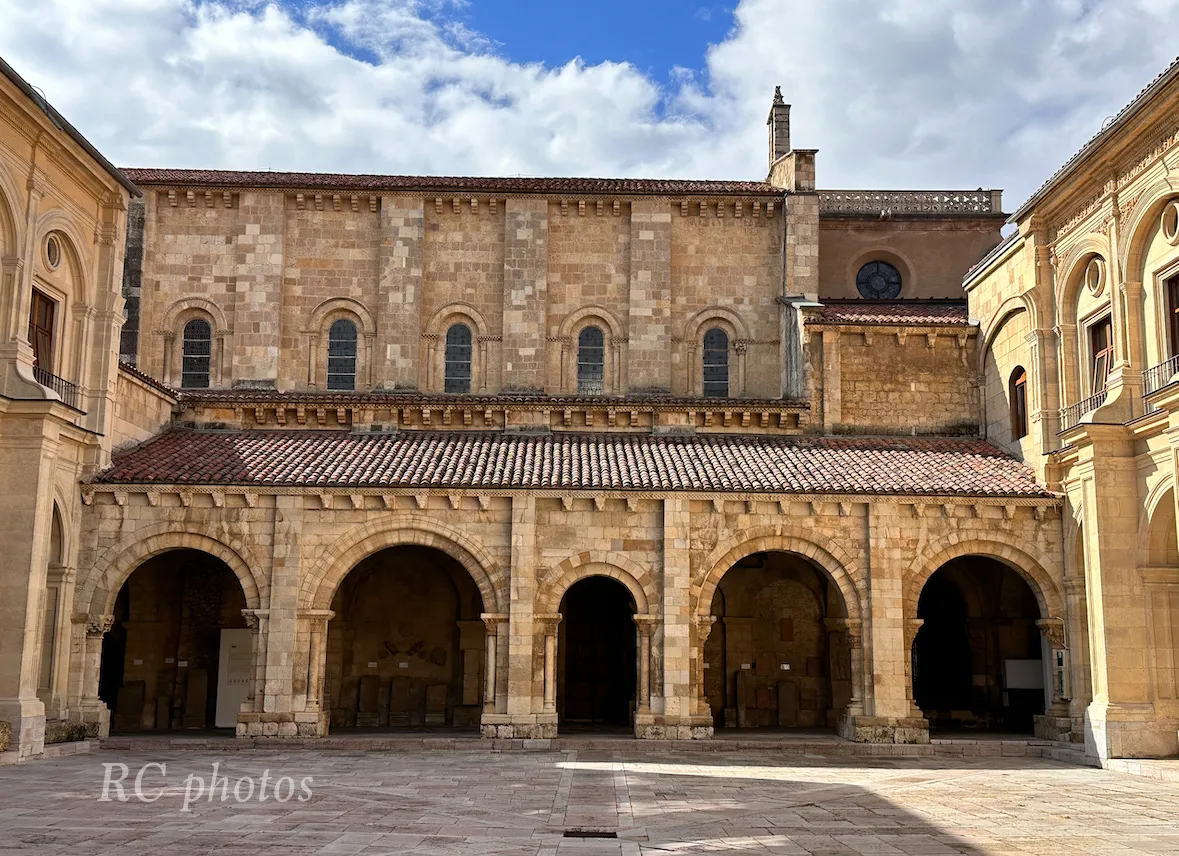
The Basílica de San Isidoro stands on Plaza San Isidoro at the edge of León's Old Town. It is a sandstone church founded in 1063, with Romanesque walls and later Gothic additions. Its main draw is the Royal Pantheon, where 12th-century frescoes cover the vaults and arches above marble columns and royal sarcophagi. The small Oriental and Biblical Museum and the collegiate library add art and history to the visit. Start with the frescoes and the carved doorway, then move on to the museum's relics.
A shrine founded in 1063
The basilica was founded in 1063 by Fernando I and Doña Sancha as a shrine for Saint Isidore of Seville, whose remains rest here. It was also built as a mausoleum for the royal family. The site once held a Roman temple dedicated to Mercury, the messenger god, and the church was rebuilt in the 12th century. Its sandstone walls were built into the side of the city wall.
Later Gothic additions joined the original Romanesque structure. Masses are still held here. In the early 19th century, Napoleon's troops sacked the church.
Inside the Royal Pantheon
The Royal Pantheon is the funeral chapel of the kings of León, and it is the part of the church most visitors come for. Royal sarcophagi rest beneath vaults and arches covered with colourful painted scenes from the Bible. Marble columns with carved capitals hold up the space. The 12th-century murals are preserved in an exceptional state.
Look for the agricultural calendar painted on one archway. It shows which farm task belongs to each month, a rare glimpse of everyday medieval life beside the royal scenes. The pantheon holds the remains of 23 kings of León, 12 princes and 9 counts.
The museum and the relics
The museum sits beside the church and holds a valuable collection of sacred art and historical objects. Its highlights include the Chalice of Doña Urraca, medieval manuscripts and the shrine of San Isidoro. A mummified finger of the saint is also among the treasures.
The collegiate library completes the set of rooms open to visitors.
The doorway and the walk from the centre
The Puerta del Cordero, the lamb's door, is carved with the sacrifice of Abraham. From the outside, the basilica looks more modest than León's cathedral, so the interior is where the surprise lies.
To reach the plaza, walk a few minutes from the Palacio de los Guzmanes. Pass Casa Botines on your left and walk up Calle Cid. The basilica is a short walk from the Barrio Romántico.
How a visit works
You can enter the basilica for free. Getting tickets in advance is recommended. Guided tours run in English, Spanish and French, and English tours cover the history of the basilica and its contents.
A QR code lets you listen to the history as you walk. Laminated sheets in several languages are also available. Photography is restricted inside, but the cloister is a permitted area for photos. The site has a wheelchair accessible entrance and restrooms.
Perguntas frequentes
Is there an entry fee?
You can enter the basilica for free. Getting tickets in advance is recommended for the visit.
Are English tours available?
Yes. Guided tours are offered in English, Spanish and French, and booking an English tour is recommended.
Can you take photos inside?
Photography is restricted inside the basilica. You can take photos in permitted areas such as the cloister.
Is the basilica wheelchair accessible?
Yes, the site has a wheelchair accessible entrance.