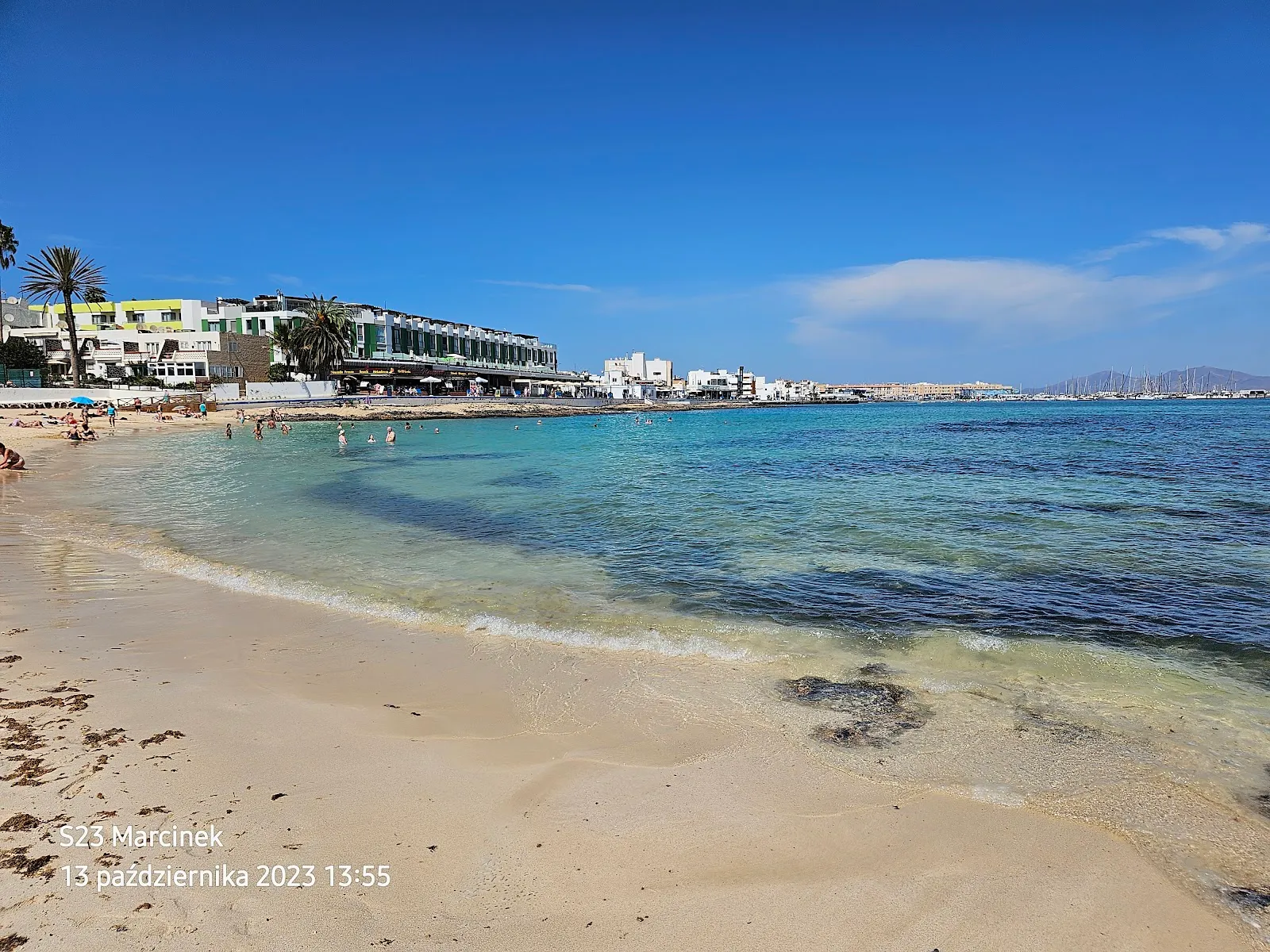
Parque Natural de Corralejo covers about 2,600 hectares on the northeast coast of Fuerteventura, close to the town of Corralejo. Its sand dunes rise above wide beaches of pale shell sand and clear, turquoise water. The dunes run for about 10 km along the coast and are shaped by the trade winds. Walk the trails for views over the dunes, watch the kitesurfers at Flag Beach, and look out for Isla de Lobos offshore. Visitors are asked to keep the park clean and take their litter home.
How the dunes formed
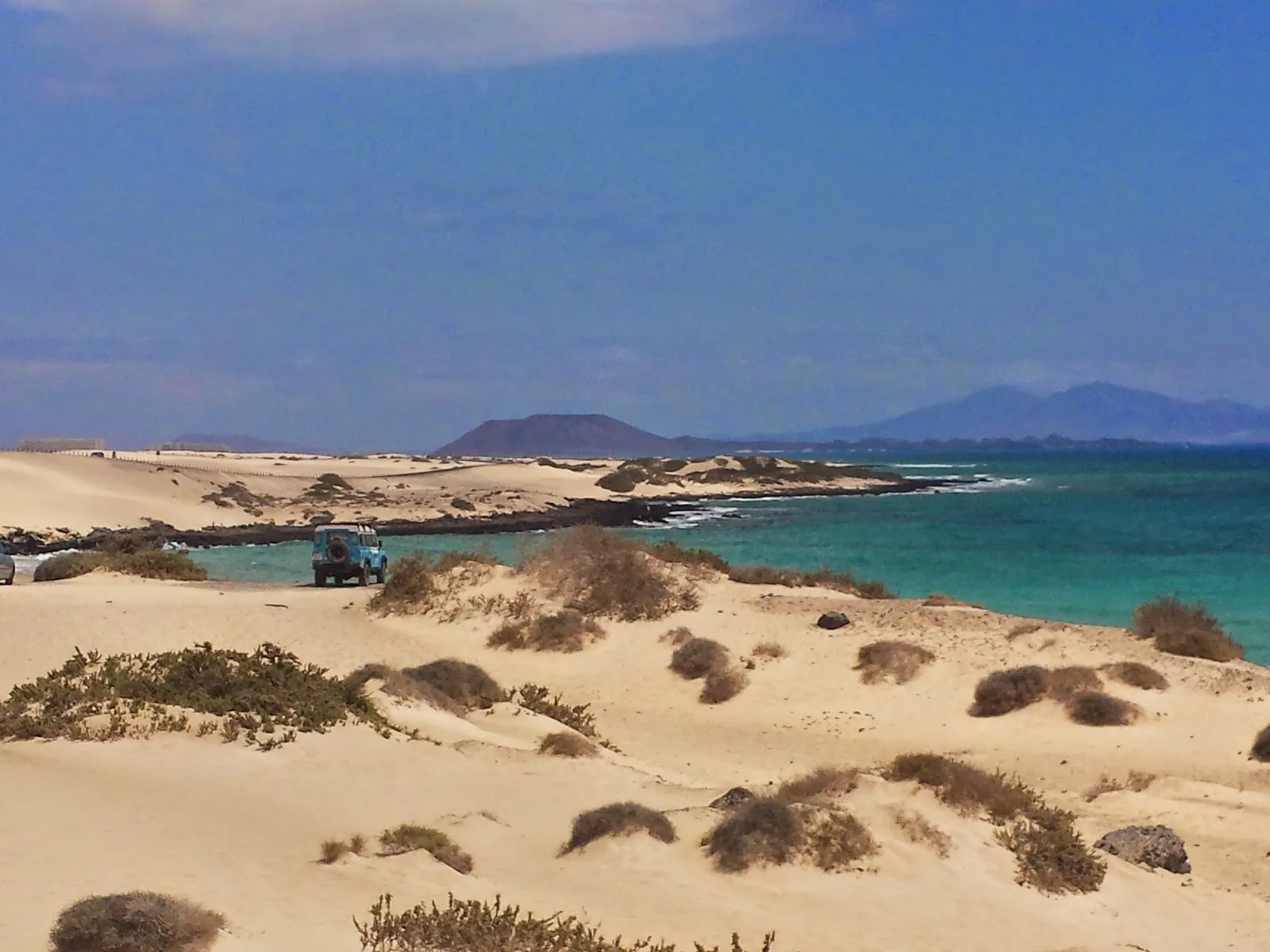
The dunes are built largely from the remains of sea life. Over time, the shells of molluscs and other marine organisms broke down into fine grains, and the sand gathered along the coast.
Sand blown over from the Sahara adds to the mix. Beneath the white sand lies a layer of volcanic rock, which is typical of the island. The trade winds keep shaping the dunes, which stretch about 10 km from Puerto Remedio to La Salina. The reserve holds the largest dunes in the Canary Islands.
Beaches and water
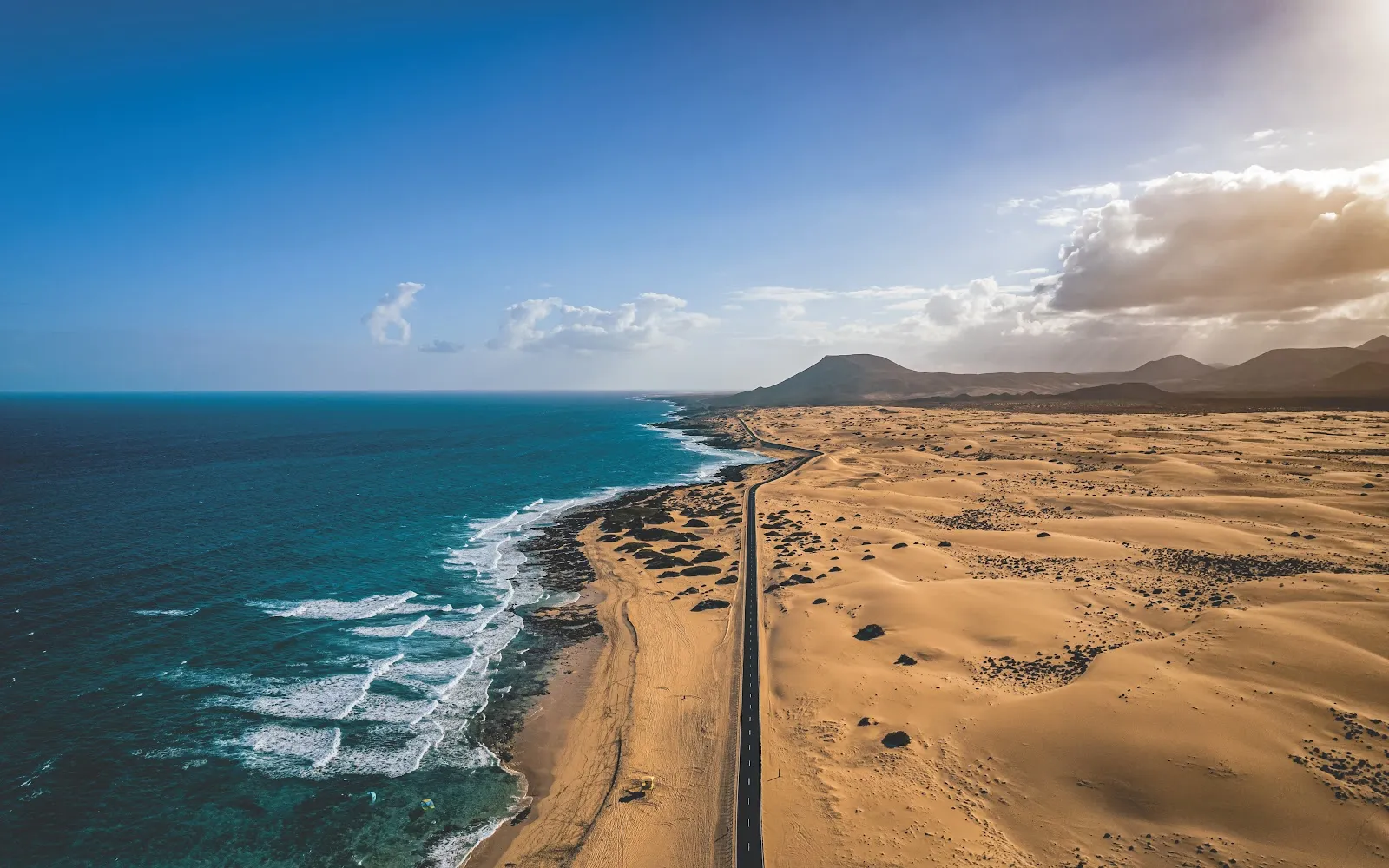
The beaches have coarse, pale sand made of crushed shell and clear, turquoise water. The strong wind along the coast makes them popular for surfing and kitesurfing.
Flag Beach is one of the most visited spots, with surfers and kitesurfers on the water most of the day. The beaches closer to the town of Corralejo have more services than the quieter stretches further away.
Views and walks
The FV-1 road runs through the dunes. A newer road now bypasses them, but the older route through the sand gives the widest views.
Nature trails lead through the dunes and offer panoramic views. From the higher ground you can see the mountains of Roja and Los Apartaderos, with dark volcanic peaks rising behind the white sand. Isla de Lobos is visible offshore from the coast.
Wildlife and protection
The park was established in 1990 to protect its natural habitat, plants and animals. It is home to a range of protected local plant and animal species, including birds.
Because the area is protected, leave plants, shells and sand where they are and take all litter home.
Facilities on site
The park has picnic tables, public restrooms and a playground, so it suits a long day out with children. Kid-friendly hiking routes are available.
Parking is available in both free and paid lots. Plan to spend time walking on the sand, which is slower than walking on a firm path.
Perguntas frequentes
Do I need to buy tickets in advance?
Getting tickets in advance is recommended, so book before you go.
How long do you need at Corralejo Natural Park?
Plan half a day to a full day. The dunes and beaches take time to explore on foot.
Is the park good for children?
Yes. It has a playground, picnic tables, public restrooms and kid-friendly hikes.
Is there parking?
There are both free and paid parking lots.
When is the best time to visit?
Early morning or late afternoon is best, when there are fewer crowds.