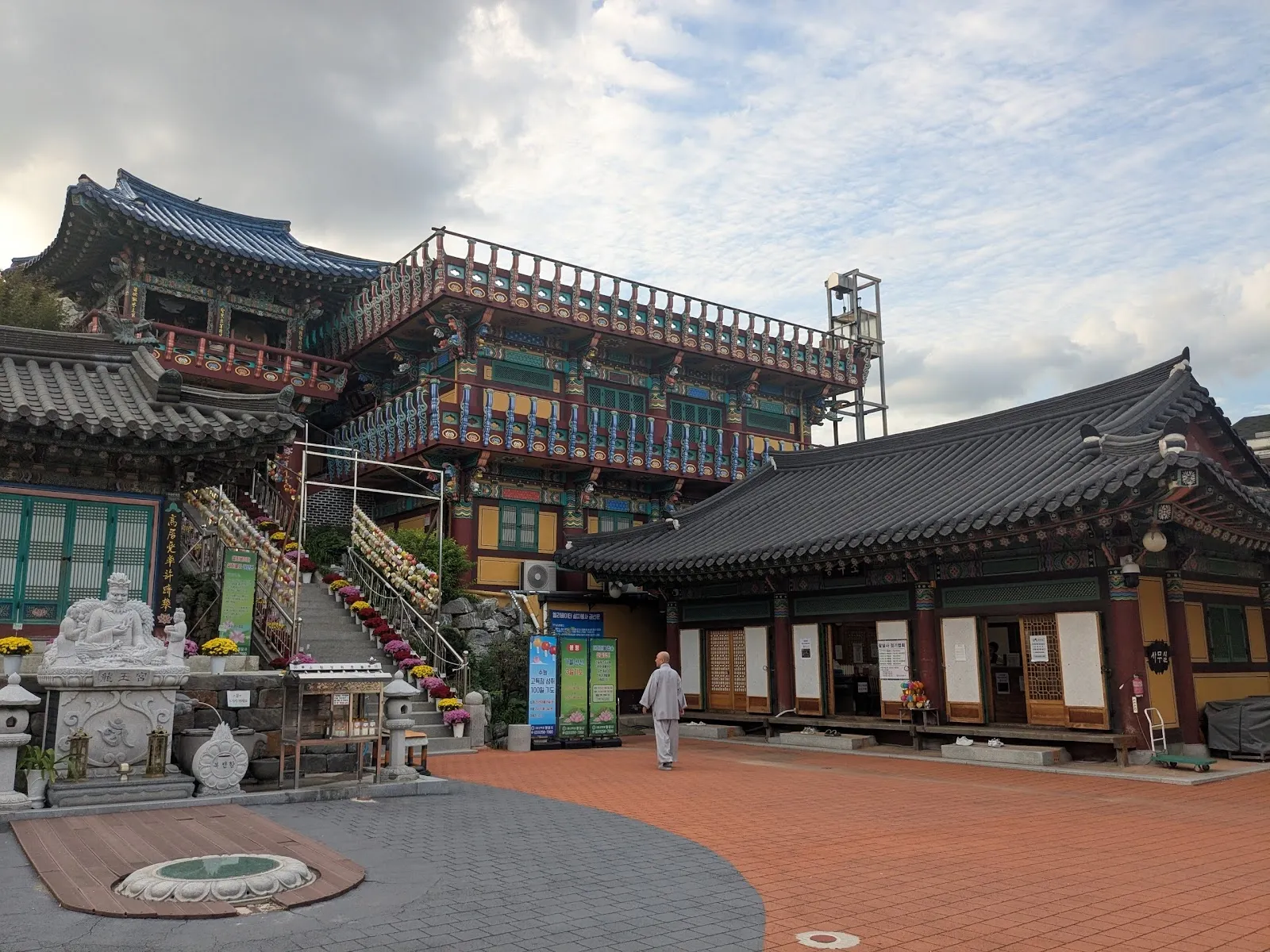
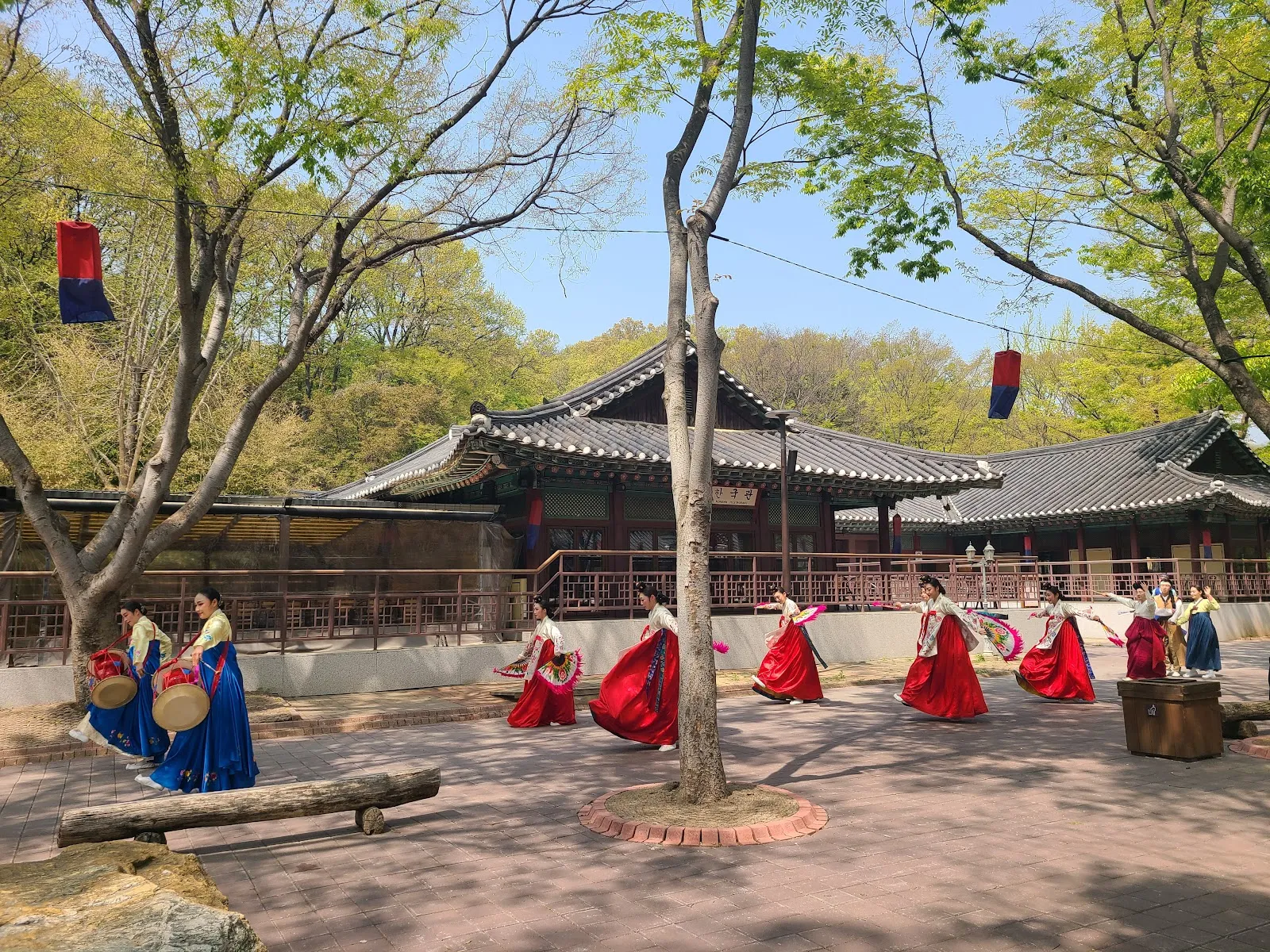
The Korean Folk Village in Yongin, Gyeonggi-do, rebuilds traditional Korean life from the Joseon period on one site. Houses from different regions and social classes stand along its lanes, with workshops and daily performances in between. Watch music, dance and martial arts shows, try pottery or see craftspeople make fans, masks and straw shoes, and eat local dishes at the food court. Rented hanbok and costumes let you join the scene.
Origins of the village
The Korean Folk Village, also known as Minsokchon, was established in 1974 as part of the government's effort to preserve and showcase traditional Korean culture. Historical villages from different regions of Korea were recreated and relocated to one location.
The idea came from a group of scholars and historians. They wanted a living museum where visitors could experience and learn about the way Koreans lived in the past, rather than only viewing objects behind glass.
Houses and everyday life
The village is an outdoor museum that recreates life during the Joseon Dynasty. The houses cover several social classes, so you can see the difference between a commoner's home and a grander residence. Traditional houses are called hanok, and many are furnished to show daily life.
One of the house tours includes a jail experience, which is a popular stop. You can also rent hanbok or local costumes on site and wear them while you walk the village.
Performances and crafts
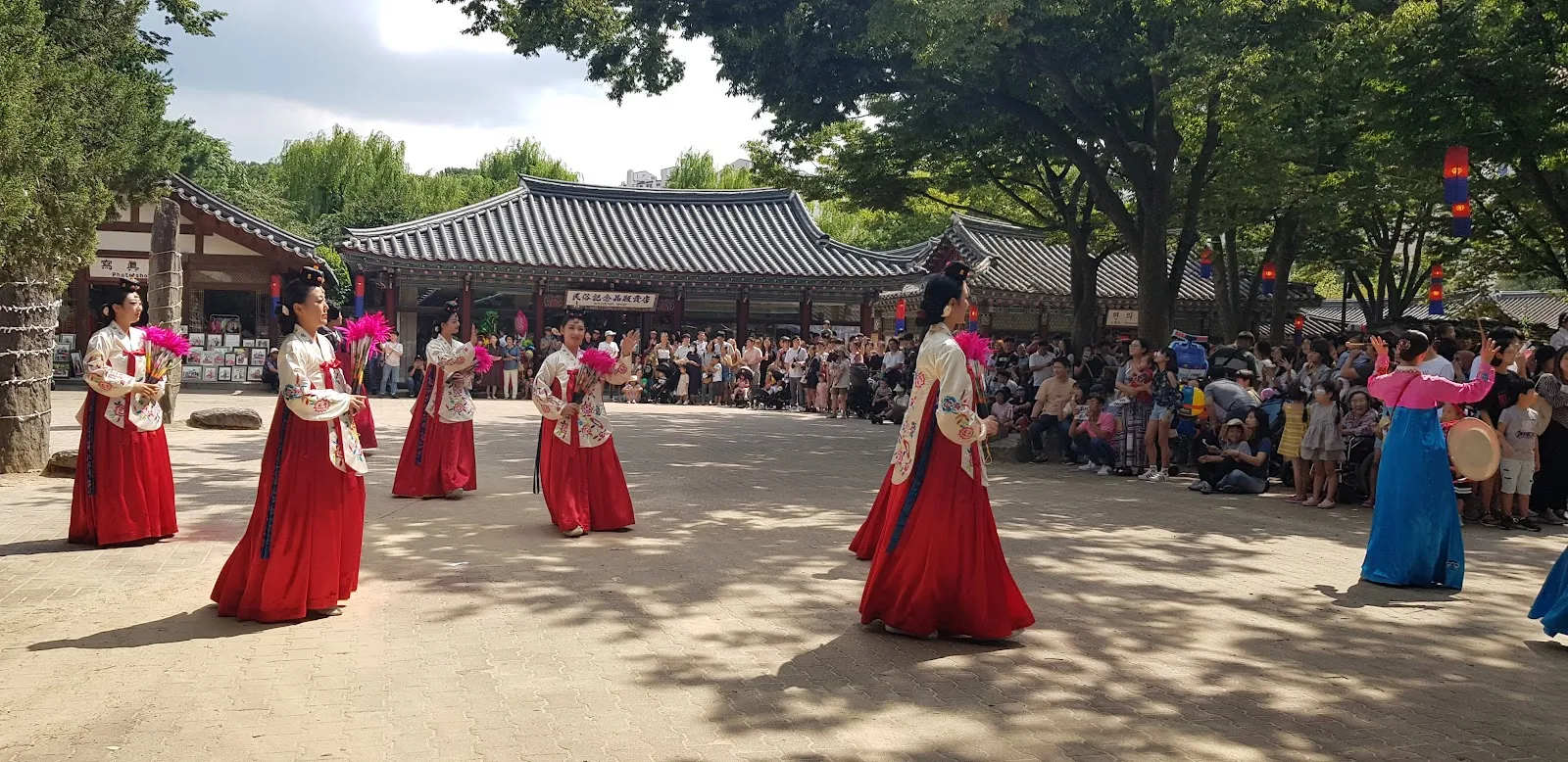
Cultural performances run throughout the day. The programme includes traditional music and dance, martial arts, including horseback martial arts, and tightrope walking. A folk parade combines comedic courtyard plays with traditional dance.
In the workshops, you can try pottery making. Staff and artisans also demonstrate traditional crafts, such as fans, masks and straw shoes. Watching the work up close is a good way to understand how these objects were made.
Food at the food court
The Jangteo Food Court serves many local dishes. To order, go to a ticket machine near the corner of the food court. Pay there, then collect your food from the stall you chose.
The menu is Korean. If you want to eat something lighter or packed, you can bring your own lunch, but the food court has enough options that many visitors buy there.
Rides, sledding and seasonal events
An amusement area sits alongside the village, with bumper cars, teacups and an oscillating ship ride. Around Halloween, haunted houses run with Joseon-era horror themes, and tickets for them can be bought in advance.
In winter, the sledding hills are an accessory facility to the village. They have three slopes: one for adults, about 140 metres long, one for children, about 60 metres long, and a snow square of about 20 metres for infants. A family park is also nearby. Night light shows are held at some times of the year.
Access and facilities
The entrance, restrooms, parking lot and seating are wheelchair accessible. Both a free and a paid parking lot are available.
The village is reachable from Seoul by public transport. Advance tickets are recommended, so decide your date before you travel.
Perguntas frequentes
Is there an entry fee?
Yes, entry is ticketed. Prices change with the season and promotions, so check the official website before you go.
Should I buy tickets in advance?
Yes, advance tickets are recommended. Buying online or at the entrance ticket machines helps you avoid queues, and weekends and holidays are the busiest times.
How long do you need?
Plan 2 to 3 hours to explore the whole village.
Is the village wheelchair accessible?
The entrance, restrooms, parking lot and seating are wheelchair accessible.
Can I wear a hanbok there?
Yes, you can rent hanbok or local costumes on site and wear them around the village.