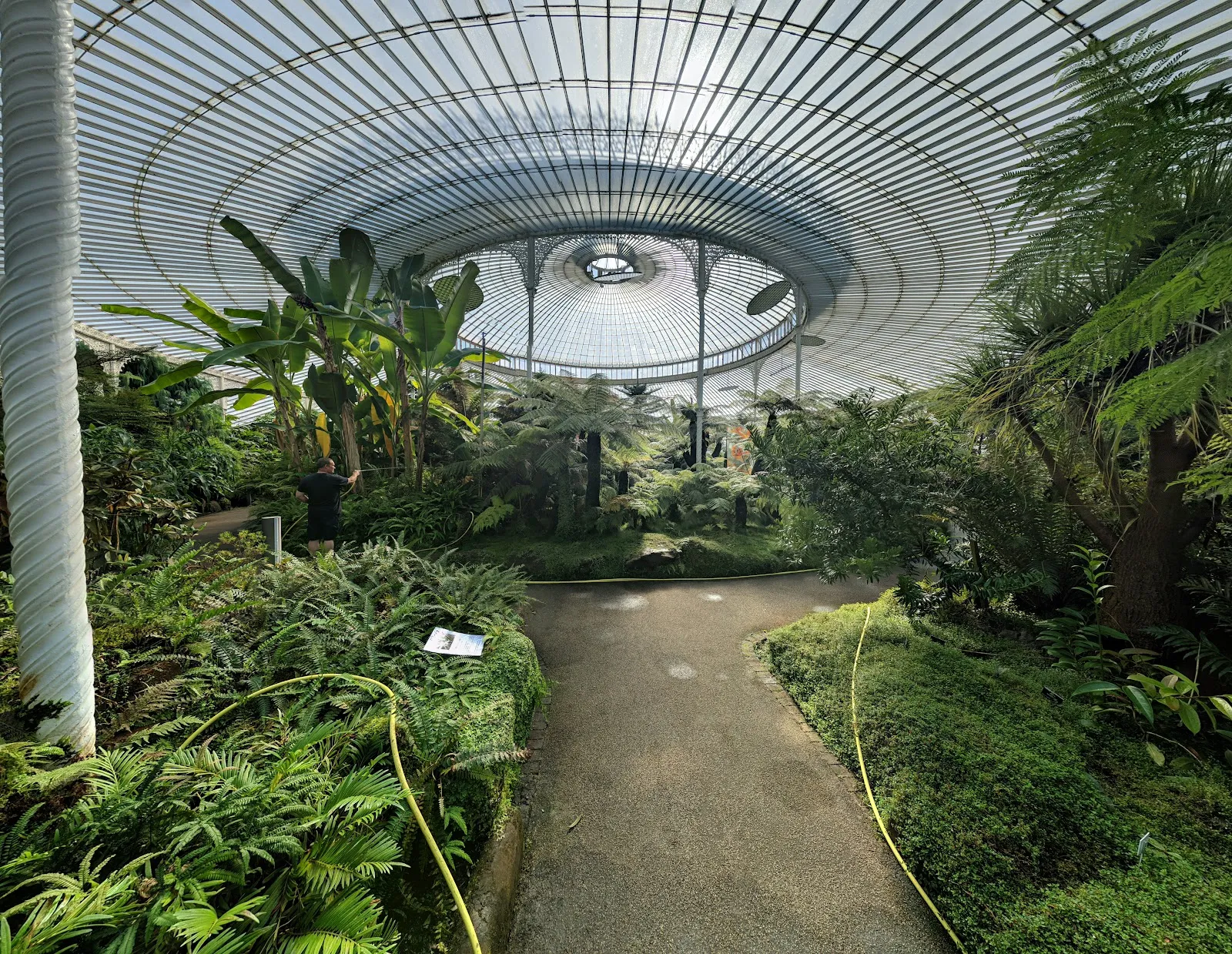
Glasgow Botanic Gardens is a free public garden in the city’s West End, beside the River Kelvin. Its paths pass lawns, flower beds, woodland and plant collections, while glasshouses shelter tropical and desert species, including orchids, ferns and cacti. The main draw is Kibble Palace, a Victorian glasshouse with exotic plants, statues and a pond. Come for a quiet walk, a picnic on a sunny day or a warm break among greenery when the weather turns damp. Guided tours are available, and a food and drink trailer offers a place to pause.
A garden shaped by Glasgow’s botanists
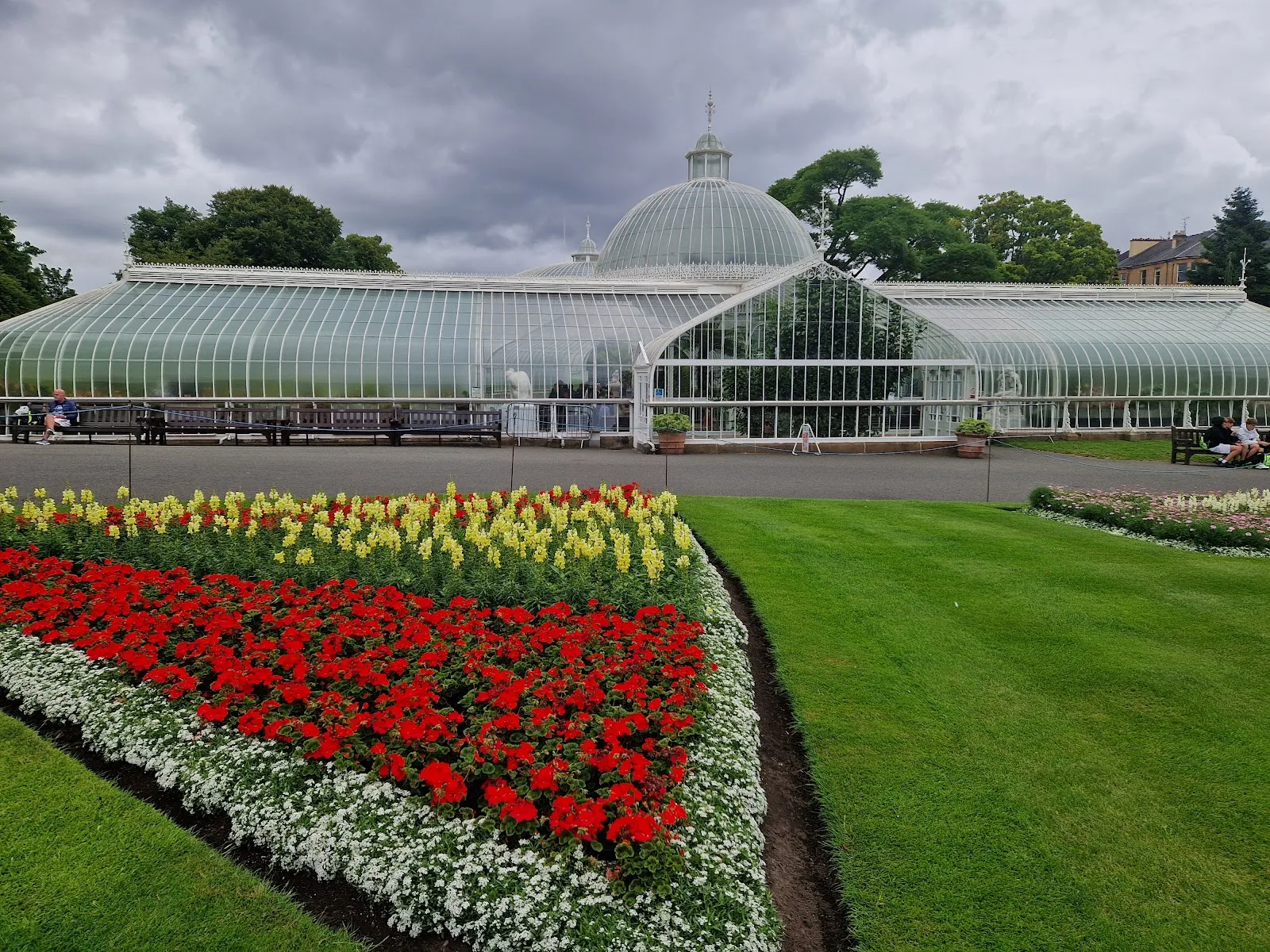
Glasgow Botanic Gardens began in 1817, founded by botanist Thomas Hopkirk. The original garden was on Sauchiehall Street before moving to the banks of the River Kelvin in the West End. The gardens were established to supply the University of Glasgow, and botanists including William Jackson Hooker helped develop the plant collections.
Today, the grounds bring together outdoor planting, woodland and glasshouses. You can follow paths through lawns and flower beds, or take a riverside walk. The setting gives you room to wander without leaving the city, and the glasshouses provide a sheltered stop in wet or cold weather.
Kibble Palace and the glasshouses
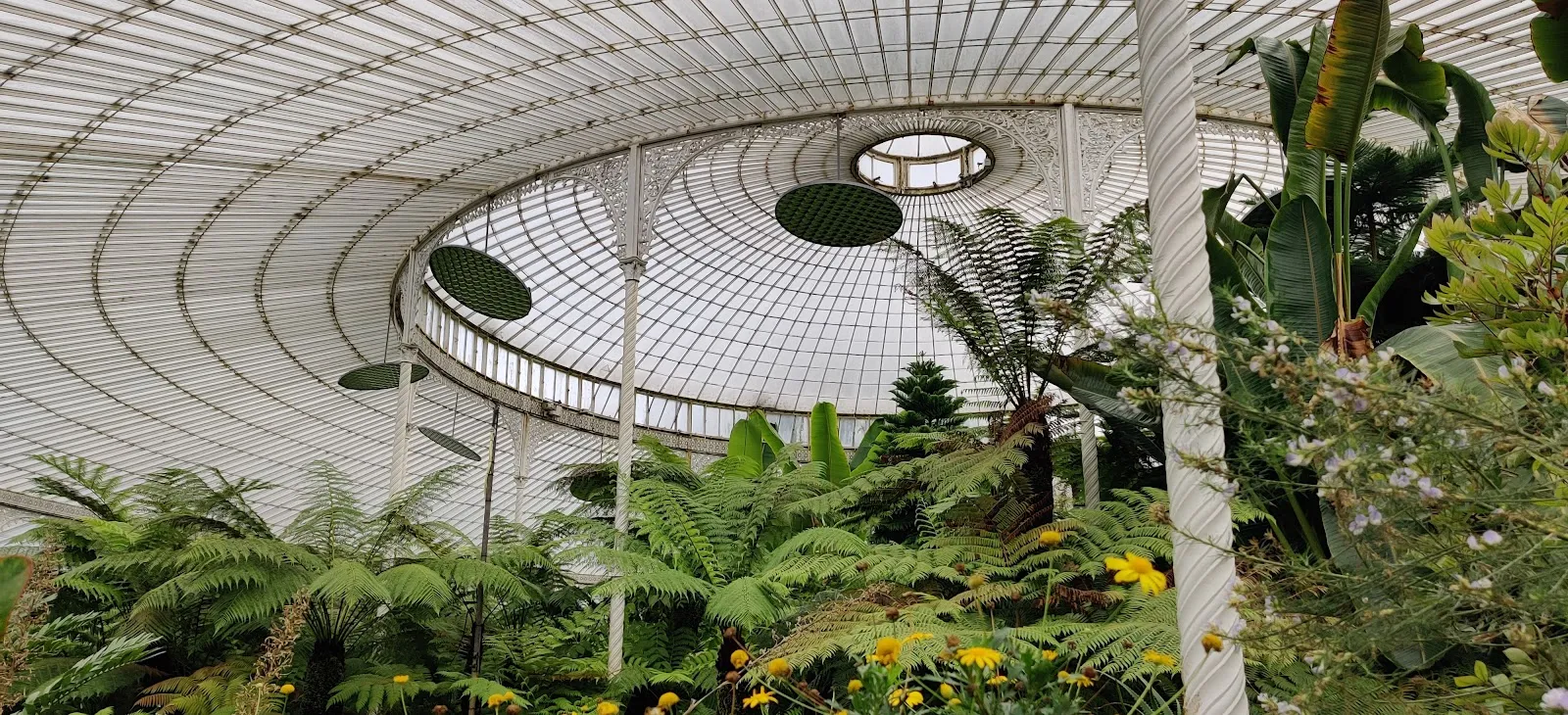
Kibble Palace is the garden’s best-known glasshouse. Its domed frame of glass and wrought iron dates to 1873. John Kibble first had the structure at his home on Loch Long; it was later moved to the Botanic Gardens. Inside, look for tropical plants, statues and a pond, as well as the national collection of tree ferns. Some of the ferns are more than 120 years old.
Other glasshouses hold plants from tropical rainforests and arid regions. Look for orchids, palms, cacti and succulents, with carnivorous plants also represented in the collections. The range gives you a reason to step inside in any season, not only when the outdoor beds are in flower.
What to look for outdoors
Outside the glasshouses, planting changes through the seasons. Spring and summer bring displays that include crocuses, daffodils, azaleas, camellias, rhododendrons and tulips. The gardens also have a rose garden, a herb garden and an edible plant garden. Sculptures add another layer to a walk through the grounds.
For a slower visit, find a place on the lawns for a picnic when the weather allows, or follow the paths towards the River Kelvin. Guided tours are available if you want more context on the gardens’ history and collections. A food and drink trailer provides a refreshment stop during your visit.
Perguntas frequentes
Is entry to Glasgow Botanic Gardens free?
Yes. Admission to the gardens is free. Donations are accepted to support their upkeep.
What is Kibble Palace?
Kibble Palace is a Victorian glasshouse built in 1873. It contains exotic plants, statues, a pond and the national collection of tree ferns.
How long should I spend at Glasgow Botanic Gardens?
Allow about 1 to 2 hours to explore the gardens and glasshouses. You can stay longer for a picnic or a more leisurely walk.
When is a quieter time to visit?
Weekdays and off-peak seasons such as winter are suggested for a quieter visit.