
On County Antrim’s north coast, the Giant’s Causeway is a shoreline of tightly packed basalt columns, many with six-sided tops. Walk among the stones and look back to the cliffs and open sea; the rock patterns are the result of ancient volcanic activity, while local folklore credits the giant Finn McCool with building the causeway. Walking paths lead along the coast, including routes to the cliff tops and the Organ, a formation that resembles a row of stone pipes. Allow time for the steep walk between the visitor facilities and the shore, or use the shuttle.
How the basalt columns formed
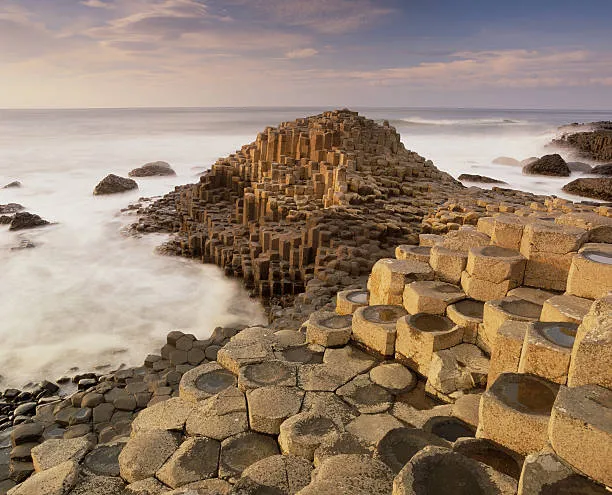
The Causeway’s closely fitted columns are made of basalt, formed by volcanic activity around 50 to 60 million years ago. Molten rock pushed through layers of chalk, then cooled and was shaped over time by movement in the earth and erosion. The result is a stretch of coastline patterned with regular, often six-sided stone tops.
The columns meet the sea at the foot of steep cliffs, where the geometry stands out against the irregular shoreline. Their dark grey and black tones, with patches of brown and rusty orange, give the rocks a range of colour. Take time to look at the shapes underfoot as well as the wider coastal views; the stones are the main event, but the cliffs and sea are part of the setting.
The paths and formations
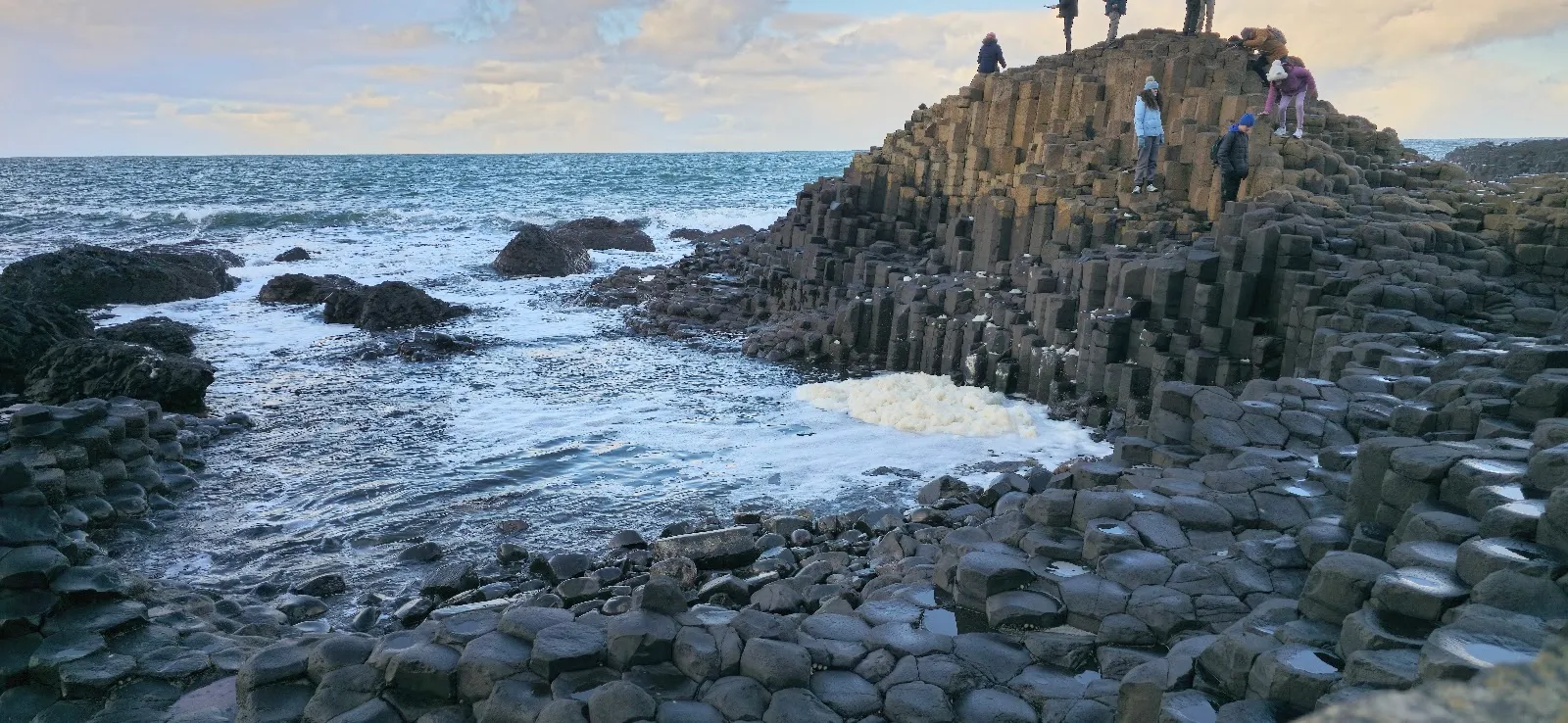
Walking routes connect the shore with higher ground and viewpoints along the coast. The Blue Trail runs down to the shoreline, while the Red Trail follows the cliff tops. The Shepherd’s Steps link the two levels, but the climb is steep and takes effort. If you prefer a shorter outing, you can focus on the Causeway itself; for a longer walk, continue towards the Organ, a striking formation whose upright columns resemble a set of pipes.
The route down from the visitor facilities to the rocks is also steep. A shuttle bus runs up and down the hill for people who would rather avoid that walk or need help with the climb. The paths are maintained, but the terrain and steps mean that the full coastal routes are not suited to everyone. Give yourself time to pause at viewpoints and take photographs rather than treating the shore as a quick stop.
The story of Finn McCool
Local folklore gives the rock formation a human-scale story. Finn McCool, also known as Fionn MacCumhaill, is said to have built the causeway as a path across the sea to Scotland, where he planned to face a rival giant. The tale offers a different way to read the stones: as a giant’s stepping stones reaching into the water.
The legend sits alongside the geological explanation, not in place of it. The visitor experience explains both the science behind the basalt and the traditional story. Learning about each gives context to the landscape before or after walking among the columns.
Planning time on the coast
The visitor facilities are above the shore, so plan for a descent and return journey as well as time at the rocks. Walking the routes and taking in the views can fill several hours, especially if you combine the shoreline and cliff-top paths. Arriving early is a practical choice if you want to explore with fewer people around.
Book tickets in advance, as recommended for the site. If the steep walk is a concern, use the shuttle; the fare is £1 each way. The Causeway is a natural coastal site, so leave time to move at your own pace between the formations, the viewpoints and the path back uphill.
Perguntas frequentes
How were the Giant’s Causeway columns formed?
They are basalt columns formed by ancient volcanic activity. The geological process began around 50 to 60 million years ago, and erosion helped shape the coastline.
What is the Finn McCool legend?
In local folklore, the giant Finn McCool built the causeway as a route to Scotland to confront another giant.
How long should I allow for a visit?
Allow 2 to 3 hours to see the shore and walk some of the paths. A longer coastal hike can take more time.
Is there a shuttle to the shore?
A shuttle runs up and down the hill between the visitor facilities and the shore. The fare is £1 each way.


