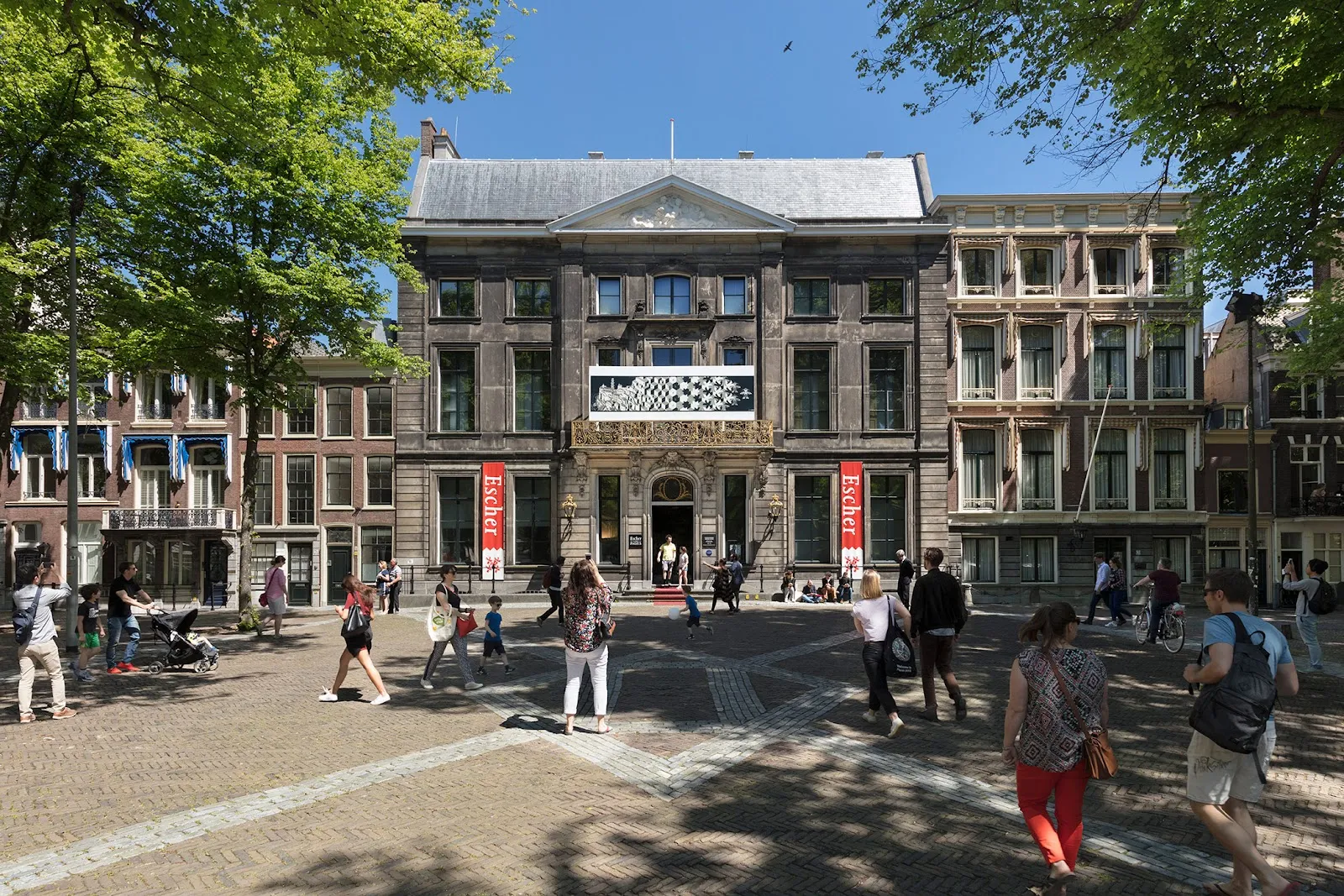
Escher in the Palace is a museum on Lange Voorhout in The Hague, set in a palace built in 1764 that was once a winter residence of Queen Emma. Its permanent exhibition brings together prints, woodcuts and lithographs by M.C. Escher, the Dutch artist known for staircases that seem to go nowhere and images that play with perspective. Upstairs, interactive rooms let you test optical illusions yourself. Look up at the crystal chandeliers, each one different and designed by a contemporary artist, and take time with the building's own history.
From royal winter residence to museum
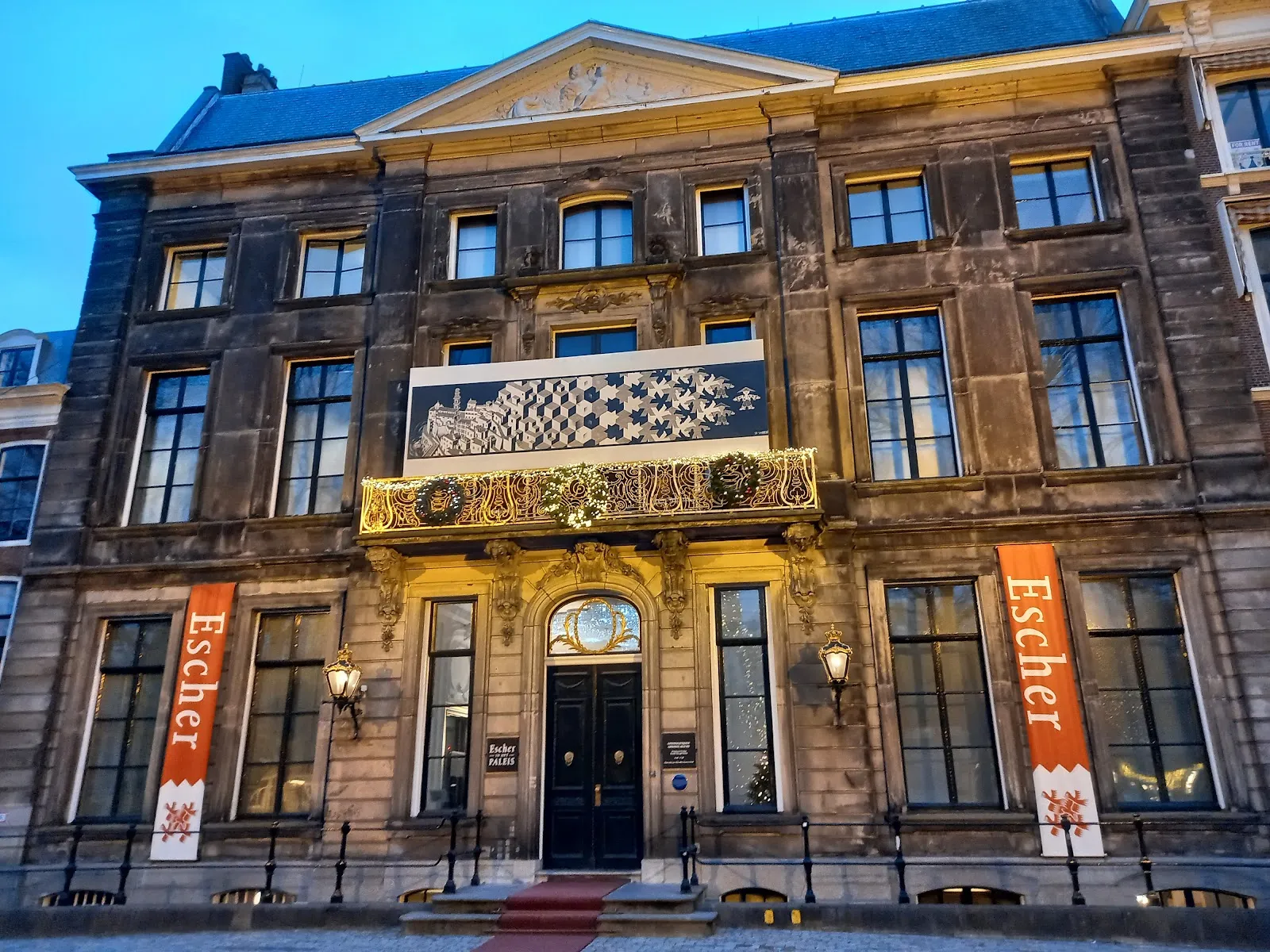
The palace on Lange Voorhout dates from 1764. It was first known as the Lange Voorhout Palace and was the residence of Caroline of Nassau, daughter of Prince Willem IV. Mozart performed for her here in 1765. Queen Emma later stayed in the building during the winter, until 1934.
Since the early 2000s, the palace has held a permanent exhibition devoted to M.C. Escher. The rooms keep their old character, with elegant interiors and chandeliers, so the setting and the artwork play off each other. The square outside is leafy and lined with grand houses, and the museum is a short walk from the Mauritshuis and the Binnenhof.
What the permanent exhibition covers
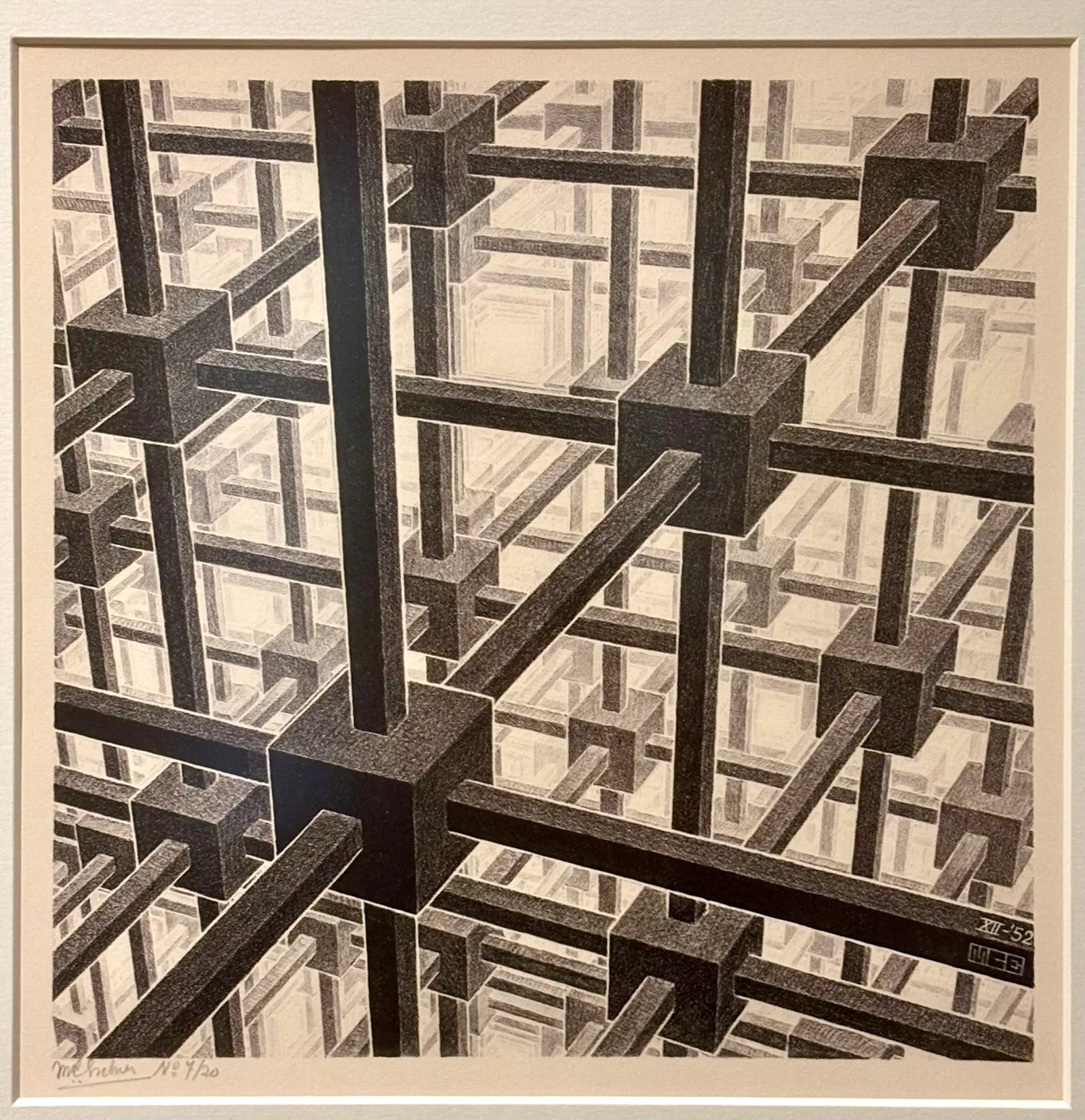
Maurits Cornelis Escher lived from 1898 to 1972. The exhibition holds more than a hundred of his works, along with notes, letters and photographs. The prints and woodcuts run from his early realistic work to his later, more fantastical images, so you can follow how his style changed.
Escher's tessellations are a central theme. Visitors have noted how strongly they reflect his interest in Islamic art. Among the large works is Metamorphosis III, a print about seven metres long that is one of the highlights of the collection.
A surround projection shows his tessellations in motion. In one room, you walk through a doorway and the lines on the walls seem to put you inside a cube. Temporary shows have also featured other artists, such as British artist Anne Desmet, alongside Escher.
The interactive rooms and chandeliers
The top floor is the most playful part of the visit. The perspective room lets small visitors appear large and large visitors appear small, and there are other optical illusions to test. Children and adults both spend time here, and it is one of the reasons families choose this museum.
The chandeliers are one of the building's signature features. They are spread through the museum, and each was designed by a contemporary artist. Some carry symbolism. A chandelier with a Masonic motif hangs above the entrance, so look up as you arrive.
Planning the visit
Admission is charged. One visitor paid around 15 euros for an adult ticket and around 10 euros for a child, with children aged six and under entering free. Prices can change, so check the official website before you go.
The building has a cafe, a restaurant and a gift shop. It has a wheelchair accessible entrance, elevator, restroom and parking lot. Live performances and private events are sometimes held in the building. A family of five spent about 1.5 hours here, which is a reasonable guide for most visitors.
Perguntas frequentes
Is there an entry fee?
Yes, admission is charged. One visitor reported around 15 euros for adults and 10 euros for children, with children aged six and under admitted free. Check the official website for current prices.
How long do you need?
One visitor spent about 1.5 hours here with a family of five. Allow 1 to 1.5 hours for a typical visit.
Can you take photos inside?
Yes, photography is allowed, but flash is not. Photos from the interactive area can be printed for a fee.
Is the museum suitable for children and wheelchair users?
Yes. Visitors describe it as family-friendly, and the interactive rooms suit children. The museum has a wheelchair accessible entrance, elevator and restroom.