
Kōfuku-ji is a Buddhist temple in Nara, founded in 669 in Kyoto and moved to Nara in 710. For centuries it was the family temple of the Fujiwara clan. Its five-story pagoda, about 50 meters tall, is the second tallest wooden pagoda in Japan and a symbol of the city. The temple grounds are free to walk, and the halls hold National Treasures and Buddhist art. The temple sits at the edge of Nara Park, so the deer are close by.
From Kyoto to Nara
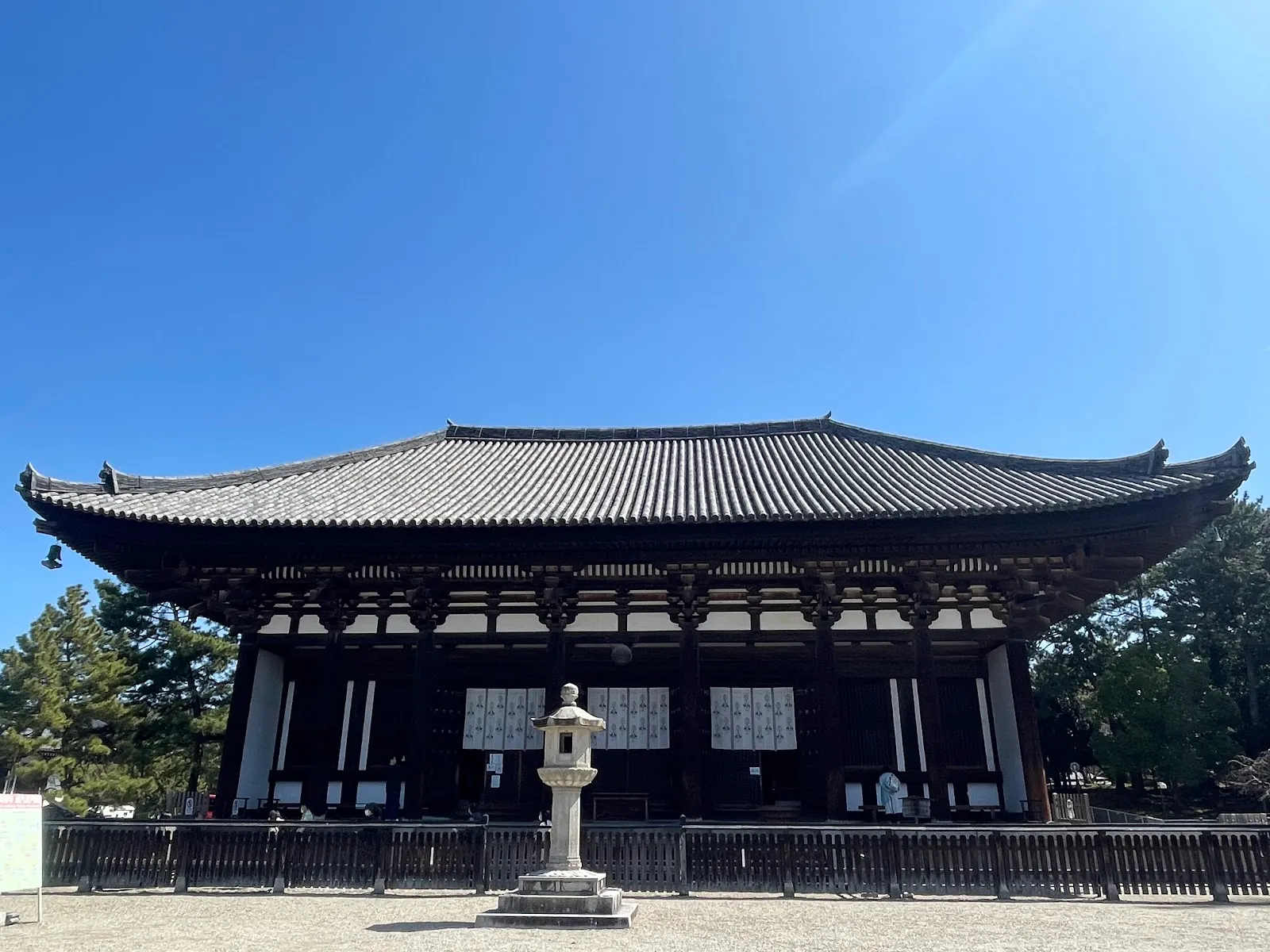
The temple was first established in Kyoto in 669. When the capital moved to Nara in 710, the temple moved with it. It is one of the Seven Great Temples of Ancient Nara, and it is now the head temple of the Hossō school of Buddhism in Japan.
For much of the Nara and Heian periods, Kōfuku-ji was the family temple of the Fujiwara clan, a noble family that dominated the imperial court. The temple had close ties to the clan and was at times involved in politics and military decisions. At its height it had more than 150 buildings. Over the centuries, many were lost to fires and wars, but a number of halls and treasures remain.
The five-story pagoda
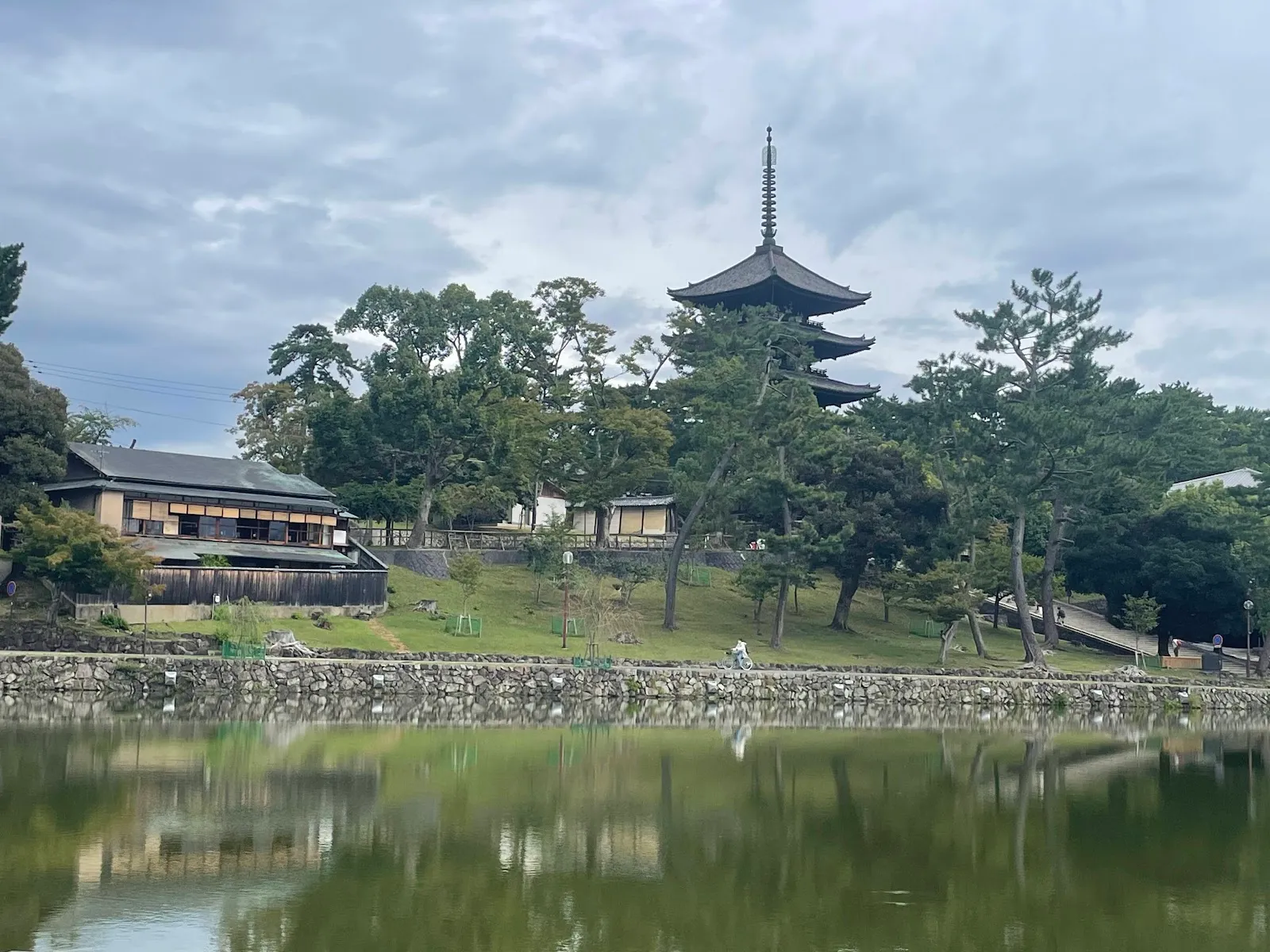
The pagoda stands about 50 meters tall and is the second tallest wooden pagoda in Japan. It is about seven meters shorter than the pagoda at Tōji in Kyoto. The first pagoda on the site was built in 730, and the present one was rebuilt in 1426.
Despite its height, the pagoda looks low and broad. Its wide, curving roofs spread out at each level, and locals call it Gojū-no-tō. The pagoda is one of the clearest landmarks in Nara, visible from the street as you walk up Noborioji. Renovation work on the pagoda is scheduled to run until 2031, so check the temple's website for the current state of the site.
Halls and treasures
The Eastern Golden Hall, known as the tōkondō, and the five-story pagoda are both National Treasures of Japan. The Middle Golden Hall has been newly reconstructed, and some other halls have been under construction in recent visits.
The treasure hall, often called the National Treasure Museum, houses Buddhist sculptures and artifacts, including ancient statues and manuscripts. Visitors who want to see the statues up close should go inside the paid halls. The grounds themselves are open and free to walk, which is enough for many visitors to see the main structures from outside.
The deer of Nara Park
The deer around the temple belong to a breed found only in Japan. According to legend, the deity Takemikazuchi rode into Nara on a deer from Kashima Shrine, which is why the deer are treated as messengers of the gods. For centuries, killing a deer was a capital crime, a rule that lasted until 1637. After the Second World War, the deer were officially named a National Treasure.
In practice, the deer approach visitors for food. Deer biscuits sold in the park are the recommended food, and other snacks are not suitable for them. Males can be aggressive during the mating season, so keep a distance and do not block their path.
Getting there and planning the visit
Kōfuku-ji is about five minutes on foot from Kintetsu Nara Station. It is also a short walk from the Nara National Museum, so the two can be visited together. The temple is close to Todai-ji, Kasuga Taisha and the main part of Nara Park, which makes it easy to link the sights in one day.
The grounds have no closing hours, so you can end here on your way back to the station. Advance tickets for the inner halls are recommended. Photography inside the buildings is not allowed, so look for signs before you take out your camera. In the evening, the pagoda is lit, and you can photograph its reflection in the water.
Perguntas frequentes
Is there an entry fee for Kōfuku-ji?
You can walk around the open grounds for free. The inner halls and treasure hall charge an admission fee.
Can you feed the deer at Kōfuku-ji?
Yes. Deer biscuits sold in the park are the recommended food for the deer. Other food is not suitable for them.
Is the pagoda open or under renovation?
Renovation work on the pagoda is scheduled to run until 2031. Check the temple's website before you go to see what is open.
How do I get to Kōfuku-ji from Nara Station?
The temple is about five minutes on foot from Kintetsu Nara Station.
Are photos allowed inside the temple buildings?
Photography inside the buildings is not allowed. Look for signs on arrival.


