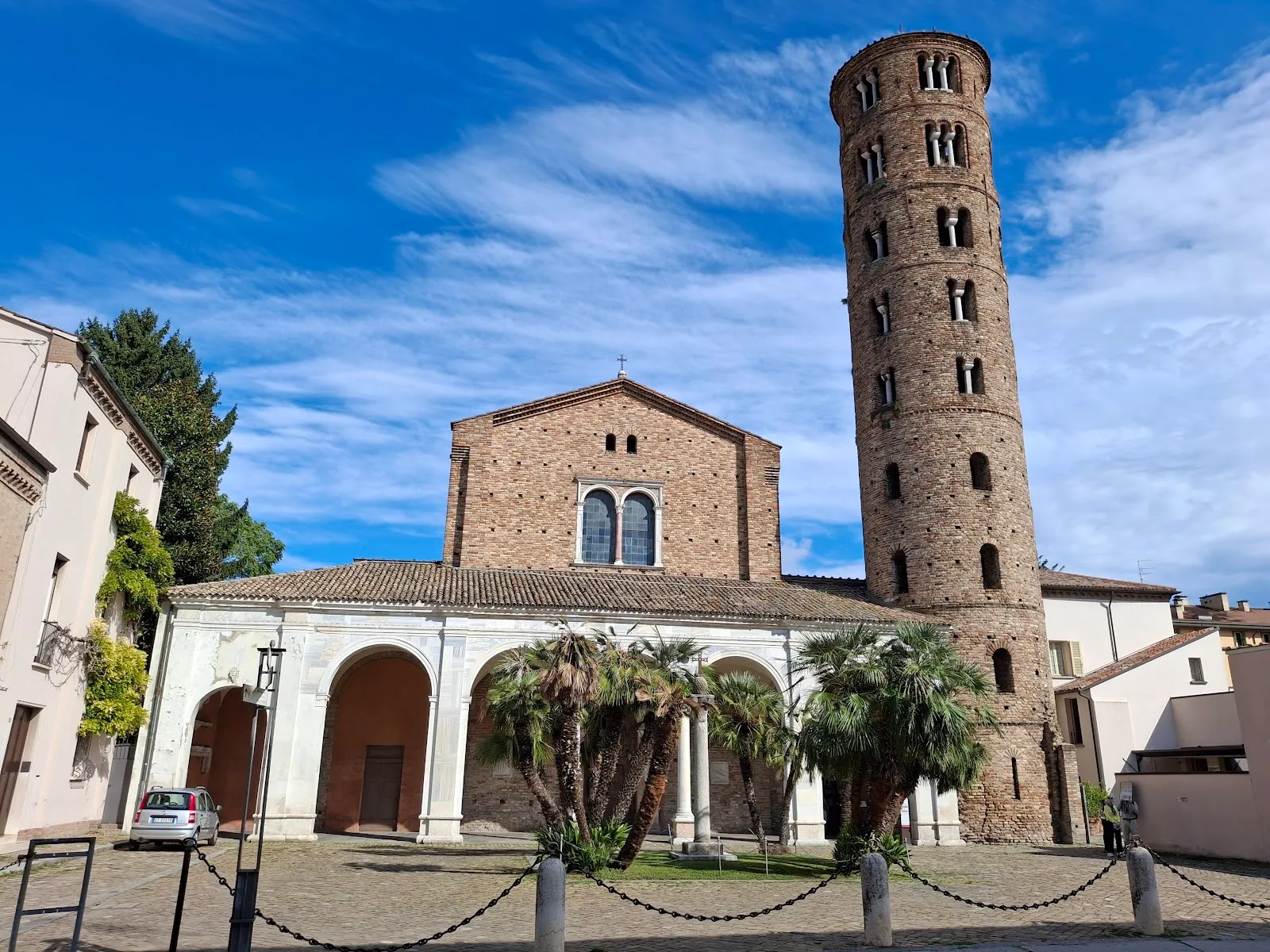
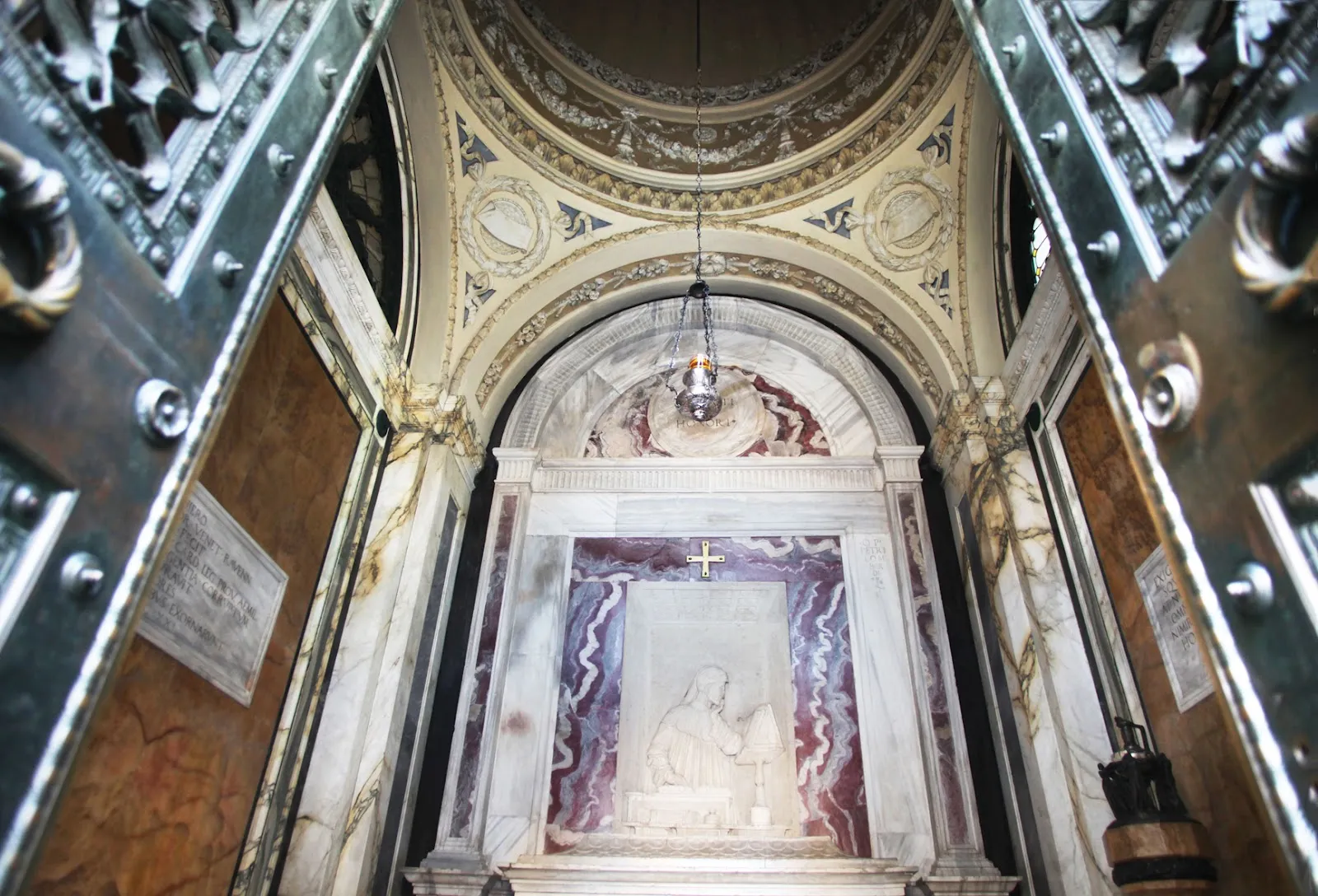
The Basilica of San Vitale is a sixth-century church in Ravenna, known for its octagonal plan and Byzantine mosaics. Its plain brick exterior gives way to a richly decorated interior, where scenes from the Old Testament sit alongside the famous panels of Emperor Justinian and Empress Theodora with their courts. Look closely around the altar, where the mosaics follow the curved arches and columns. San Vitale is part of Ravenna’s UNESCO-listed early Christian monuments and stands beside the Mausoleum of Galla Placidia.
A sixth-century church in Ravenna
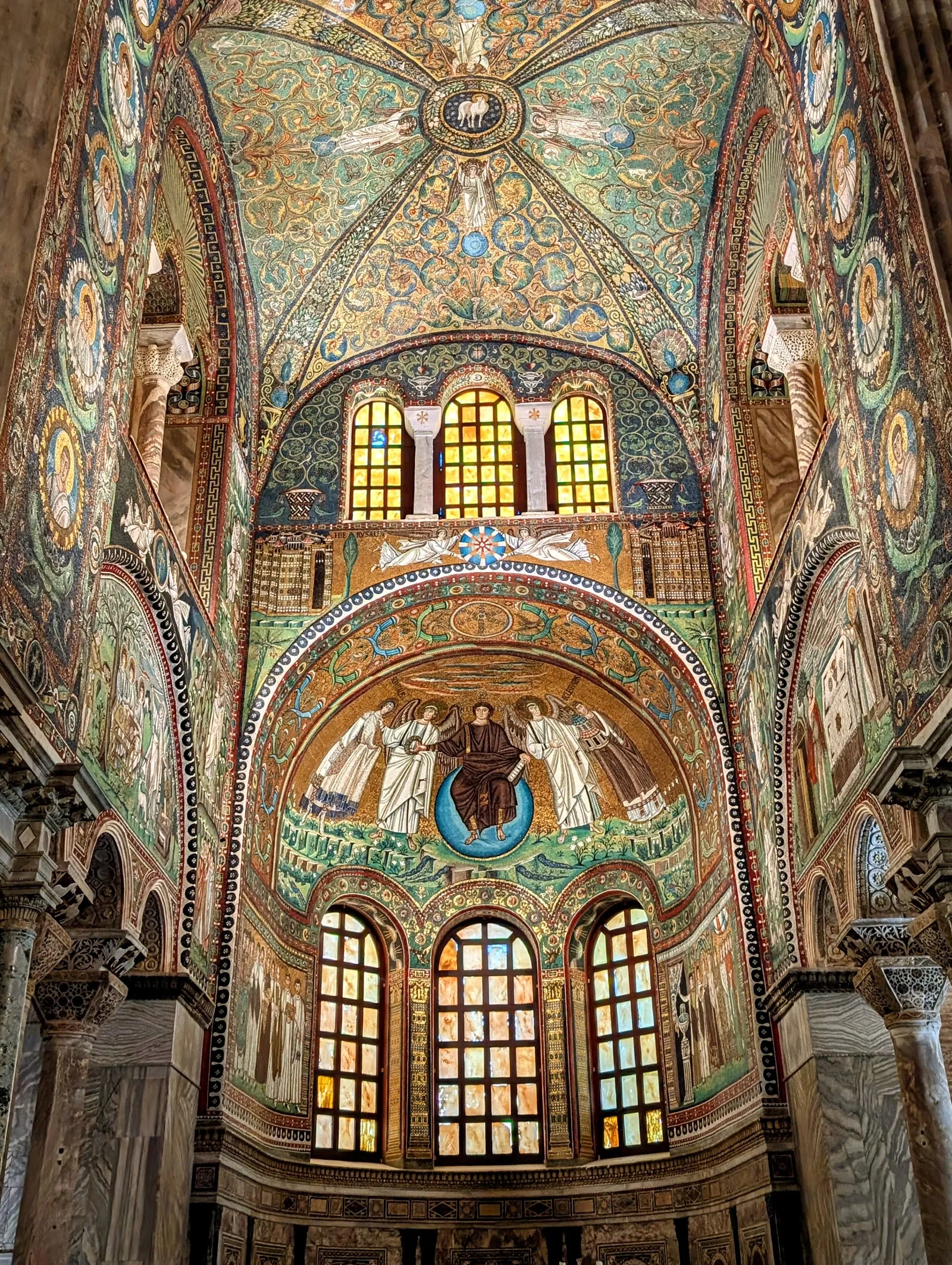
San Vitale was built in the sixth century and consecrated in 547. Its construction began under Bishop Ecclesius, during the Ostrogothic period, and the church was completed after Ravenna came under Byzantine rule. The building belongs to the UNESCO-listed group of eight early Christian monuments in the city.
The basilica’s octagonal plan sets it apart from the cross-shaped layout common to many churches. Its design brings together Roman and Byzantine elements. From outside, the exposed brick gives the building a restrained appearance; inside, marble and mosaics shape a more elaborate space.
Mosaics around the altar
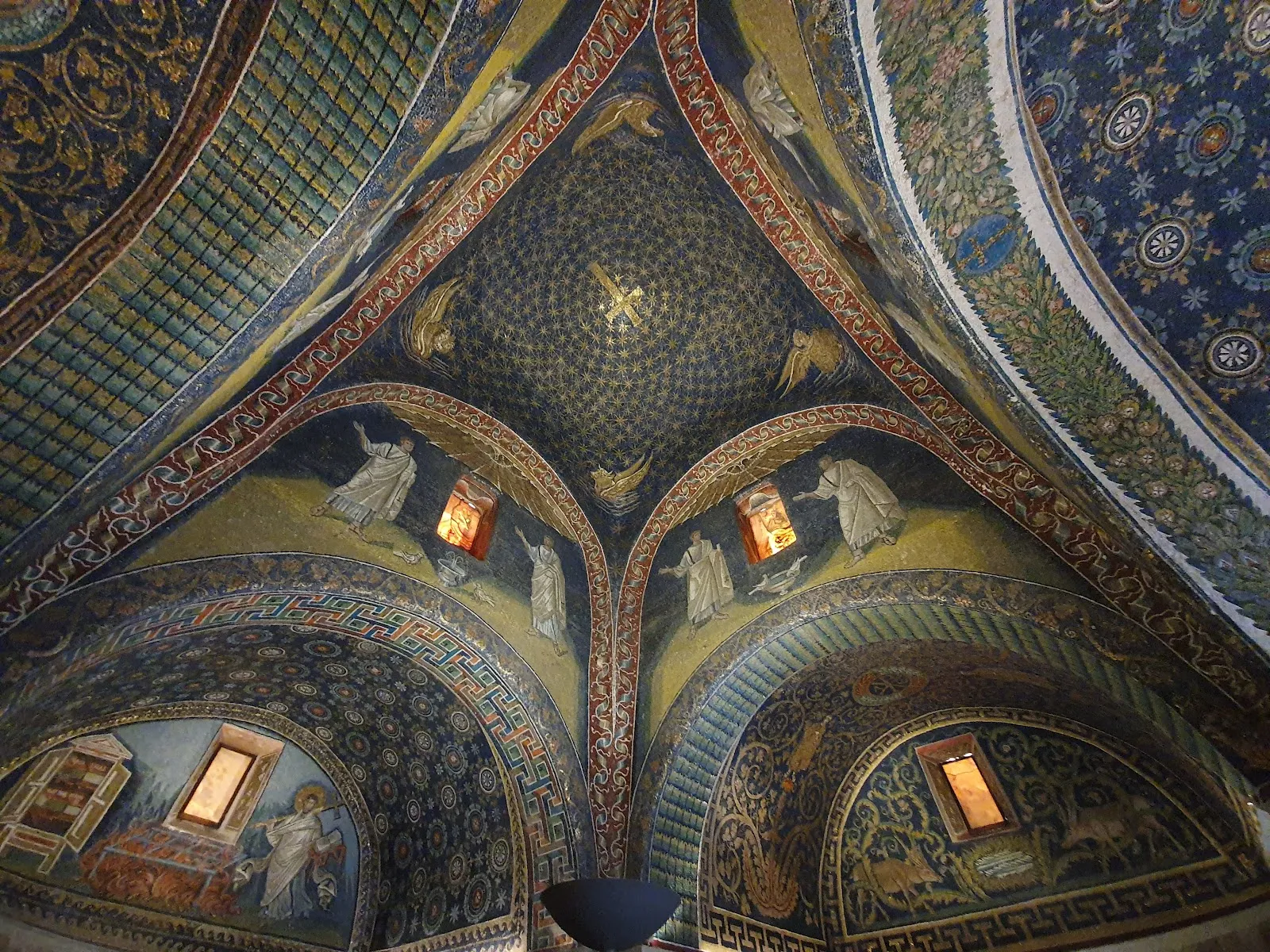
The presbytery and apse hold the basilica’s best-known mosaics. On opposite walls, Emperor Justinian and Empress Theodora appear with their respective retinues. The panels place imperial figures within the church’s religious setting and are among Ravenna’s most recognizable works of Byzantine art.
Look beyond the two imperial processions. Mosaics also depict scenes from the Old Testament and religious figures, including Christ, angels and prophets. The decoration follows the building’s curved surfaces, extending around arches and columns. Gold tesserae catch the light across the interior, while other sections use varied colours and detailed figures.
How to look around
Take in the church as a whole before focusing on individual panels: the octagonal plan, central dome and layered interior give the mosaics their setting. Then spend time near the altar, where the Justinian and Theodora panels face each other. The floor also rewards a closer look, so remember to turn your attention down as well as up.
San Vitale shares its historic setting with the Mausoleum of Galla Placidia, which is next door. A combined ticket can cover other Ravenna monuments, but some locations require a reserved time slot. Check the ticket arrangements when planning a route that includes several sites.
Perguntas frequentes
How long should I spend at the Basilica of San Vitale?
Allow about 40 minutes to see the interior and study the mosaics.
What are the main mosaics to see?
Look for the panels of Emperor Justinian and Empress Theodora near the altar, as well as the biblical scenes elsewhere in the church.
Can I visit the Mausoleum of Galla Placidia at the same time?
Yes. It is next to the basilica, and combined tickets are available for Ravenna monuments. Check in advance whether a timed entry is required at any site.
Is the Basilica of San Vitale accessible by wheelchair?
The venue lists a wheelchair-accessible entrance, but visitor accounts differ about access at the main entrance. Contact the site before your visit to confirm the route.