
On Via dell’Abbondanza in Pompeii, the Terme Stabiane are among the oldest surviving public bath complexes in the city, dating to around 125 BC. Walk through the changing rooms and the cold, warm and hot bathing areas to see how the complex was arranged. A gymnasium and central pool formed part of the site, while frescoes, mosaics and surviving heating features give a sense of its design. Public baths were places for socialising as well as bathing, so the rooms offer a glimpse of everyday Roman life.
A public bath complex dating to around 125 BC
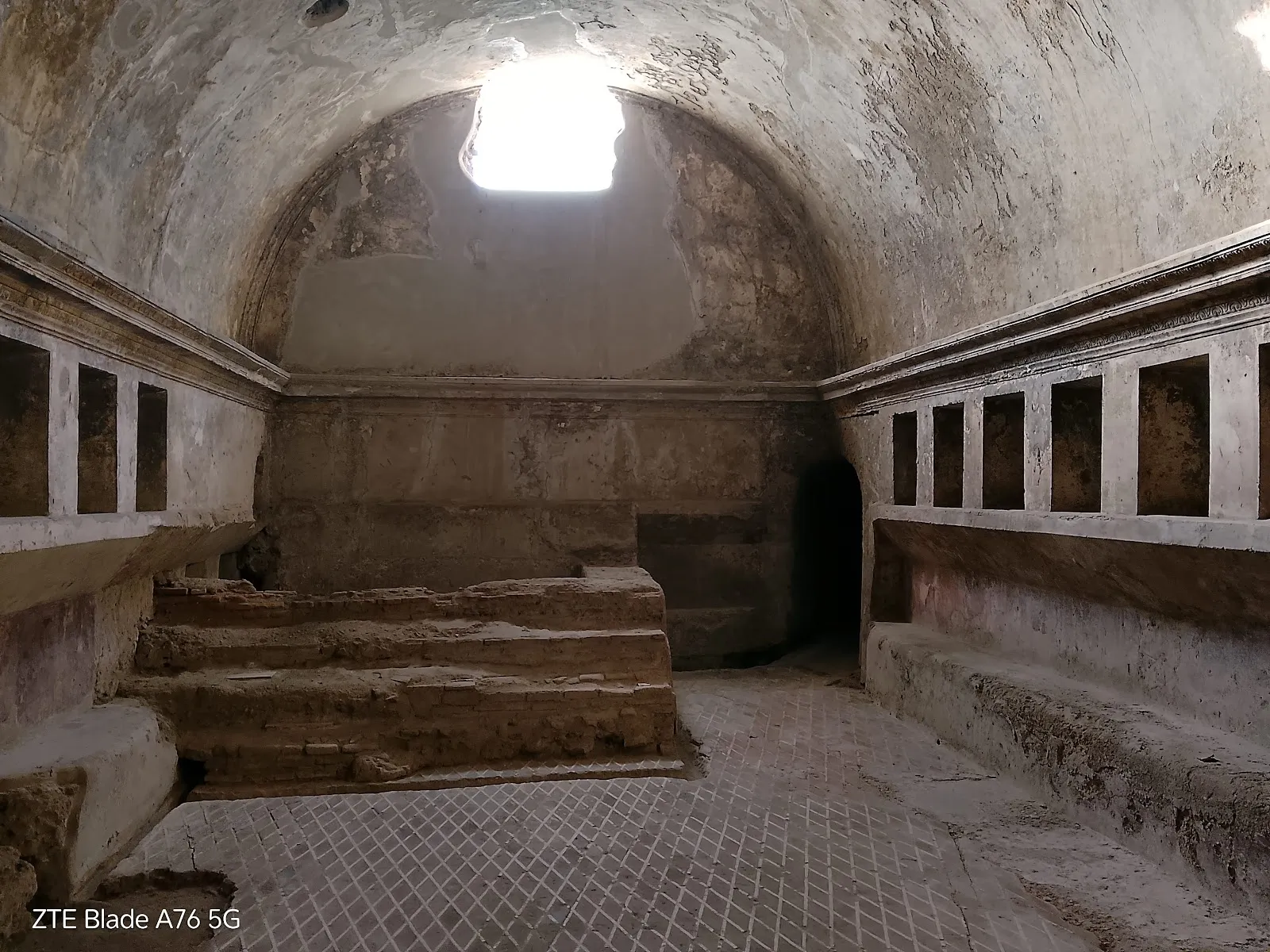
The Terme Stabiane, or Stabian Baths, are among the oldest surviving examples of public baths in Pompeii. They date to around 125 BC, and their layout still lets you distinguish several parts of the bathing complex.
In Roman times, bathing was a communal activity. Public baths brought people together for bathing, leisure and social contact. Private bathing at home was beyond the reach of many, so these shared facilities formed part of ordinary life across different levels of society.
Rooms for changing and bathing
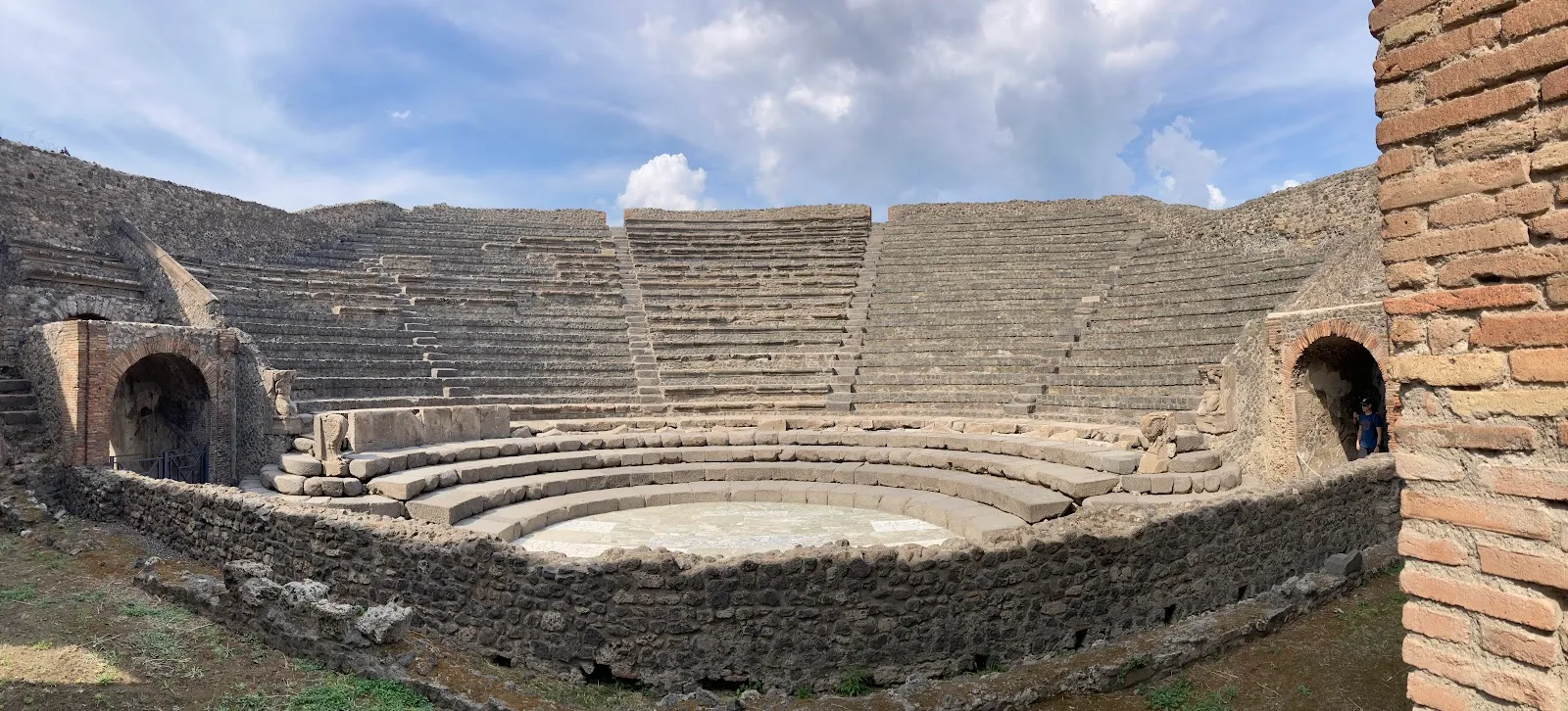
The complex included changing rooms, a gymnasium and separate areas for men and women. Its bathing rooms were arranged for cold, warm and hot baths: the frigidarium, tepidarium and calidarium. The surviving layout, together with underfloor heating features, shows how the baths were designed to serve different stages of bathing.
A central swimming pool was another part of the complex. Frescoes and mosaics decorate areas of the baths, and the rooms preserve details of their decoration and use. Take time to look at the changes in temperature and function from one room to the next.
Reading the baths on site
The Stabian Baths are on Via dell’Abbondanza. As you move through the remains, look for the changing areas, bathing chambers and pool rather than treating the complex as a single open space. These distinct parts help explain how visitors moved through the baths and how the building combined exercise, bathing and social life.
The ruins have uneven surfaces, so comfortable footwear is useful. A guide can add context to the purpose of each area. The site is part of Pompeii’s archaeological area, where water vendors may be limited, so bring water with you.
Perguntas frequentes
How old are the Terme Stabiane?
The baths date to around 125 BC and are among the oldest surviving public bath complexes in Pompeii.
What can you see inside the baths?
The complex has identifiable changing rooms and cold, warm and hot bathing areas, as well as a gymnasium, central pool, frescoes, mosaics and heating features.
Were the baths separated by gender?
The complex had separate areas for men and women.
When is a good time to visit?
Early morning or late afternoon can help you avoid busier periods.


