Palazzo Bo, on Via VIII Febbraio in central Padua, has been the historic home of the University of Padua since 1493. A guided visit takes you through Renaissance courtyards and university rooms, including the Aula Magna, where Galileo taught, and the wooden Anatomical Theatre, built in 1594. Look for the coats of arms and frescoed interiors, as well as works by architect Gio Ponti that bring a more modern note to the historic setting. The tour gives context to the building’s role in the history of science and education.
A university with a long history
The University of Padua was founded in 1222, and Palazzo Bo has been its historic seat since 1493. The university still uses parts of the building, including as the home of its School of Law and Rectorate, so this is a working academic site as well as a heritage visit.
The palace takes its name from an inn called the Albergo del Bove. An ox’s head was associated with the inn, and the university kept the motif in its emblem. The building grew through the joining and alteration of several earlier structures. Its main Renaissance block and monumental courtyard took shape in the 16th century, with work led by architect Andrea Moroni.
The courtyard and university rooms
The Old Courtyard is a focal point of the visit. Its lower level has Doric columns and the upper level Ionic columns. Coats of arms decorate the walls, alongside frescoed surfaces that record the university’s history. Take time to look closely rather than treating the courtyard simply as a passage between rooms.
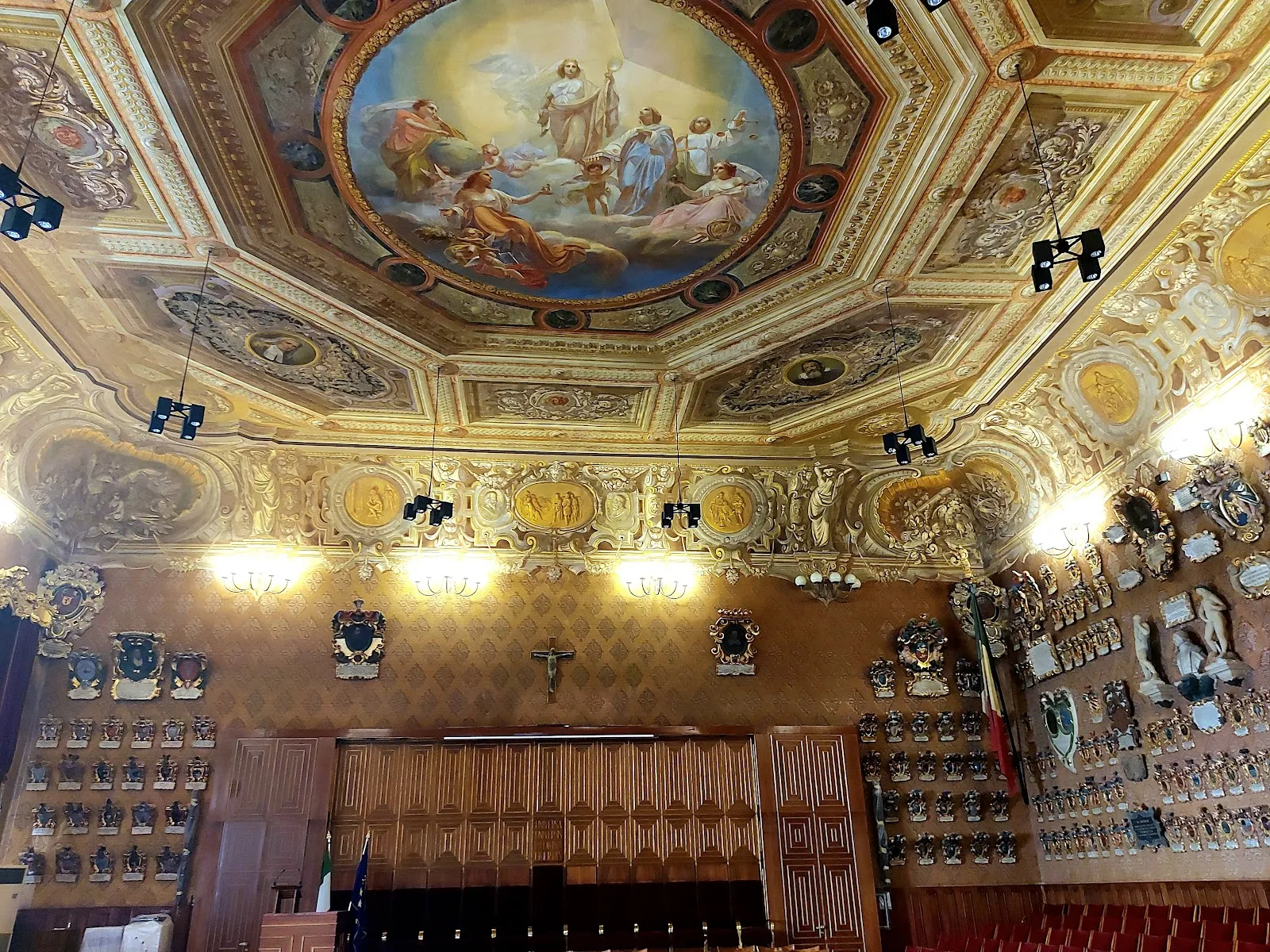
The university’s past is also present in its lecture spaces. Galileo Galilei taught in the Aula Magna from 1592 to 1610, and a chair associated with him is preserved in the building. The hall remains part of the university’s ceremonial life, including the presentation of honorary degrees. Gio Ponti’s work adds a modern architectural layer to the older rooms.
The Anatomical Theatre
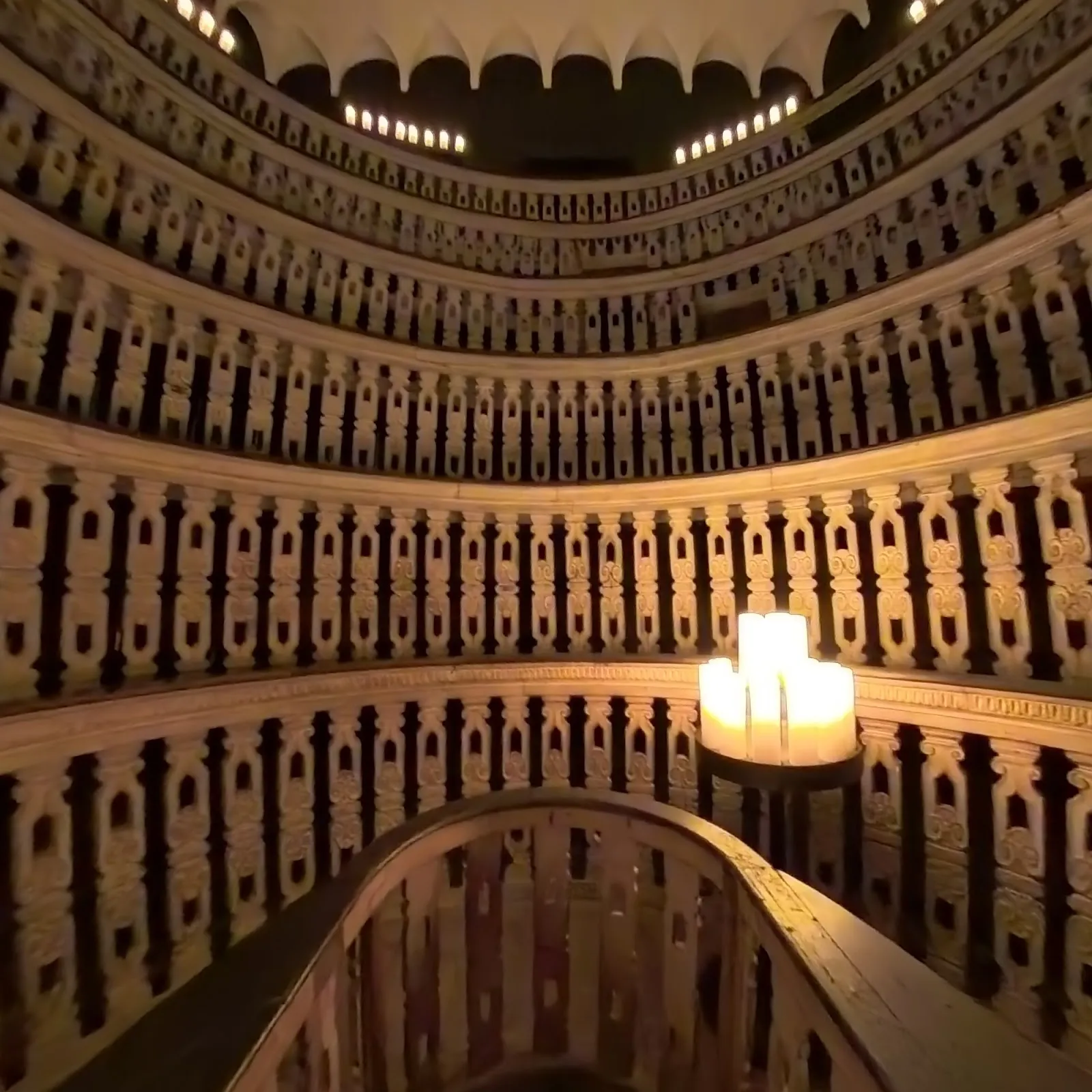
Built in 1594, the Anatomical Theatre is the oldest permanent anatomy theatre in the world. Its compact, elliptical plan rises in narrowing tiers around the central space, where dissections once took place. Students stood on the steep wooden levels to observe the lessons below.
The room is spare and concentrated in atmosphere. Its shape brings the audience close to the centre, making the layout itself an important part of the story of medical teaching. The theatre was last used for dissections in 1872. A guided visit is the way to see it and understand how it fitted into the university’s teaching traditions.
People remembered at Palazzo Bo
The building is linked to several turning points in academic history. Galileo taught here during his years in Padua, while Elena Lucrezia Cornaro Piscopia became the first woman to receive a university degree in 1678, graduating in philosophy. Her coat of arms is displayed among those in the courtyard.
A guide can connect these people and events to the rooms themselves, including the Aula Magna and Anatomical Theatre. Tours are available in English as well as Italian. The university recommends advance booking, and weekday visits can be quieter than weekend ones.
Perguntas frequentes
Do you need a guided tour to visit Palazzo Bo?
A guided tour is required to visit the historic interiors, including the Anatomical Theatre. The courtyard can be visited separately.
How long does a Palazzo Bo tour take?
A visit typically takes about 45 to 60 minutes.
Can you take a tour in English?
Yes. Guided tours are available in English as well as Italian.
What is the Anatomical Theatre?
It is a wooden, tiered theatre built in 1594 for anatomy teaching and dissections. It is the oldest permanent anatomy theatre in the world.