
Cong Abbey is a ruined Augustinian monastery on Abbey Street in the village of Cong, County Mayo. Founded in the 12th century by High King Turlough O’Connor on the site of an earlier religious settlement, it is known for its carved stonework, cloister and medieval arches. Walk among the ruins and through the grounds, where beech and redwood trees frame the river. A short walk away, the Monk’s Fishing House stands over the water, offering another glimpse of how the monastic community used the riverside.
A monastery founded by a High King
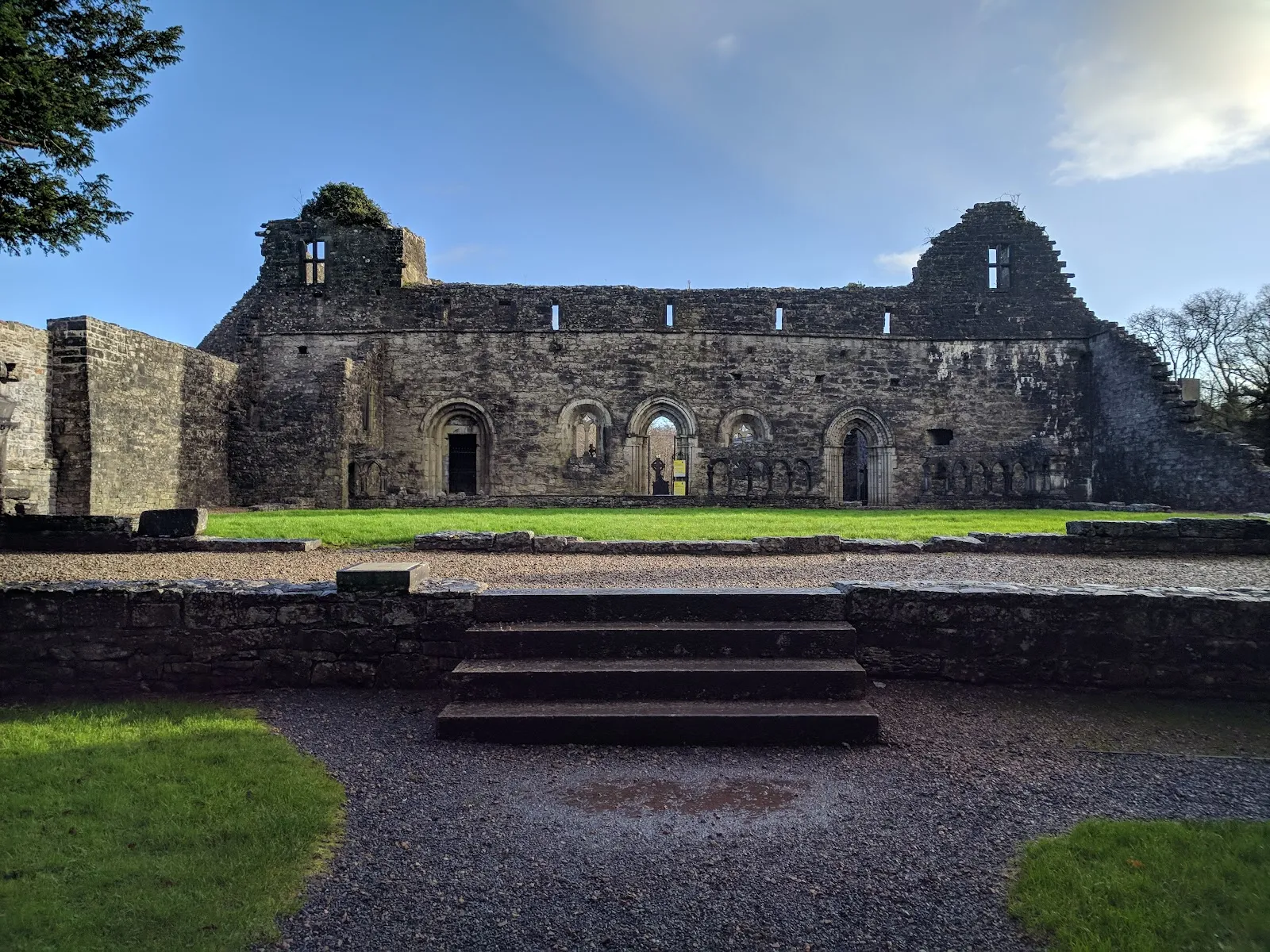
Cong Abbey stands in the village of Cong on the Mayo-Galway border. The site has religious roots reaching back before the surviving ruins: an earlier monastery here is associated with St Feichin and dates to the early medieval period.
The Augustinian abbey was established in the 12th century by Turlough O’Connor, High King of Ireland. The buildings visible today reflect centuries of construction and rebuilding, with much of the surviving work dating to the medieval period. The community was associated with learning as well as religious life, and the abbey is said to have educated thousands of students.
Stonework and the cloister
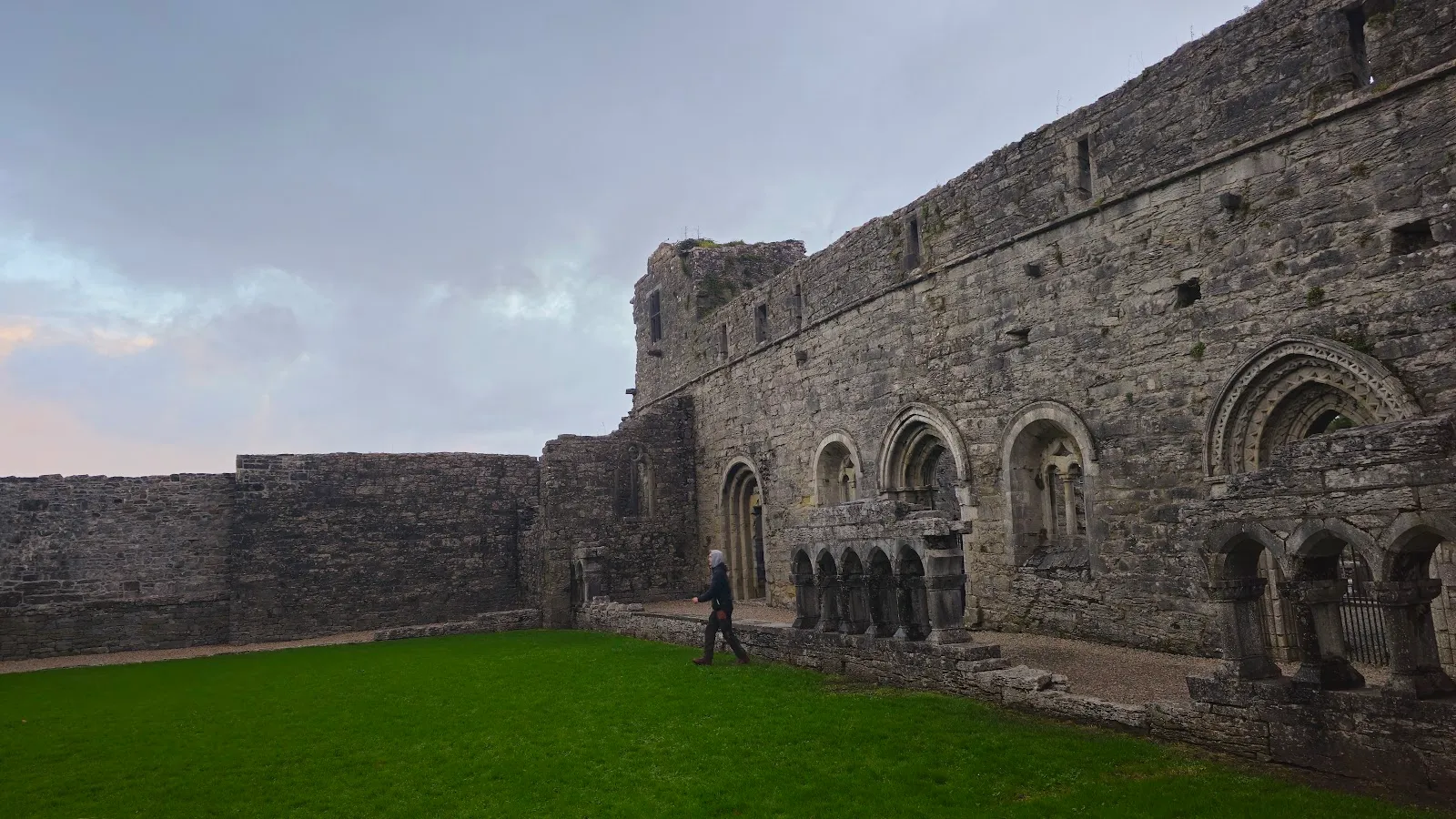
The remains give you plenty of detail to notice at walking pace. Look for pointed Gothic windows, Romanesque doorways, arches and carved stonework. The cloister is among the most distinctive parts of the site, with its columns and carefully worked capitals framing the open lawn.
Tombstones among the ruins include examples dating to 1549. Take time to look closely at the masonry and the different forms of the windows and arches; the abbey’s surviving details show the skill of the builders across its long history.
The river and the Monk’s Fishing House
The abbey grounds extend towards the River Cong, where bridges and paths link the ruins with the surrounding park and woodland. Beech and redwood trees shade the grounds, and the waterways bring the walk close to the landscape that shaped daily life here.
A short walk from the main ruins is the Monk’s Fishing House, a small stone building set over the river on an island. Its fireplace provided shelter, while a trapdoor in the floor allowed monks to lower nets into the water to catch fish. The nearby paths continue towards Cong Forest, so the abbey can be part of a longer walk through the village’s green spaces.
The Cross of Cong
The abbey is also associated with the Cross of Cong, an ornate 12th-century processional cross made for Turlough O’Connor. It is now held at the National Museum of Ireland, rather than displayed among the abbey ruins. The connection adds another thread to the site’s history as a religious centre supported by a High King.
Perguntas frequentes
Is admission to Cong Abbey free?
Yes. Admission is free.
Where is Cong Abbey?
It is on Abbey Street in the village of Cong, County Mayo, near the Mayo-Galway border.
What is the Monk’s Fishing House?
It is a small stone building over the River Cong, a short walk from the abbey ruins. Monks used a trapdoor in its floor to lower fishing nets into the water.
Can you walk from the abbey into Cong Forest?
Yes. A bridge from the abbey grounds leads towards the park and forest, where walking routes continue.


