
The Beatles Ashram in Rishikesh, also called Chaurasi Kutia, is a former spiritual retreat on a forested slope above the Ganges, on the edge of Rajaji National Park. The Beatles stayed here in 1968 to learn Transcendental Meditation under Maharishi Mahesh Yogi, and many songs written during that stay later appeared on the White Album. Today the site is partly in ruins and covered in graffiti and murals. The main draws are the stone meditation caves, the painted halls, the forest trails and the river views from the bluffs.
From Chaurasi Kutia to the 1968 visit
The site is known historically as Chaurasi Kutia. Before the band arrived, it was a centre where Maharishi Mahesh Yogi taught yoga and meditation, and it was sometimes called the International Academy of Meditation.
The Beatles came in early 1968 and stayed for several months to learn Transcendental Meditation. Their visit drew worldwide attention to Rishikesh, and the ashram began to be called the Beatles Ashram. Many of the songs they wrote during the stay later appeared on the White Album.
After the community left, the buildings were abandoned and slowly overtaken by the forest. The site is now managed by the Forest Department, which collects the entry fees.
Inside the ashram grounds
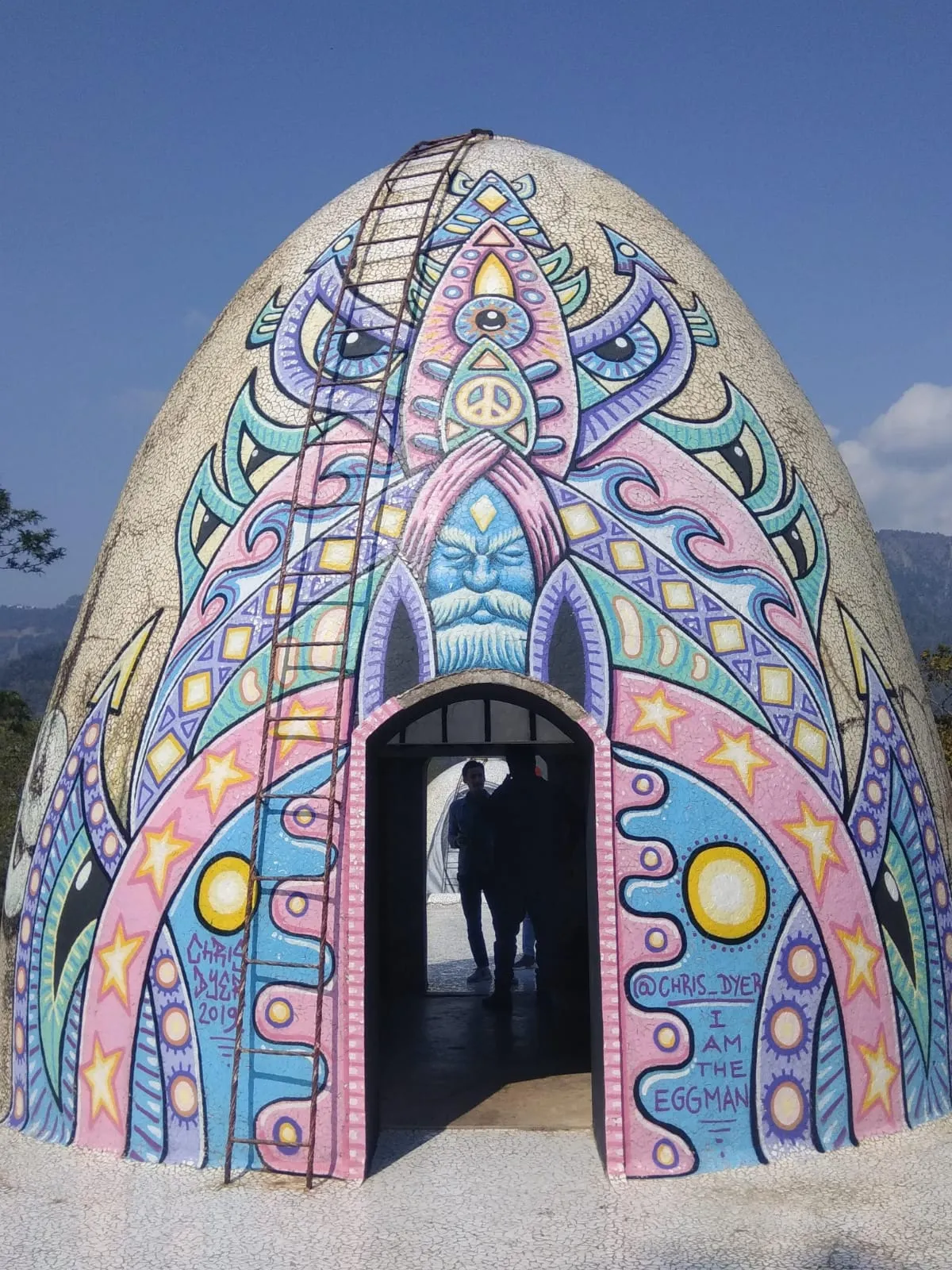
The best-known structures are the stone meditation caves and the oval-shaped meditation domes. Some visitors also find underground chambers and quiet cells where people once sat in solitude.
The wider complex once included a temple, a library, a kitchen, meditation huts and the house where Maharishi Mahesh Yogi lived. Parts of these buildings are still standing, though many are in poor condition.
A small exhibition on the site shows photographs from the 1968 visit, taken by the photographer Paul Saltzman. It gives useful context for the buildings around it.
Murals and graffiti on the walls
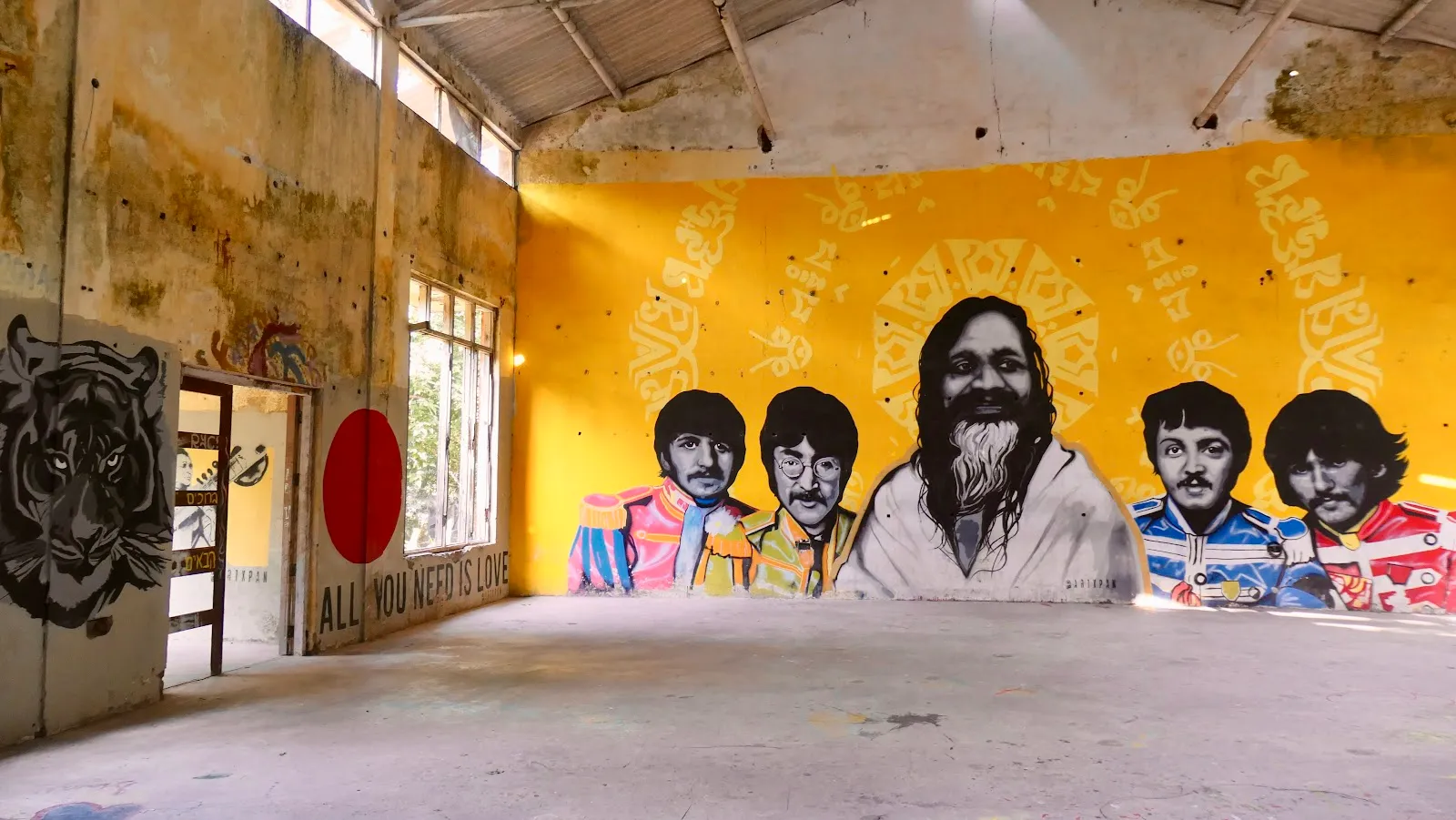
Local and international artists have painted many of the walls. The murals include images of the band, of Maharishi Mahesh Yogi, and of messages about peace and love.
Fans have also left their own marks, so the walls read as a record of many visits over the years. Standing in the main hall with the paintings around you and the forest outside is one of the most memorable parts of a visit.
The colour of the art contrasts with the grey of the old stone, which makes the buildings especially photogenic in good light.
Nature and the walk
The forest is slowly reclaiming the site. Vines climb the old brickwork, and birds call from the canopy above the paths.
Trails lead through the grounds and out to the bluffs, where you can look down over the Ganges and across to the city of Rishikesh. The river views are a good reason to stay longer than the caves alone would suggest.
The site sits close to the edge of Rajaji National Park, so the setting feels more like a forest than a town.
Visiting with respect
Some people still come here to meditate, so keep your voice low in the caves and quiet spaces. Dress modestly, as you would at other spiritual sites in Rishikesh.
Stay on the marked paths and keep away from structures that look unstable. The ruins are fragile, and parts of the site are under repair.
Ask before you photograph people who are meditating, and avoid using flash inside the caves.
Perguntas frequentes
Is there an entry fee?
Yes. Foreign visitors pay a higher fee than Indian visitors, and the Forest Department collects the entry payment on site.
How long do you need at The Beatles Ashram?
Plan two to three hours to see the caves, the painted halls and the trails at a relaxed pace.
Is the whole site open to visitors?
Not at present. Restoration work has limited access, and at times only the Satsang Hall has been open to visitors.
Is there food on site?
A small canteen serves simple snacks and drinks, including Maggi and mango shakes.
Do students get a discount?
Students can get a reduced ticket if they carry a valid student ID.
