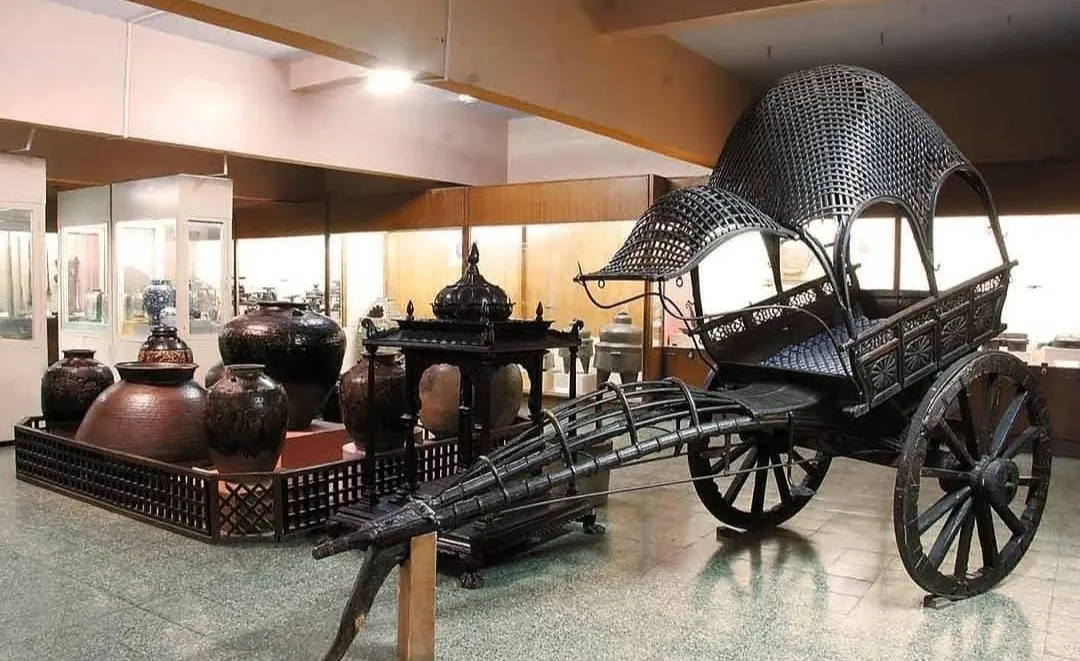
The Raja Dinkar Kelkar Museum is a three-storey museum on Bajirao Road in Shukrawar Peth, Pune, built around one man's collection of Indian objects. Dr Dinkar G. Kelkar gathered about 20,000 artefacts from across India, and the galleries hold textiles, weapons, musical instruments, carved doors and windows, and household objects from the 14th to the 19th century. The Mastani Mahal section, a recreation of a palace room, is the best-known part. Plan around two hours to see the galleries at a steady pace.
Who built the collection
Dr Dinkar G. Kelkar began collecting in 1920 and kept at it until 1960, gathering objects from across India and beyond.
He founded the museum in 1962 in memory of his only son, Raja, who had died. At first the collection was kept in his own home under the name Raja Sangraha. By 1984 it had grown to 15,000 objects.
In 1975 he gave the collection to the Government of Maharashtra to preserve it for the public. It is now cared for by the state's archaeology department.
What fills the galleries
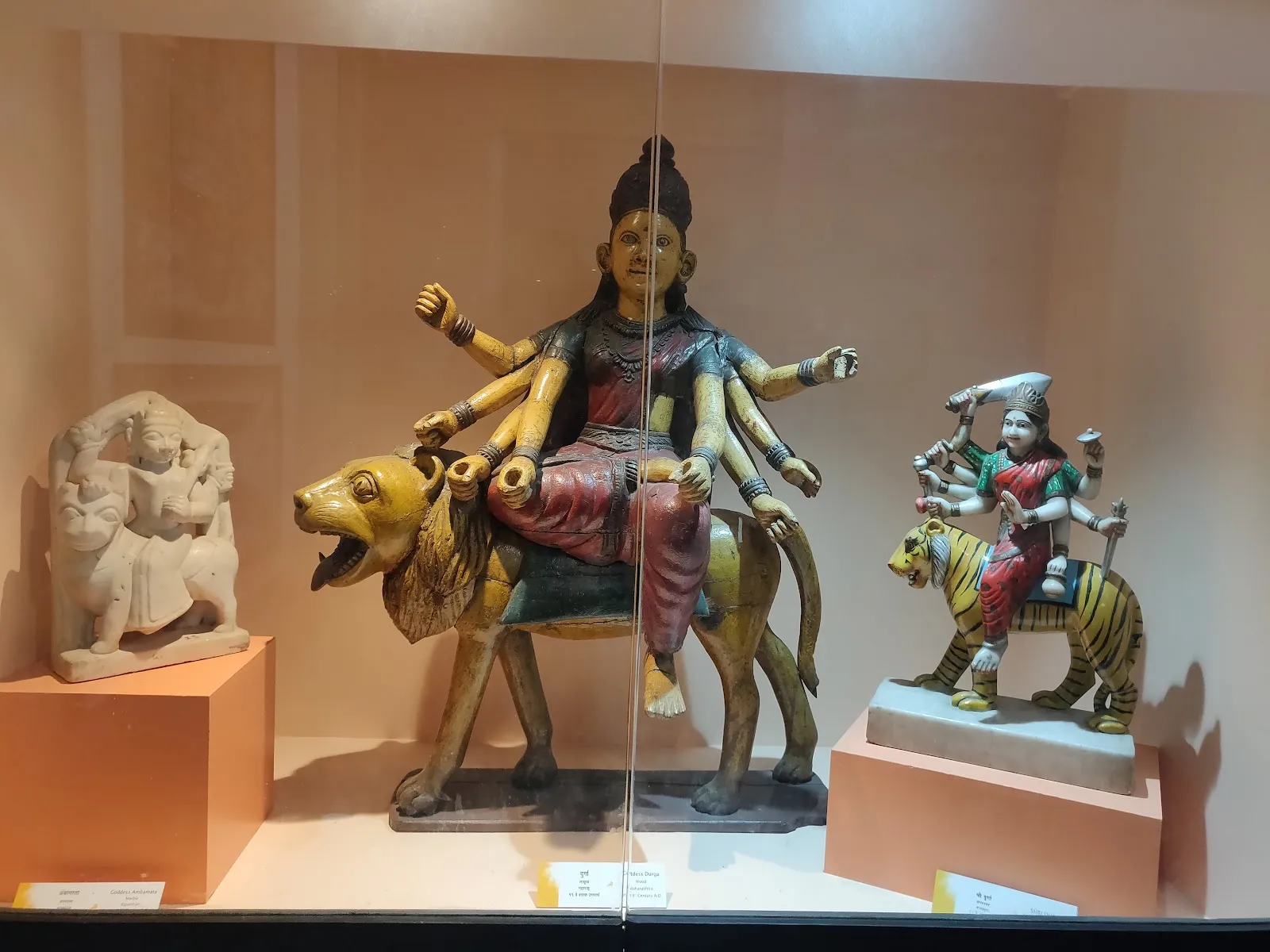
The museum holds more than 20,000 objects across three floors, and about 2,500 of them are on display at any one time. The textile wing is a good place to start, with Paithani sarees, hand fans and clothing once worn by kings and queens. The weapons include arrows, spears, shields and swords that were used in battles.
Other rooms hold hookah pipes, writing instruments, lamps, toys, puppets, kitchen utensils, furniture and ivory playing cards. Entire doors and windows are on show, with carved wooden details. Musical instruments and vessels of copper, brass, silver and terracotta add to the range.
Among the sculptures are unusual Ganpati idols, including one called Shakti and a five-headed Ganesha.
The Mastani Mahal section
The Mastani Mahal is a recreation of the palace of Mastani, the second wife of Peshwa Bajirao I. The room is furnished with cushions and chandeliers meant to show how a royal household of that period looked.
Give this section time. It is the part of the museum most people come back to describe.
Planning a visit
Adult entry costs about ₹120. Photography on a phone needs a separate ticket of about ₹100, and an audio guide is also available for about ₹100. Booking tickets in advance is recommended.
The museum has a restaurant on site, a wheelchair accessible entrance, an elevator, an accessible restroom and an accessible parking lot. Paid parking is available, both in the lot and on the street. It is within walking distance of Mandai metro station, about 4 km from Pune Junction and 1.5 km from Shaniwar Wada fort.
Perguntas frequentes
Is there an entry fee?
Yes. Adult entry costs about ₹120. Photography on a phone needs a separate ticket of about ₹100.
How long do you need?
Plan about two hours to see the galleries properly.
Can you take photos inside?
Yes, with a mobile photography ticket of about ₹100. Keep the permit with you, since staff may ask to see it.
Is the museum wheelchair accessible?
The entrance, elevator, restroom and parking lot are wheelchair accessible.
Is there a restaurant at the museum?
Yes, a restaurant is on site.