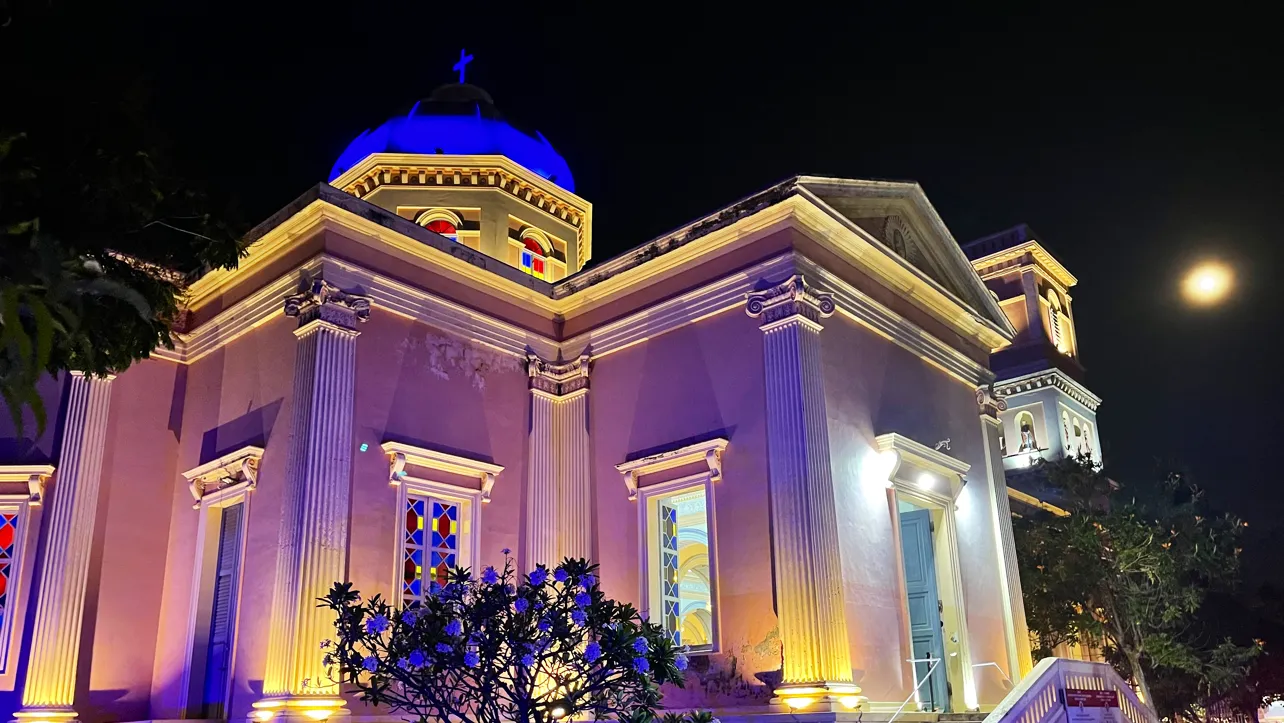
Arulmigu Manakula Vinayagar Devasthanam is a Hindu temple dedicated to Lord Ganesha in White Town, Puducherry, a short walk from the seafront. It predates French rule in the town and is built in the Dravidian style, with colourful stucco figures and paintings of Hindu mythology on the walls and ceiling. A temple elephant named Lakshmi blesses devotees near the entrance, and a golden chariot is paraded on Vijayadashami. The temple is spacious, and a darshan can take as little as 15 minutes. Shoulders and knees should be covered, and photography is not allowed inside.
The name and the temple's history
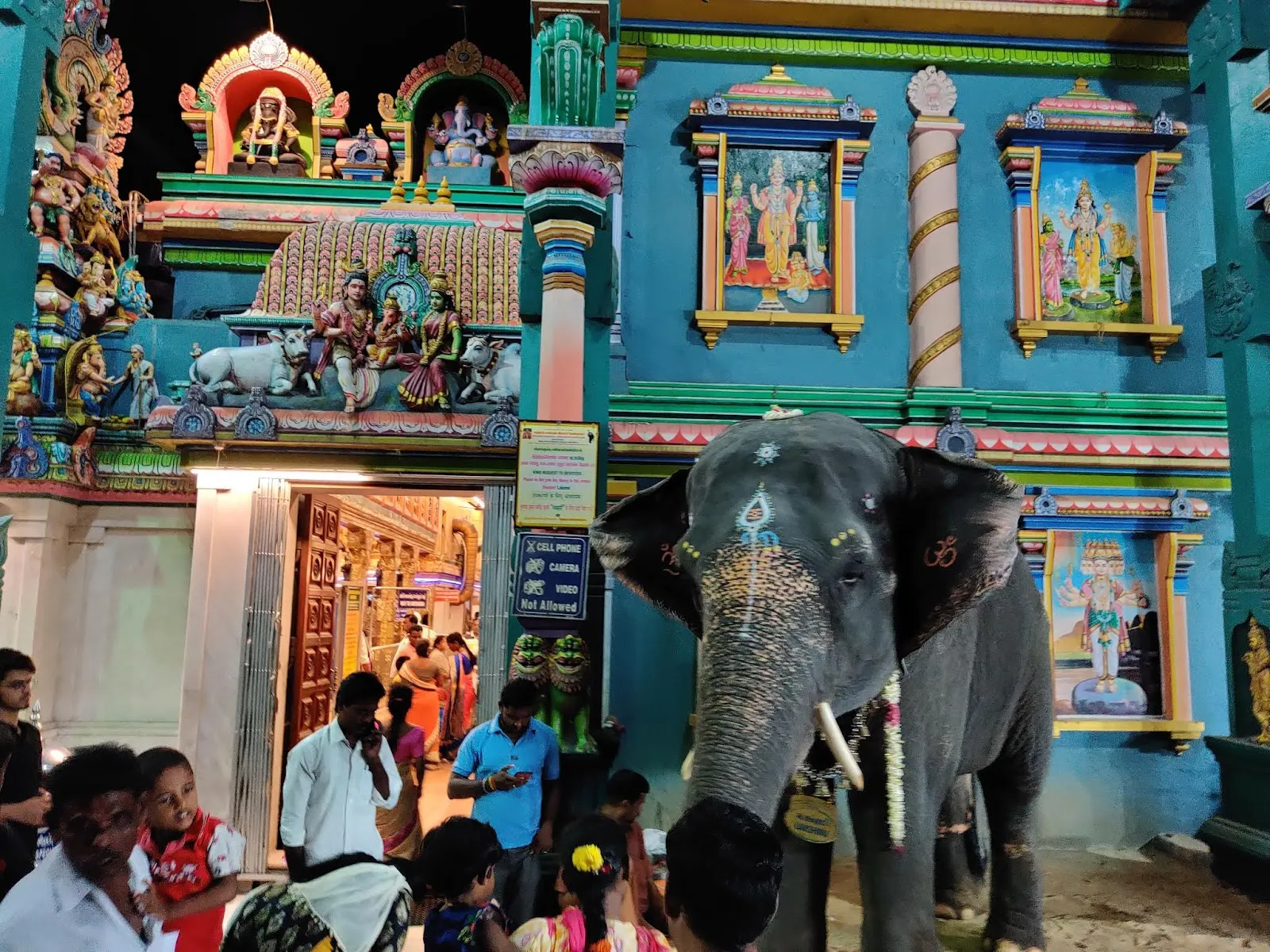
Manakula Vinayagar Temple stands in White Town, Puducherry, and is dedicated to Lord Ganesha. Its name comes from two Tamil words: manal, meaning sand, and kulam, meaning pond. They refer to the sandy ground and the pond near the sea where the temple grew up. The temple faces east towards the Bay of Bengal and was earlier known as Bhavaneshar Ganapathy.
The temple existed before the French settled in Puducherry. Local tradition holds that French missionaries and officials tried several times to pull it down, and that local people saved it each time. Another story says an officer had the idol thrown into the sea and that it returned to the temple. The deity is known locally as Vellaikaran Pillai, a name that points to the French connection. Sources give different ages for the temple, so it is safest to say that it is centuries old and older than French rule.
Architecture and paintings
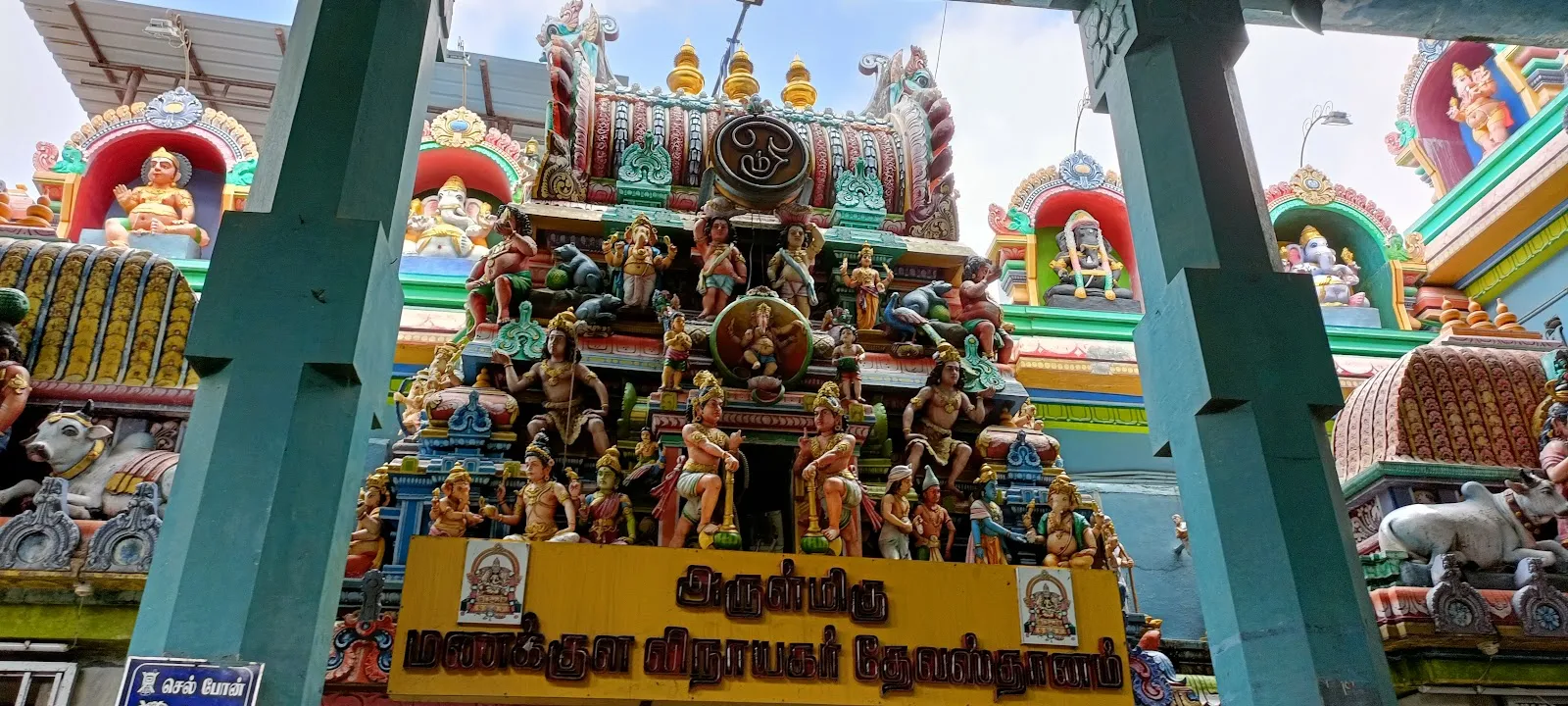
The temple is built in the traditional Dravidian style. Outside, stucco figures and friezes in bright colours decorate the walls, including around forty different forms of Ganesha. Inside, paintings on the walls and ceiling show scenes from Hindu mythology and many images of Ganesha. The ceiling paintings are worth a look upward. Gold and silver ornaments adorn the main idol, which devotees regard as self-manifested.
The temple complex also has a shrine to Lord Murugan, the brother of Ganesha. The temple is spacious enough to walk around and look at the carving and paintings without feeling hurried.
The golden chariot and the elephant
The temple's golden chariot is about ten feet tall. It is made of teak and 7.5 kg of gold, and devotee donations paid for it. It is paraded on Vijayadashami.
The temple elephant, Lakshmi, stands near the entrance and blesses visitors by touching their heads with her trunk. Devotees see this as a blessing for good luck. Treat the elephant with the same quiet respect you would show in the temple itself.
Planning your visit
The temple is about 3 km from the Puducherry bus station and a few minutes' walk from the seafront and Sri Aurobindo Ashram. Local buses run from the New Bus Stand, and autos and cabs know it as Manakula Vinayagar Temple. The street outside has stalls selling puja items, souvenirs, clothes and fridge magnets, as well as several restaurants.
A darshan can be done in about 15 minutes on an ordinary day, and the evening queue is usually short. Special poojas can be booked at the counters inside. At festivals the temple is much busier. Two-wheelers have official parking nearby, while cars find parking on the surrounding roads difficult.
Perguntas frequentes
Is photography allowed inside Manakula Vinayagar Temple?
No. Photography is not allowed inside the temple. Keep your camera and phone put away while you are in the shrine.
What should I wear to the temple?
Wear modest clothes that cover your shoulders and knees. You will leave your footwear at the stand beside the entrance, which costs ₹5.
How long does a visit take?
Plan 30 to 60 minutes. A darshan can take about 15 minutes, and extra time lets you look at the paintings and walk around the temple.
How do I get to Manakula Vinayagar Temple?
The temple is in White Town, about 3 km from the Puducherry bus station and within walking distance of the seafront. You can take a local bus from the New Bus Stand or an auto or cab to Manakula Vinayagar Temple.
Is there parking at the temple?
Two-wheelers have parking nearby, but cars can find it hard to park on the surrounding roads. Walking or taking an auto is easier, especially at weekends.