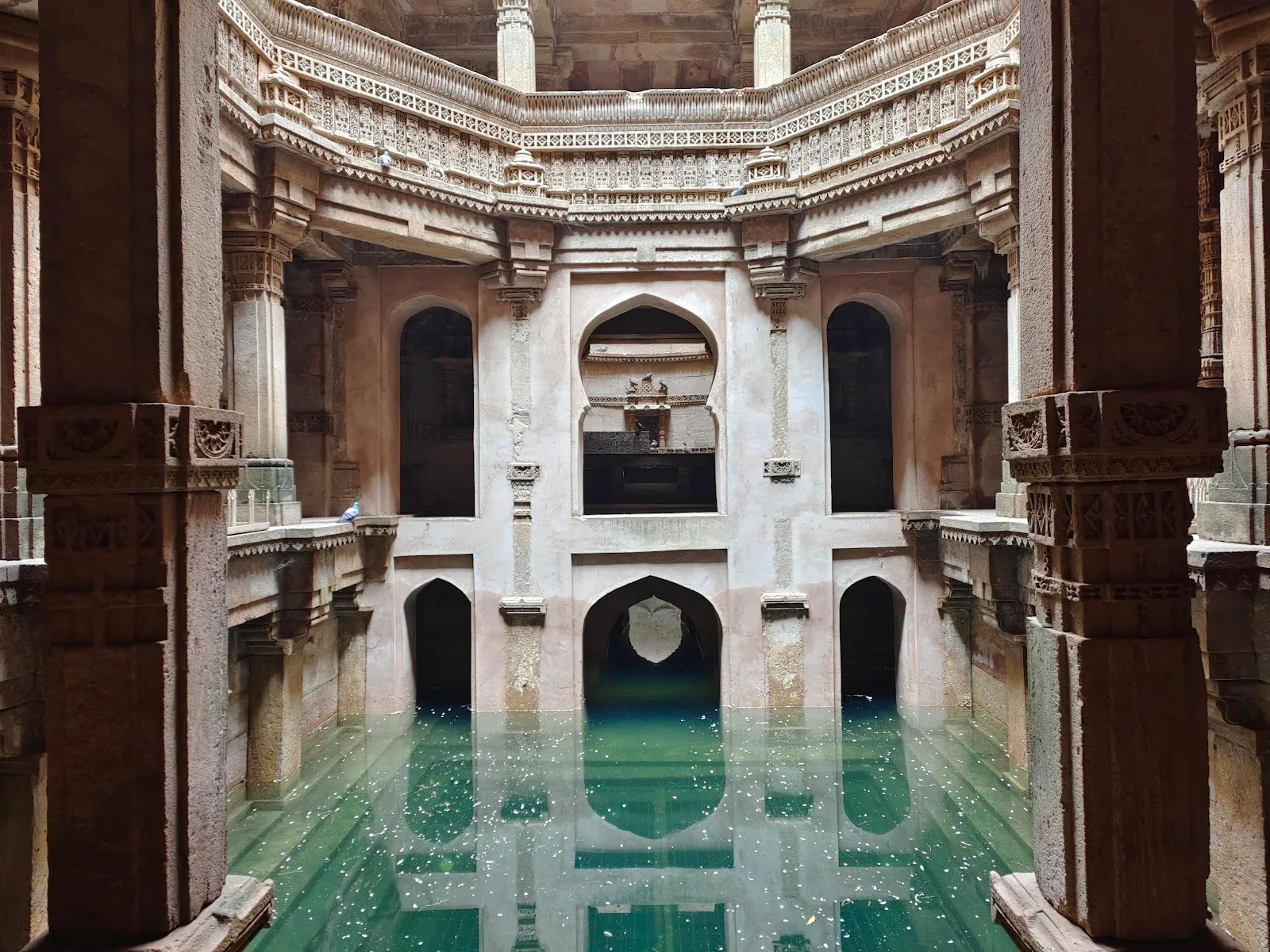
The Adalaj Stepwell, also called Adalaj ni Vav or Rudabai Stepwell, is a five-storey sandstone stepwell in the village of Adalaj, close to Gandhinagar and a short drive from Ahmedabad. It dates from the late 15th century and was built as a water source and a resting place for travellers. You walk down flights of steps past carved pillars, balconies and niches, and the air gets cooler with each level. The carvings mix Hindu and Jain motifs with Islamic design, and the stone geometry rewards slow looking.
Why the stepwell was built
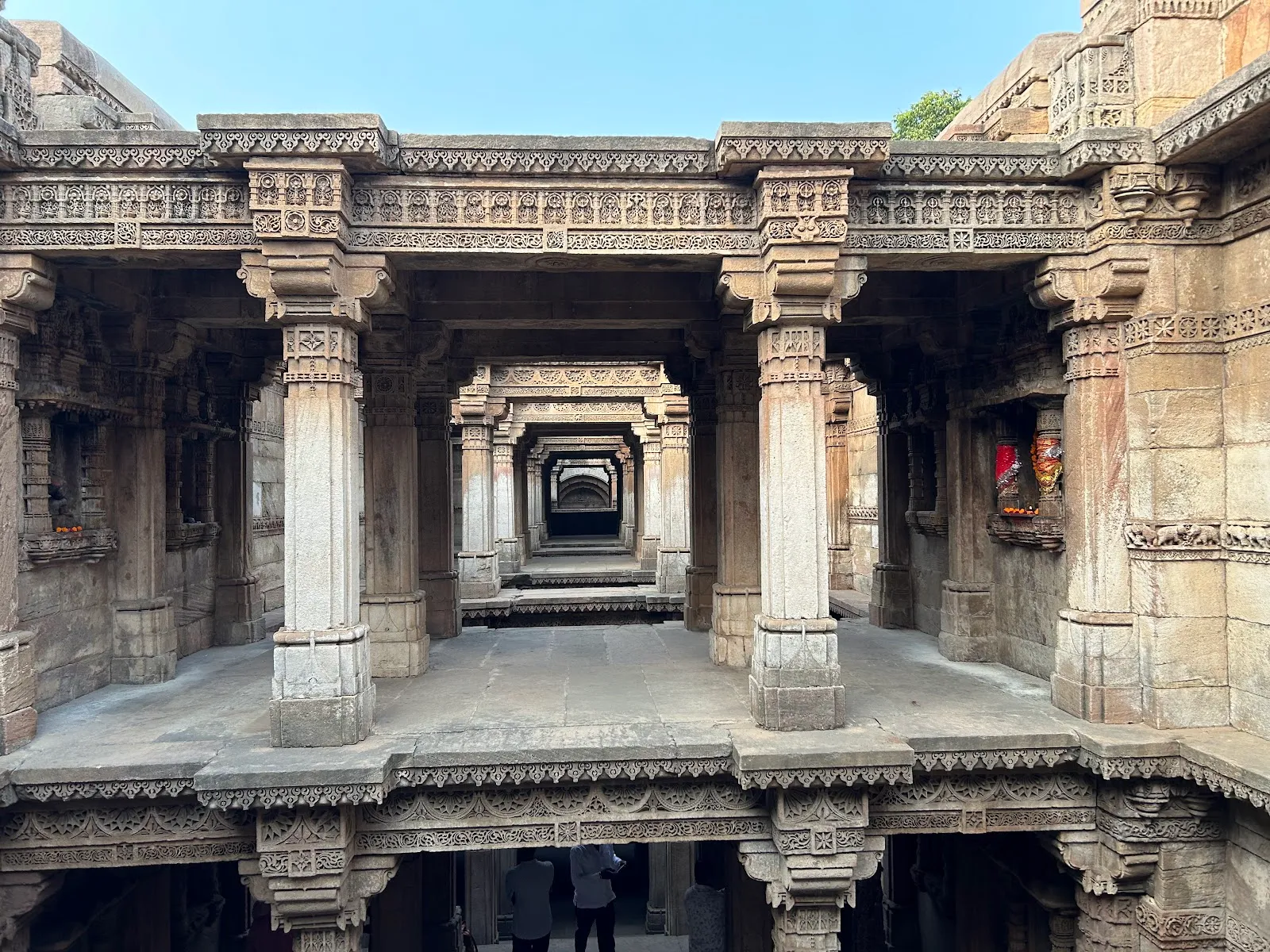
Stepwells were common in the semi-arid parts of India, especially along trade routes. They held rainwater and gave groundwater a way to be reached, and pilgrims and merchants stopped at them to rest. Adalaj followed that pattern. People in the village and travellers on the route used it for daily water, shelter and quiet.
The local word for a stepwell is vav, which is why the monument is also known as Adalaj ni Vav. It is also called the Rudabai Stepwell. Construction began under Rana Veer Singh, a Vaghela chief, who died in a war with Mahmud Begada. His wife, Queen Rudabai, saw the work finished in his memory. The date is given as 1498 or 1499, so the late 15th century is the safe way to place it. Local accounts tell the story as one of love, war and sacrifice.
Going down through five storeys
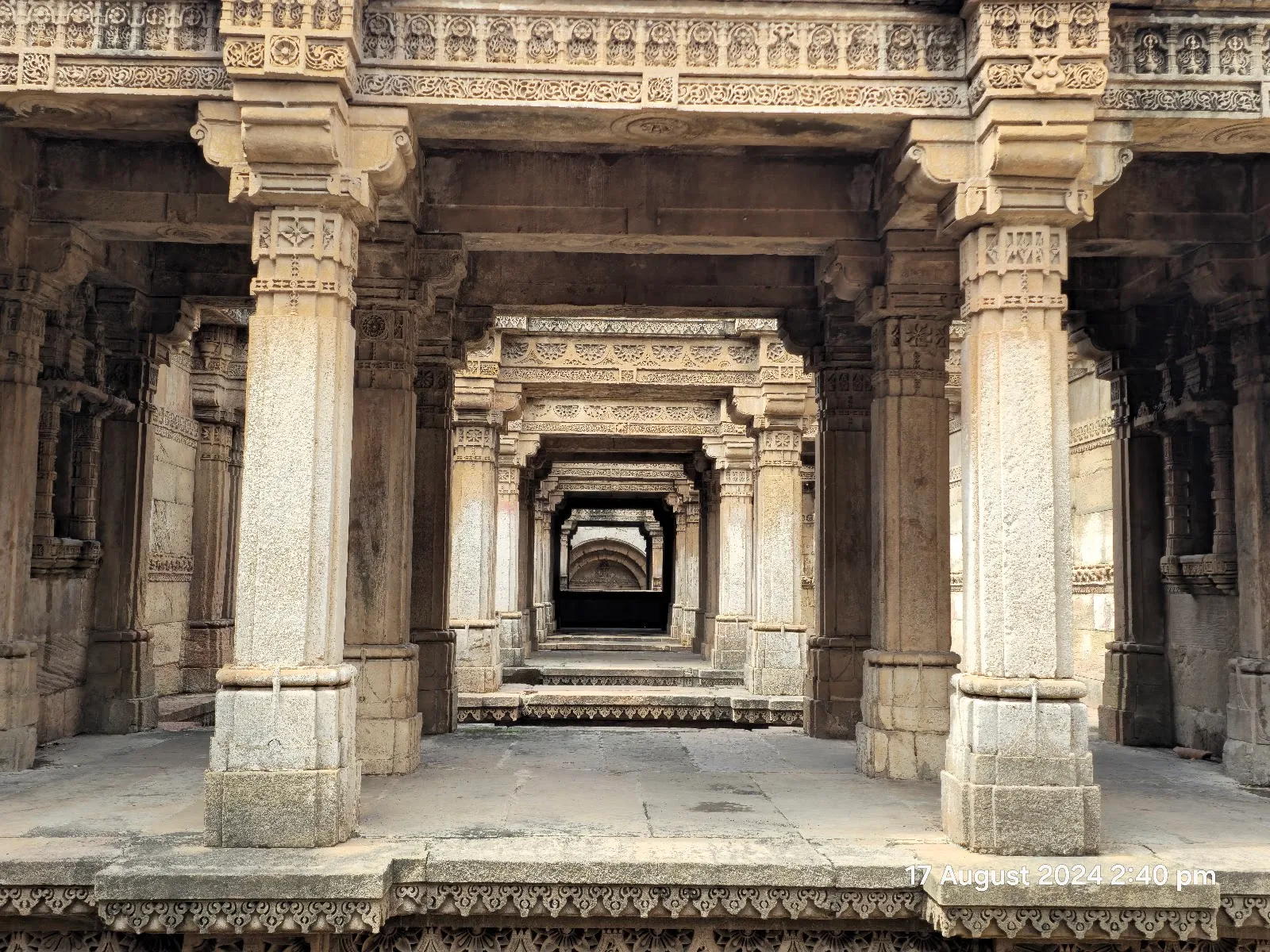
The stepwell is octagonal and five storeys deep, built of sandstone. You enter at ground level and move down the flights of steps, passing platforms, balconies and pillared galleries on the way.
An opening in the ceiling lets light and air into the octagonal well. Direct sun reaches the steps only for a short time around noon, and for the rest of the day the light is soft and indirect. That shade is why the inside stays cool. One account puts the difference at about 6 degrees below the temperature outside, and you notice the drop within a few steps.
The design also shows how the space was used. It was a source of water, a place to rest on a long journey, and a place for people to meet and pray.
Carvings and the mix of styles
The walls, columns and niches are covered in carved sandstone. The panels show mythological scenes, animals and episodes from daily life, and the pillars are cut with geometric patterns and floral motifs. Deities are carved into the walls as well.
The style is usually described as Indo-Islamic, or Hindu and Islamic combined. Hindu and Jain symbols sit alongside Islamic features such as Persian flower motifs and arches. Some writers also call the architecture Solanki in style. The carving is precise, and it is worth stopping on each level to look at the pillars and brackets rather than hurrying to the bottom.
Students and researchers come here for projects on history, architecture and heritage conservation.
Planning the visit
The Archaeological Survey of India runs the ticketing, with a QR code at the entrance for buying tickets online through its official website. The site has free and paid parking, a wheelchair accessible entrance, parking and restroom, and a gender-neutral restroom. Facilities are basic, so bring water.
Morning is the best time for photographs, when light comes in through the roof opening and falls across the steps and pillars. Some visitors find unofficial people at the site offering stories or guiding. If you want a guide, use an approved one.
Perguntas frequentes
Who built the Adalaj Stepwell?
Queen Rudabai had it completed in memory of her husband Rana Veer Singh, a Vaghela chief. Work began under him, and he died in a war with Mahmud Begada. It dates from the late 15th century.
What is the best time to visit?
Morning, between about 8 and 10 AM, gives the best light and a calmer atmosphere. Weekdays are quieter than weekends.
Why is it cool inside the stepwell?
The five-storey octagonal structure sits below ground, and direct sun reaches the steps only briefly around noon. One account puts the inside about 6 degrees cooler than the outside.
Can I buy tickets online?
Yes. Scan the QR code at the entrance and buy a ticket through the official Archaeological Survey of India website. This avoids waiting at the counter.
Is the stepwell accessible for wheelchair users?
The entrance, parking lot and restroom are wheelchair accessible, and there is wheelchair accessible seating.