The Hungarian National Museum on Múzeum körút in Budapest traces the country’s past through archaeology, art and historical objects, from prehistoric finds to the Communist era. Its neoclassical building, designed by Mihály Pollack, is part of the visit: look for the grand staircase, detailed interiors and central rotunda. Inside, follow the chronological displays and seek out the medieval Coronation Mantle, once worn by Hungarian kings. The surrounding garden is a quiet place to pause between galleries.
A museum with a role in 1848
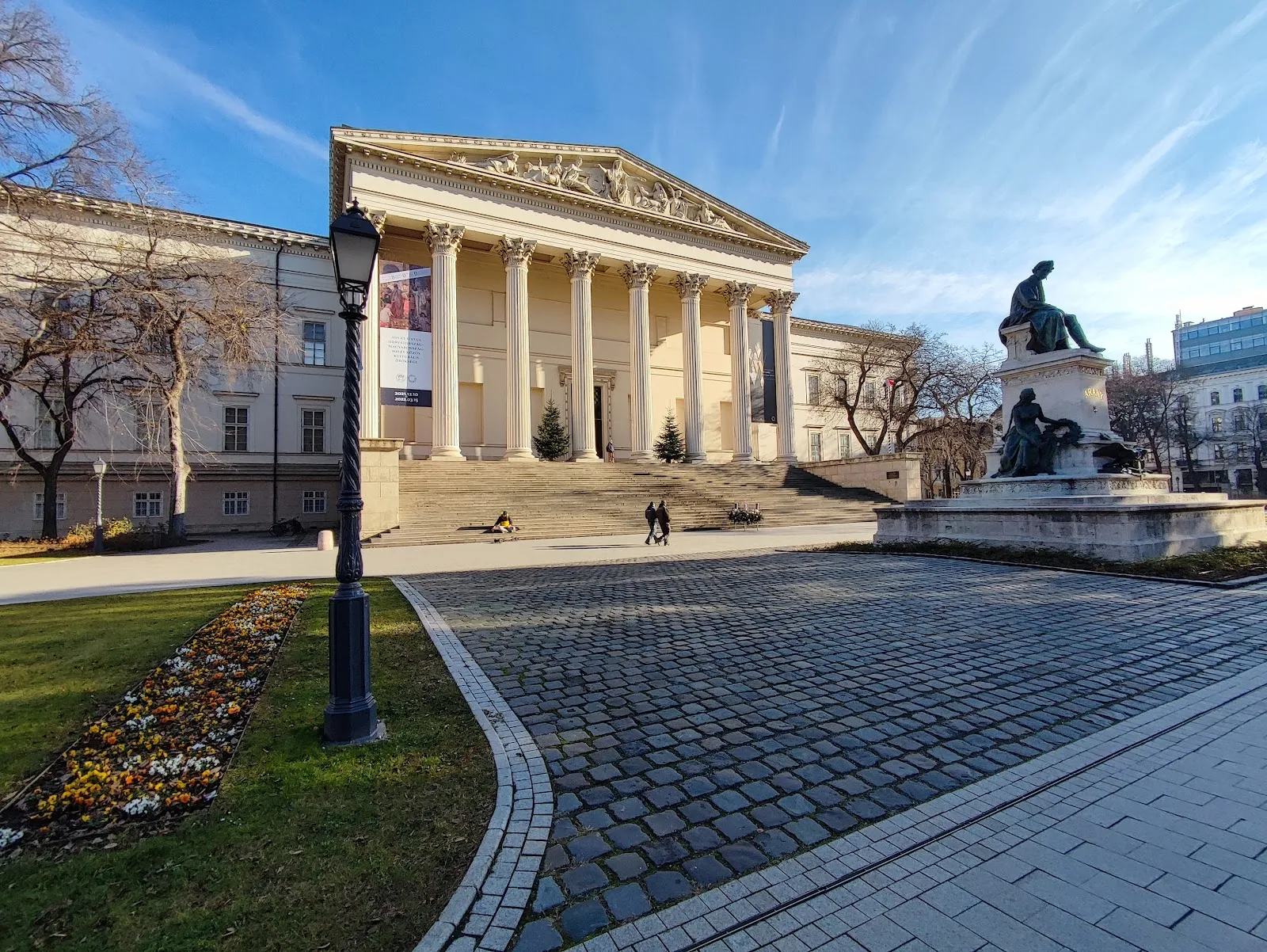
The Hungarian National Museum was founded by Count Ferenc Széchenyi in 1802. Its present neoclassical building was designed by Mihály Pollack and constructed between 1837 and 1847. The broad staircase and formal façade give the museum a striking presence on Múzeum körút, but the steps also carry a place in Hungarian history.
On 15 March 1848, poet Sándor Petőfi recited his National Song on the museum steps and read the revolutionaries’ Twelve Points, a list of demands. The event became closely associated with the start of the Hungarian Revolution. As you approach the entrance, the staircase is worth seeing as more than an architectural feature: it was a setting for a defining public moment.
Follow the collections through time
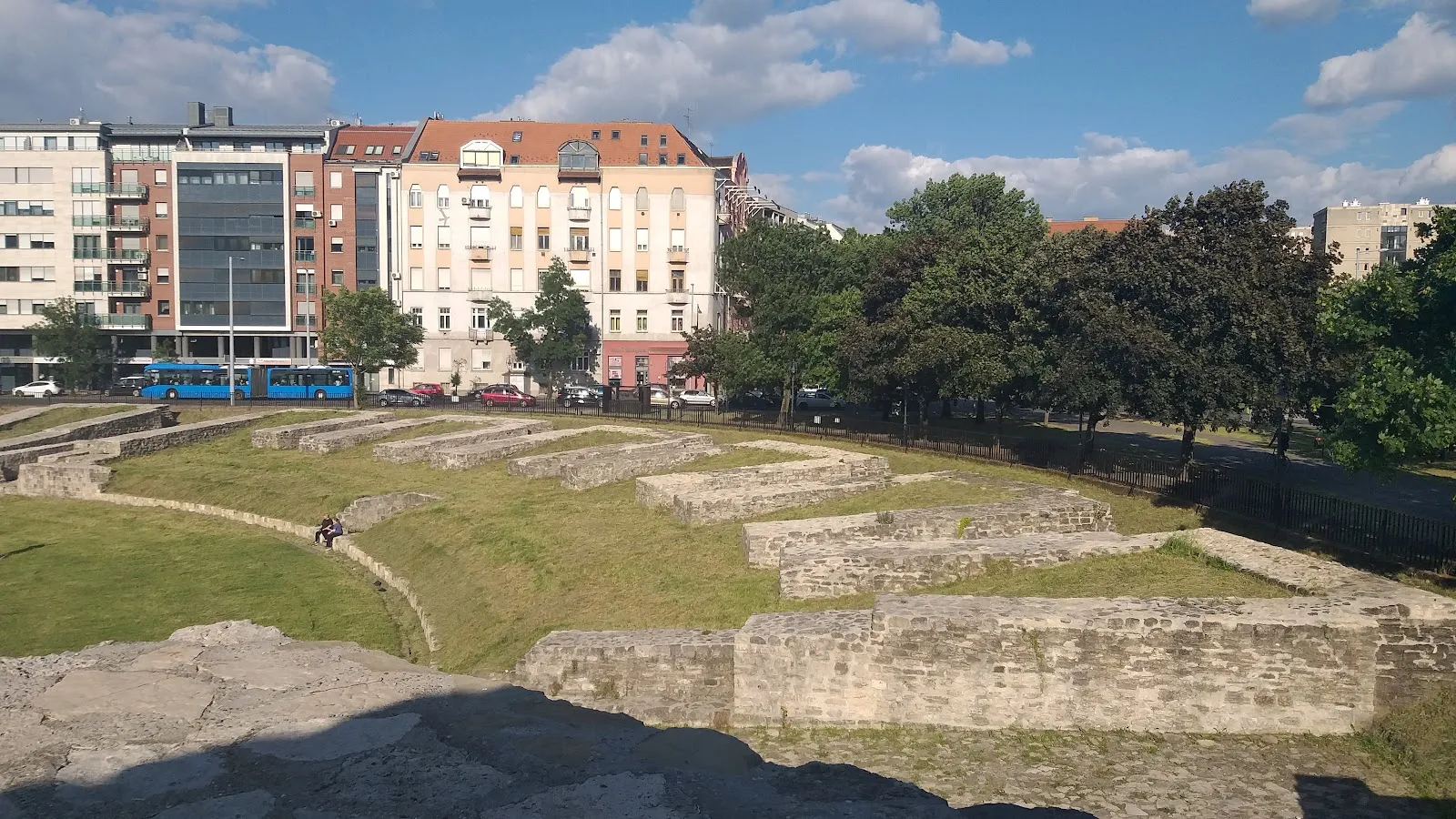
The permanent displays take you from prehistoric periods through the history of the Carpathian Basin and Hungary, continuing to the fall of Communist rule. Archaeological finds, historical documents, artworks and everyday objects give the galleries a broad scope. Displays cover periods including Roman times, the Habsburg era and the 20th century.
Look for the medieval Coronation Mantle, a ceremonial garment worn by Hungarian kings at their coronations. Other collections include Roman stone inscriptions and carvings in the lapidarium, alongside objects such as weapons, textiles, furniture and ceramics. The contents and layout give you a way to connect Hungary’s history with objects from specific periods, rather than seeing the building only as an architectural landmark.
Notice the interior and plan your route
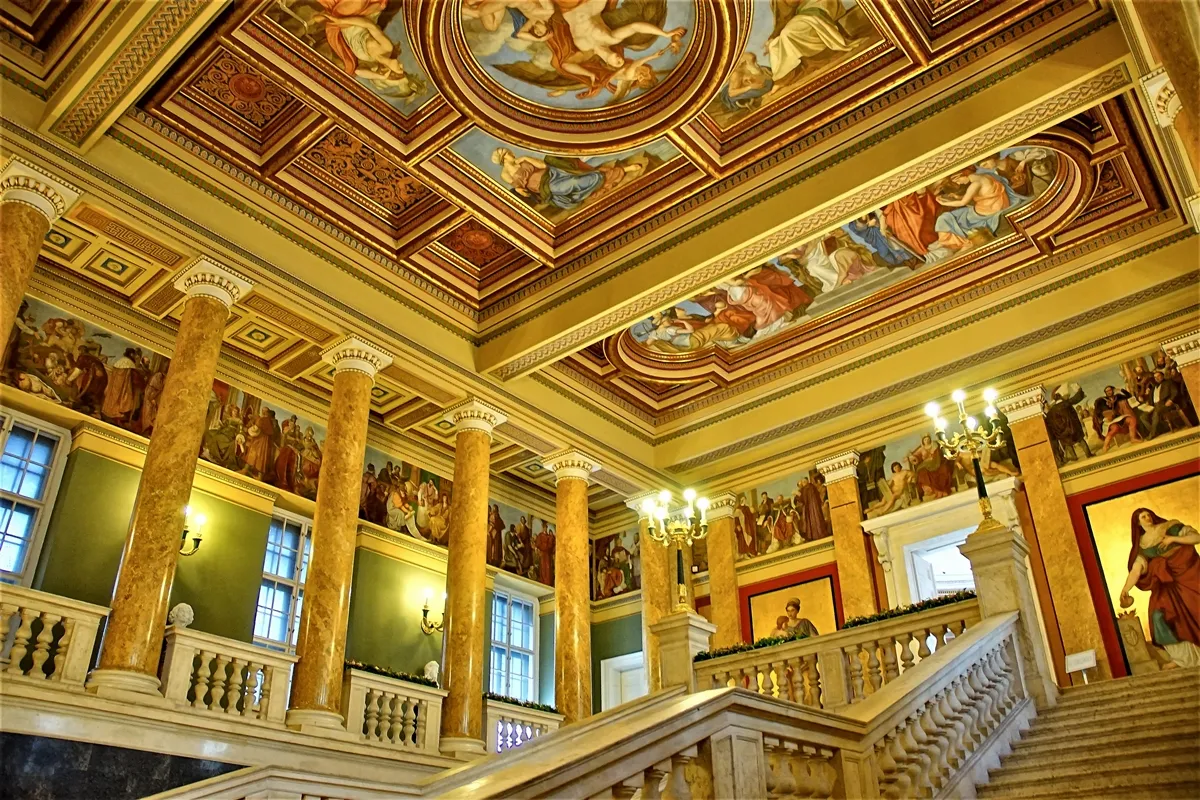
Inside, the museum’s ornate stairways and central rotunda are among the details to look for between galleries. The exhibition route is arranged chronologically; starting on the lower level helps you follow the story in sequence. English-language signage makes the displays accessible to English-speaking visitors, and the spacious layout includes places to sit.
Allow about two to three hours for a visit to the main collections. A temporary exhibition may also be on during your trip, with separate admission sometimes required, so check the museum’s website for current details before you go. The building has elevators and ramps for wheelchair and stroller access. A café and a cafeteria provide places to take a break, and the garden outside offers a pause before or after the galleries.
The garden and museum steps
The grounds around the museum are used as a meeting place and a spot to sit, especially in warmer months. Benches and green space make them a useful place to rest after time indoors. The steps are another natural stopping point: they frame the main entrance and recall Petőfi’s reading in 1848.
You can visit the grounds without taking in the collections, or include them as a short break during a museum visit. The building and garden together give the stop a different pace from moving through the galleries alone.
Perguntas frequentes
How long do you need at the Hungarian National Museum?
Allow about two to three hours to explore the museum. You may need longer if you want to see a temporary exhibition as well.
What can you see at the Hungarian National Museum?
The collections trace Hungarian history from prehistoric times to the Communist era. Highlights include the medieval Coronation Mantle and Roman stone inscriptions and carvings.
Is the Hungarian National Museum accessible to wheelchair users?
The museum has wheelchair-accessible entrances, elevators, seating and restrooms. Ramps are also available.
Is the Hungarian National Museum open on Mondays?
No. The museum is closed on Mondays.