Ancient Thera is an archaeological site on Mesa Vouno, the ridge between Perissa and Kamari in Santorini. Its remains span Dorian, Hellenistic, Roman and Byzantine periods, with traces of temples, houses, public buildings and a theater. The climb is part of the experience: the path from Perissa takes about 45 minutes, while the narrow, winding road from Kamari calls for confident driving. At the top, you can look down toward both coastal villages and across the Aegean. Choose a fine-weather day for the views.
A city on Mesa Vouno
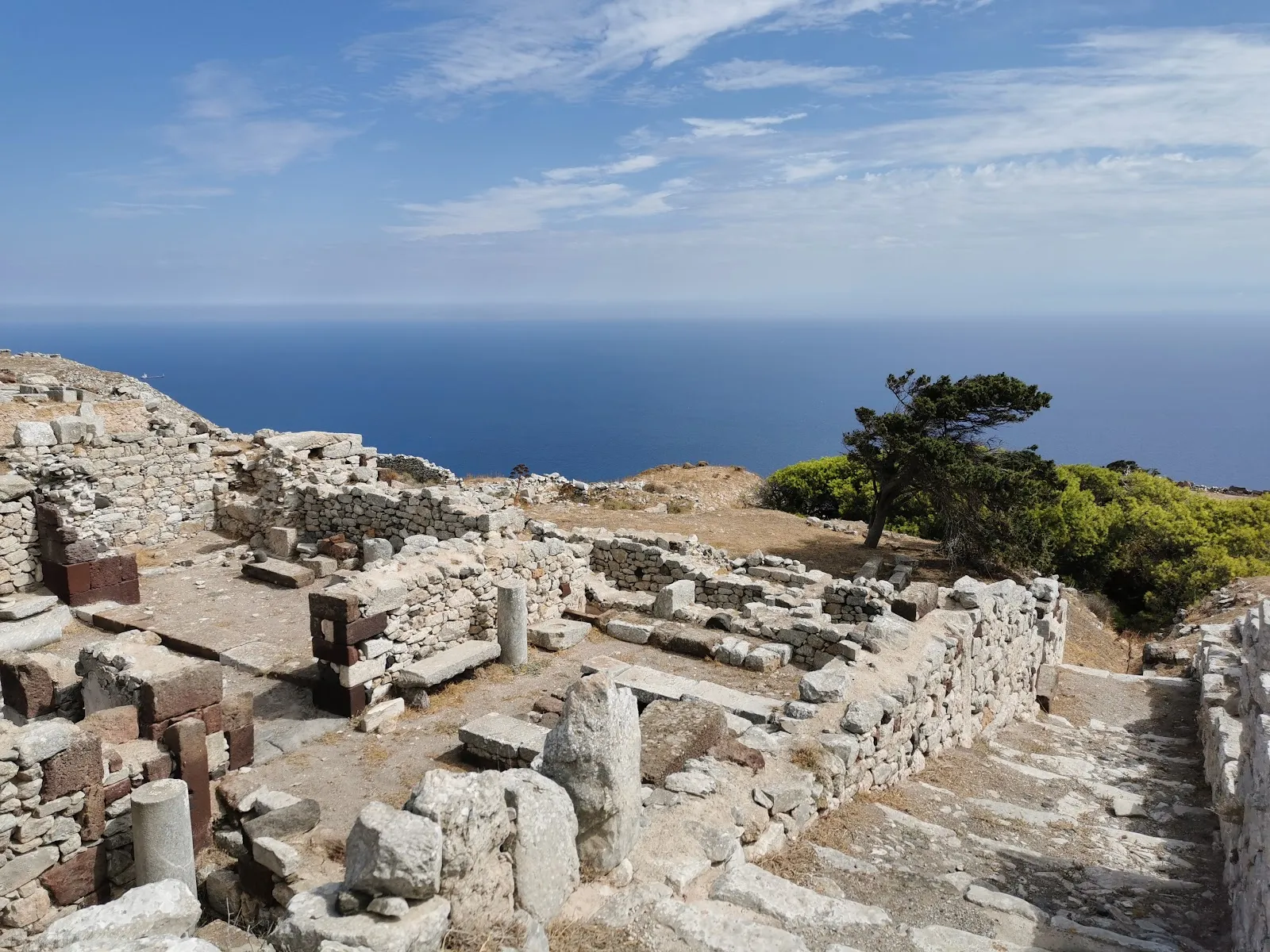
Ancient Thera occupies the ridge of Mesa Vouno, between the coastal settlements of Perissa and Kamari. Its elevated position gave the city a broad outlook over the surrounding coast and made the site naturally defensible. The settlement was founded by Dorian colonists in the 9th century BC and remained inhabited for centuries, with traces of later Hellenistic, Roman and Byzantine periods.
The ruins are spread along the mountain ridge. Foundations and short sections of wall mark the outlines of buildings, while better-preserved remains help suggest the layout of the ancient city. The agora, or public square, is among the clearest places to make out. Other excavated areas include houses, temples, administrative buildings and a theater.
What to look for among the ruins
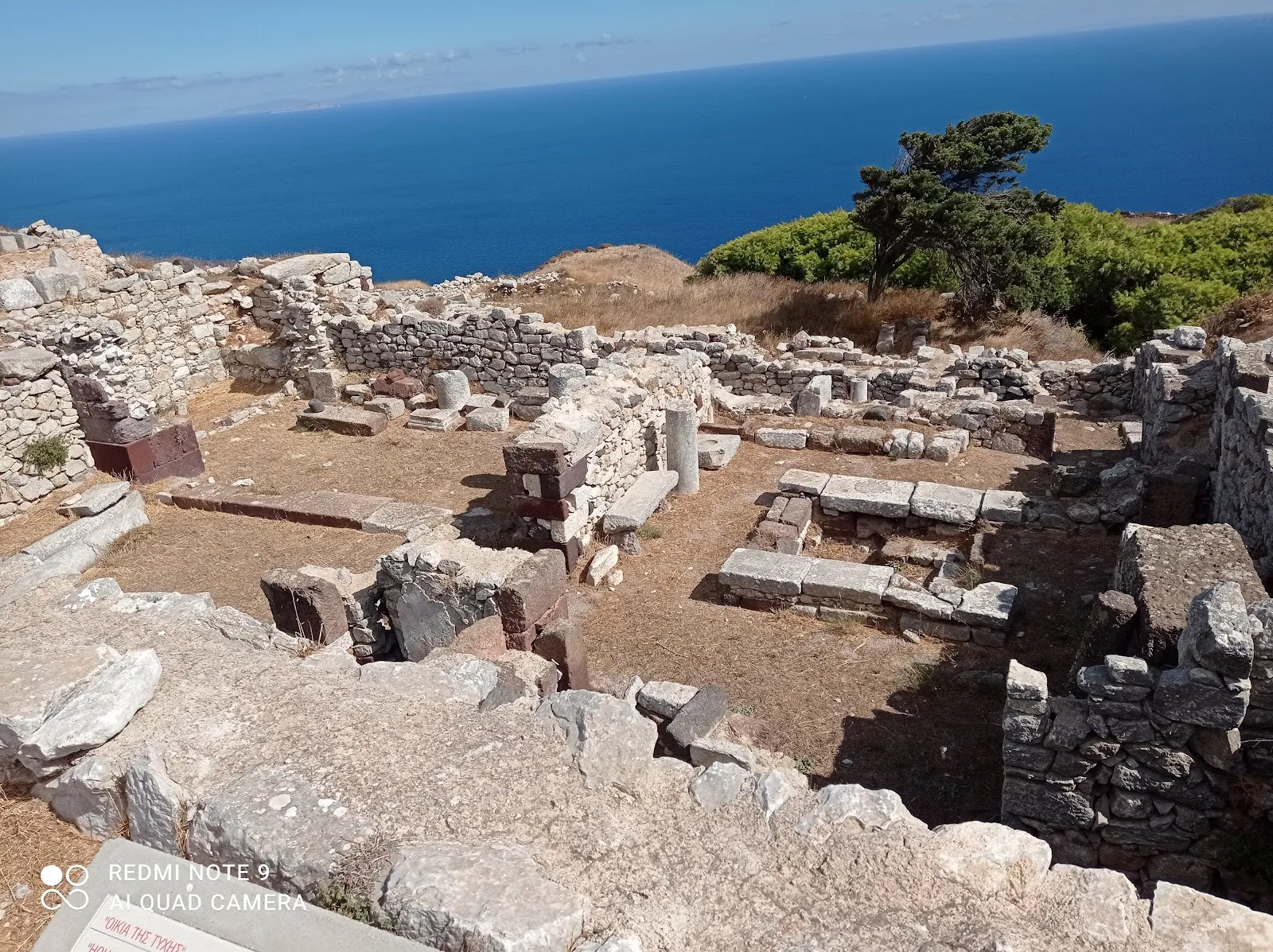
As you walk around, look for the remains of public and religious spaces as well as domestic buildings. The site includes traces of temples and a sanctuary associated with Apollo, along with a theater and structures linked to the city’s civic life. Together, these remains show that Ancient Thera was more than a hilltop lookout: it had public, religious and residential areas.
The settlement’s history is visible in layers. Dorian foundations and later Hellenistic remains sit alongside Roman and Byzantine buildings and traces of fortifications and churches. Excavations have also uncovered ceramics and inscriptions. The site’s surviving walls are incomplete, so it helps to focus on the layout and the different kinds of buildings rather than expect intact streets or houses.
Getting up to the site
From Perissa, a steep hiking path climbs the western slope of Mesa Vouno to Ancient Thera. The walk takes about 45 minutes, and suitable hiking shoes are advised. The route passes the area of Sellada, where an ancient cemetery and two tombs have been noted. It is a demanding uphill approach, so plan for the climb rather than treating it as a casual stroll.
From Kamari, an asphalt road climbs toward the archaeological site and its parking area. It is narrow and winding, with sharp bends and some tight stretches, so it is better suited to drivers at ease on that kind of road. Either approach brings you to the same ridge-top remains. Read the historical account at the roundabout before going up, and choose a fine-weather day to enjoy the views across the island and the Aegean.
Perguntas frequentes
How do you get to Ancient Thera?
You can hike up from Perissa or drive the winding road from Kamari to the parking area near the site. The Perissa hike takes about 45 minutes and involves a steep climb.
How long does the hike from Perissa take?
The uphill walk to Ancient Thera takes about 45 minutes. Wear proper hiking shoes for the steep path.
What can you see at Ancient Thera?
The site has remains from Dorian, Hellenistic, Roman and Byzantine periods, including traces of an agora, theater, temples, houses and public buildings.
Is the road from Kamari difficult?
The road is narrow and winding, with sharp bends and tight stretches. It is best for drivers who are comfortable with those conditions.