At Porscheplatz 1 in Stuttgart’s Zuffenhausen district, the Porsche Museum traces the carmaker’s story through more than 80 vehicles and around 200 smaller exhibits. The collection ranges from historic models and prototypes to racing cars and newer designs, with interactive displays and an audio guide to help explain the engineering. The building is part of the visit too: its striking modern form rises above the ground on three concrete supports. Families can also look for child-focused activities.
A collection shaped by Porsche’s history
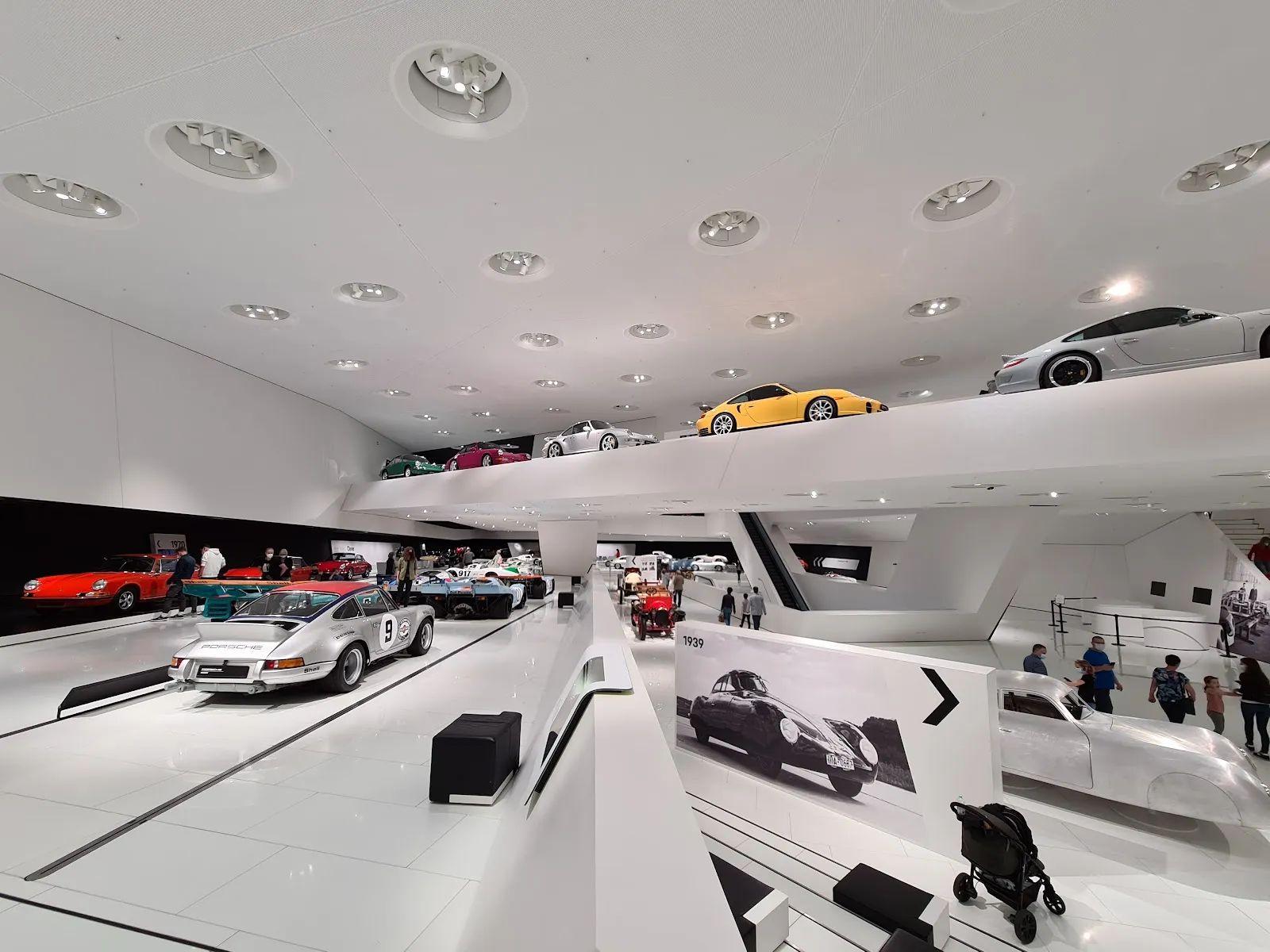
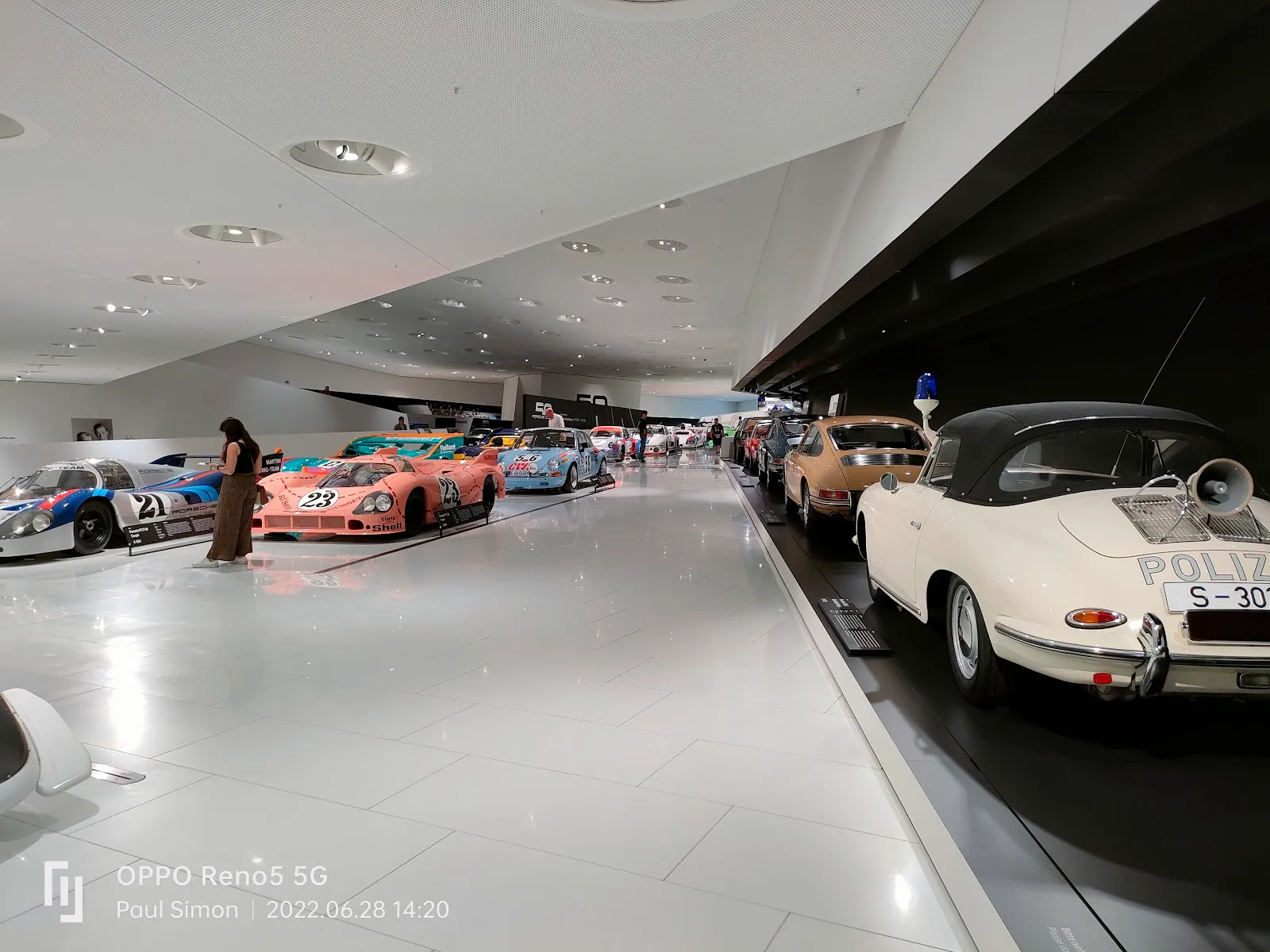
The museum presents Porsche’s product and motorsport history in chronological order. Its displays bring together more than 80 vehicles and around 200 smaller objects, covering early models, production cars, prototypes and racing machines. Familiar names include the 356, 550, 911 and 917. The collection also includes the Porsche 356 “No. 1” Roadster, a 1950 356 Coupé known as “Ferdinand”, and a 356 1500 Speedster.
Ferdinand Porsche’s engineering work is part of the story. Exhibits trace the company’s early development and the ideas that shaped its cars. One display connection reaches beyond the Porsche range: vehicles designed by Ferdinand Porsche helped lead to the Volkswagen Beetle. The museum’s account follows the evolution of the brand through its models and engineering, rather than treating each car as an isolated object.
Historic cars sit alongside contemporary vehicles, so you can compare how Porsche’s designs have changed over time. Some of the older forms still look strikingly modern. The museum also changes vehicles on display, and special exhibitions add new material to the permanent collection.
Architecture and the visitor route
The museum opened in its current form in 2009, beside Porsche’s headquarters in Zuffenhausen. Austrian architectural practice Delugan Meissl designed the building, which appears to hover above ground level. Three reinforced-concrete cores support the exhibition hall, whose shape gives the exterior a strong, forward-moving profile.
Inside, the galleries cover about 5,600 square metres. The exhibition route rises through the displays, and its layout can be easy to misread: continuing to the left helps you keep your bearings. The building’s dramatic structure is visible from within as well as outside, giving visitors another reason to look beyond the cars.
A free audio guide explains themes in the collection, including the design ideas carried through successive Porsche models. Interactive installations add another way to engage with the material. The museum is smaller and quicker to cover than Stuttgart’s Mercedes-Benz Museum, which can help if you want a focused visit to one marque rather than a full day of automotive history.
Activities for children
The museum has interactive elements aimed at families, including the Porsche 4Kids area and holiday activities. A children’s rally booklet uses puzzles and questions to encourage close attention to the vehicles; it has an extra charge. A photo opportunity inside a Porsche and a racing simulator are also mentioned among the activities, though availability can depend on what is running during your visit.
The collection can appeal to children who are interested in cars or technology, as well as adults who want to follow the company’s design and motorsport history. If you are deciding between Stuttgart’s two major car museums, the Porsche Museum provides a more compact alternative, with its own focus on Porsche models and engineering.
Perguntas frequentes
Where is the Porsche Museum?
It is at Porscheplatz 1 in the Zuffenhausen district of Stuttgart, beside the Porsche headquarters.
How many cars are on display?
The collection includes more than 80 vehicles, alongside around 200 smaller exhibits. The vehicles on display can change.
Is the Porsche Museum suitable for children?
Yes. It has interactive exhibits and child-focused activities, including Porsche 4Kids and a puzzle booklet that costs extra.
Is the Porsche Museum open on Mondays?
No. It is closed on Mondays and open Tuesday to Sunday.