
Neuschwanstein Castle stands on a rock above the Pöllat Gorge near Füssen, in the Bavarian Alps. King Ludwig II began building it in 1869 as a private retreat and a tribute to the operas of Richard Wagner, and it was still unfinished when he died in 1886. A guided tour takes you through the completed rooms, including the Singers Hall and the carved royal bedroom. The approach is part of the visit: a walk through forest or a ride uphill, then the view from Marienbrücke. Entry is by timed ticket, and photography is not allowed inside.
Ludwig II's castle, 1869 to 1886
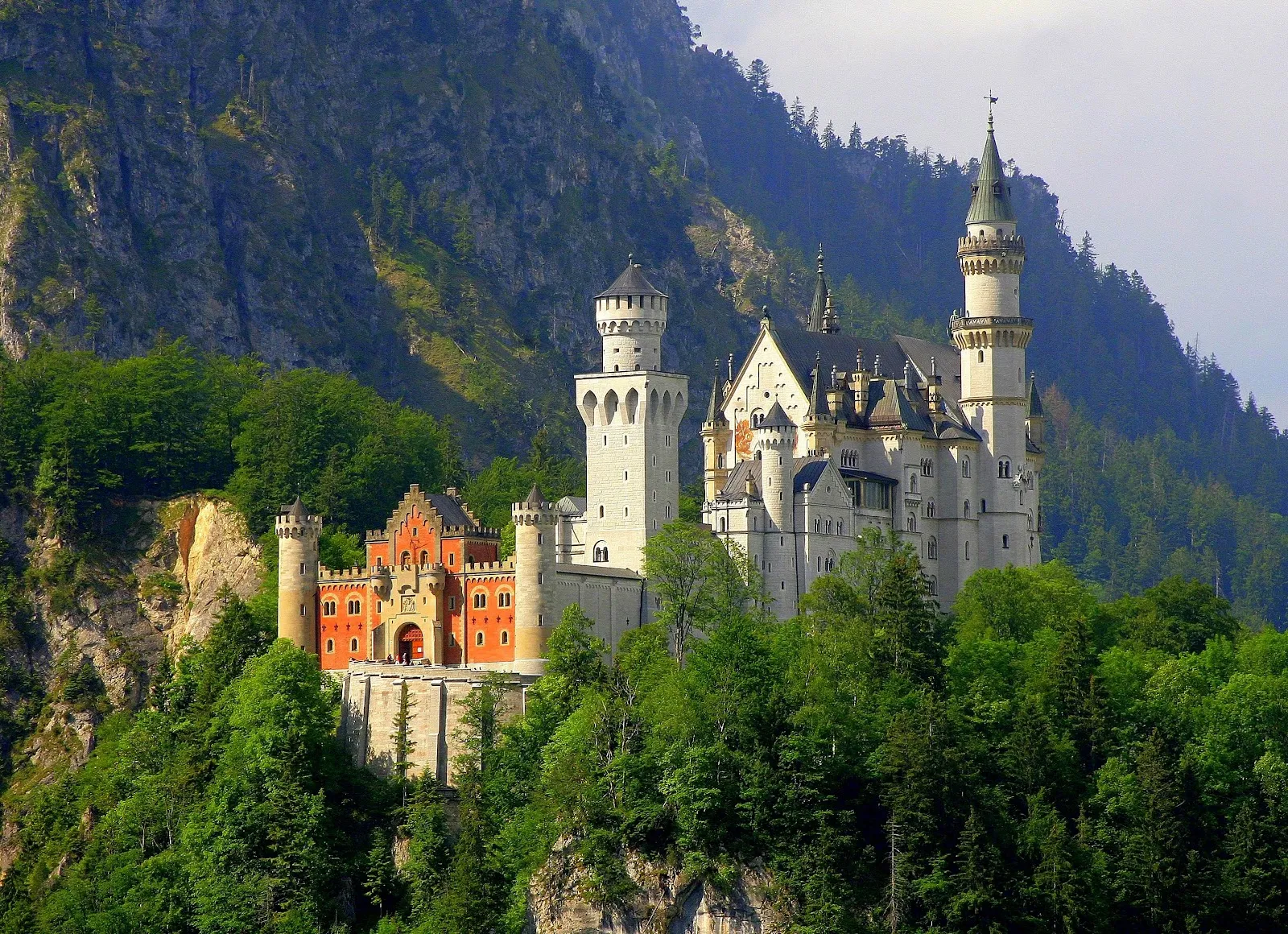
Neuschwanstein was commissioned by King Ludwig II of Bavaria and begun in 1869. It was built on the site of two older fortresses, Vorder- and Hinterhohenschwangau. To make room, the rock plateau was lowered by about 8 metres with blasting. The foundation stone was laid on 5 September 1869, after a road and a water pipeline had been built.
The castle was first called New Hohenschwangau. It was conceived as a grand recreation of Hohenschwangau Castle, where Ludwig spent his childhood, and the older castle stands just across the valley. The present name means New Swan Stone, and swan motifs appear throughout the interior.
Ludwig did not use an architect for the design. He hired a theatre stage designer, and he saw the building as a stage for the world of Germanic mythology, shaped by the music of his friend Richard Wagner. The result is a Romanesque Revival castle in light limestone, built in medieval style but fitted with the latest technology of its day.
The king died unexpectedly in 1886 and had slept in the castle only about 11 nights. The plans called for more than 200 rooms, and only 15 rooms and halls had been completed. After his death the castle was opened to paying visitors, partly to help cover debts and finish construction. It remains state property.
What the guided tour covers
The interior can only be seen on a guided tour with a timed ticket. Tours start every few minutes, so the rooms are busy and the group keeps moving. Expect many steps along the way. The ticket includes a digital audio guide in several languages, and the tour itself runs about 30 minutes.
The Singers Hall is the largest room on the route. Its paintings refer to Wagner's work, with frescoes of scenes from Tannhäuser. The king's bedroom is covered in intricately carved wood. The Throne Room, in a neo-Byzantine and Romanesque style, was nearly finished when work stopped. Elsewhere you will see gold, velvet and heavy furniture.
Photography is not allowed inside, so take your pictures from the balconies and from the overlook next to the castle cafe. A pushchair can be left at the information counter inside. There are two gift shops. The second one, on the way out, is the original shop and is locally owned.
Getting up to the castle
You cannot drive to the entrance. Parking is in Hohenschwangau, in four signposted areas: P1 at the duty free shop, P2 and P3 next to the Kainz restaurant, and P4 at the Alpsee. The ticket centre is also in Hohenschwangau, and the walk from there to the castle is about 30 minutes.
If you are coming by train from Munich, the journey to Füssen takes about 2 hours. The castle is a short way from the town.
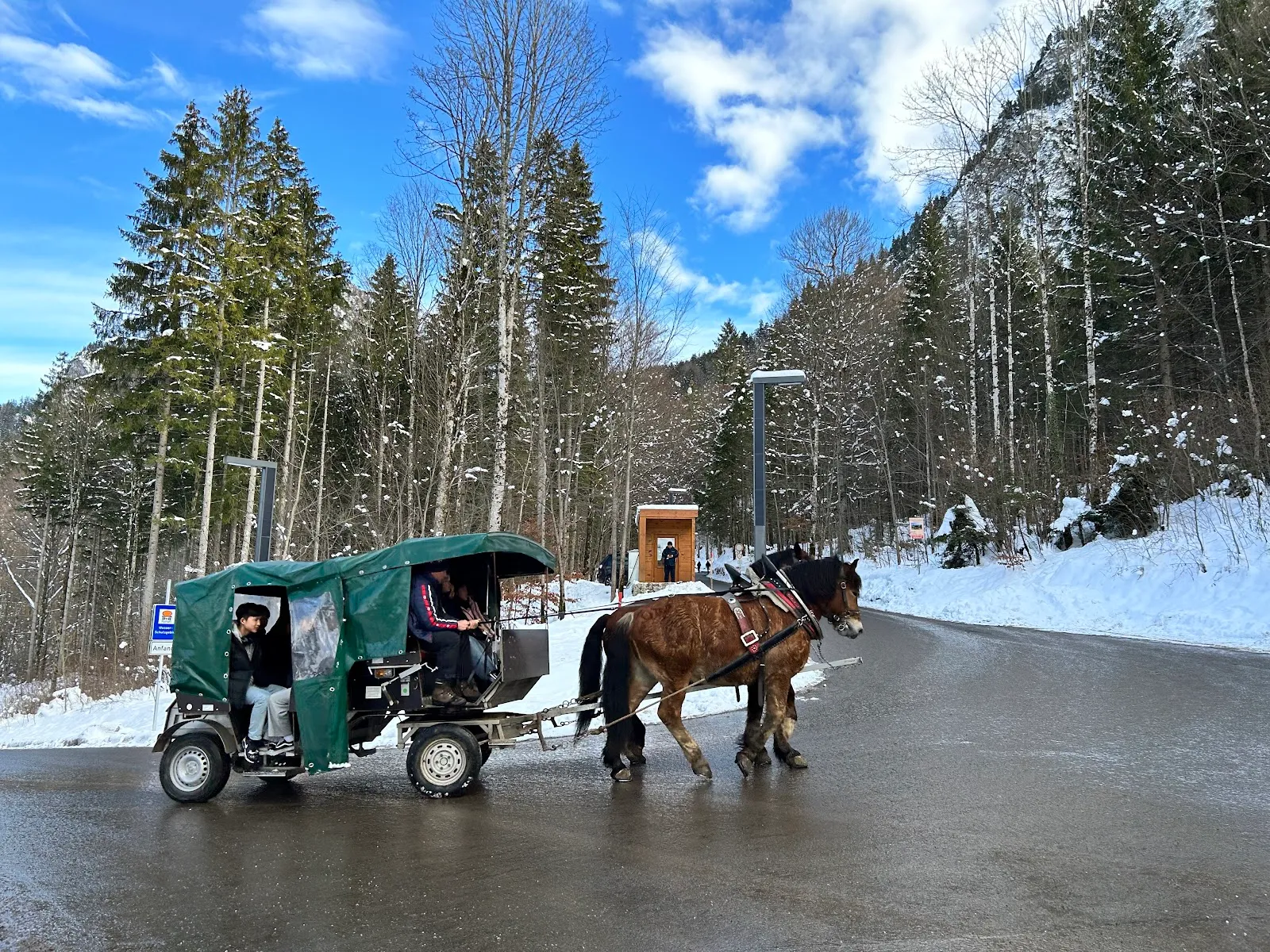
The path is paved and climbs steadily through forest, with small waterfalls beside it. Shuttle buses and horse-drawn carriages run uphill for an extra fee, and the Deutschlandticket does not cover them. Carriages seat you with other passengers. Whichever you choose, allow an extra 5 to 10 minutes on foot from the drop-off point to the entrance.
Marienbrücke and other viewpoints
Marienbrücke crosses the Pöllat Gorge at a considerable height and is the standard viewpoint for the castle. It is a 15 to 20 minute walk from the exit of the tour. The bridge is long and sturdy but sways slightly, which matters if heights make you uneasy. It is calmer early in the day, before the entrance area fills up.
On the way up, the route passes another good vantage point shortly before the bridge. From the castle's own balconies, on a clear day, you look out over the plain and toward the Alps.
Hohenschwangau and Füssen nearby
Hohenschwangau Castle faces Neuschwanstein across the valley. It was the summer residence of the Bavarian royal family, and its tours cover how the family lived. It belongs to the Wittelsbach family, unlike Neuschwanstein. The Museum of the Bavarian Kings is on the shore of the Alpsee, in a former hotel called the Alpenrose, with digital documents, photographs and a few ceremonial pieces in gold and china.
The village below has shops and restaurants, and Füssen, the nearest town, is worth about half a day of its own.
Perguntas frequentes
Do you need to book tickets for Neuschwanstein Castle in advance?
Yes, booking ahead is advisable, because the interior is open only on timed guided tours and summer slots can sell out weeks in advance. Tickets are sold online and at the ticket centre in Hohenschwangau, not at the castle. A ticket costs 15 euros, plus a reservation fee when booked online.
How long does a visit to Neuschwanstein Castle take?
The guided tour takes about 30 minutes. With the walk up, queues and Marienbrücke, plan about half a day from arrival to departure.
Can you take photos inside Neuschwanstein Castle?
No, photography and video are not allowed inside. You can photograph the castle from outside, from its balconies and from Marienbrücke.
Can you drive up to Neuschwanstein Castle?
No. Park in Hohenschwangau and walk uphill, about 1.5 miles. A shuttle bus or horse-drawn carriage costs extra, and you still have a short walk at the top.
When is the best time to visit Neuschwanstein Castle?
Spring and autumn have smaller crowds than summer. Go on a weekday and either early or late in the day. Winter is the quietest season, but the weather can be poor.


