Narikala Fortress sits on a hill above Tbilisi's Old Town, and its walls date back to the 4th century. From the top you see the Mtkvari (Kura) River, the rooftops of the old quarter and the hills beyond. Reach it by the cable car from Rike Park or climb the steep path from the Old Town. Plan time for the walls, the small church with its frescoes and the view at sunset, which is one of the best in the city.
From the 4th century to today
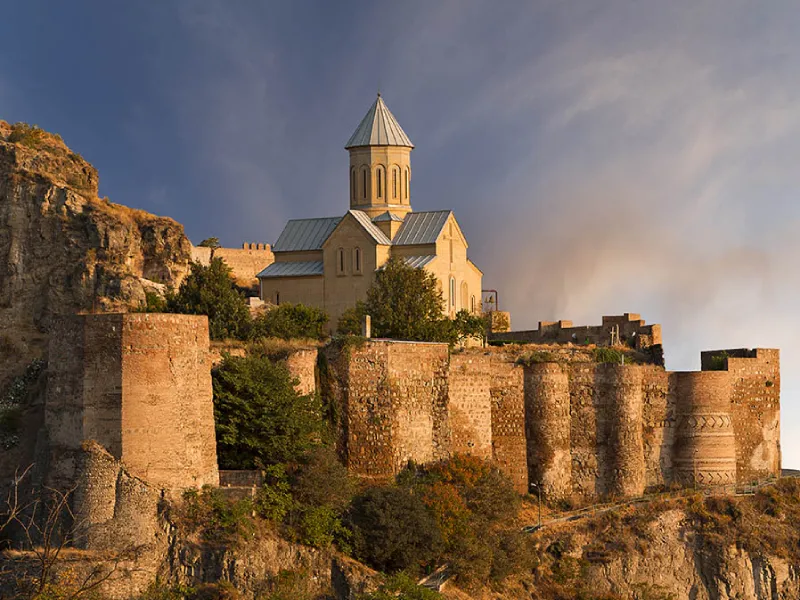
The first fortifications on the hill are dated to the 4th century, when the site was known as Shuris-Tsikhe. Some accounts describe it as a Persian citadel in its early years.
Arab rulers expanded the fortress in the 7th and 8th centuries. Later Umayyad, Mongol and Georgian rulers repaired and altered it, so the walls you see today combine several periods. The current form is largely from the 16th and 17th centuries.
In 1827 an earthquake or an explosion damaged the inner part of the fortress, and much of it was left in ruins. The site was renovated in 1996.
The walls and the views
The walls climb the hill in irregular lines, and the towers are most intact on the side facing the botanical garden. Walking the upper sections gives the widest view over the city.
From the walls you can see the Old Town below, the Peace Bridge and Rike Park across the river, and the hills that surround Tbilisi. The walls also drop toward the river, and in the past they gave the fortress control over the trade routes that ran beside the water.
The best light comes in the late afternoon, when the sun drops behind the walls and the river turns warm colours.
The church and the frescoes
Inside the fortress grounds stands St Nicholas Church, a small building that is one of the few intact structures on the site. Its walls and ceilings are painted with frescoes showing scenes from the Bible and events from Georgian history.
The church is small, so visitors usually step in for a short look rather than a long visit. Keep your voice low, dress modestly and follow any signs about photography.
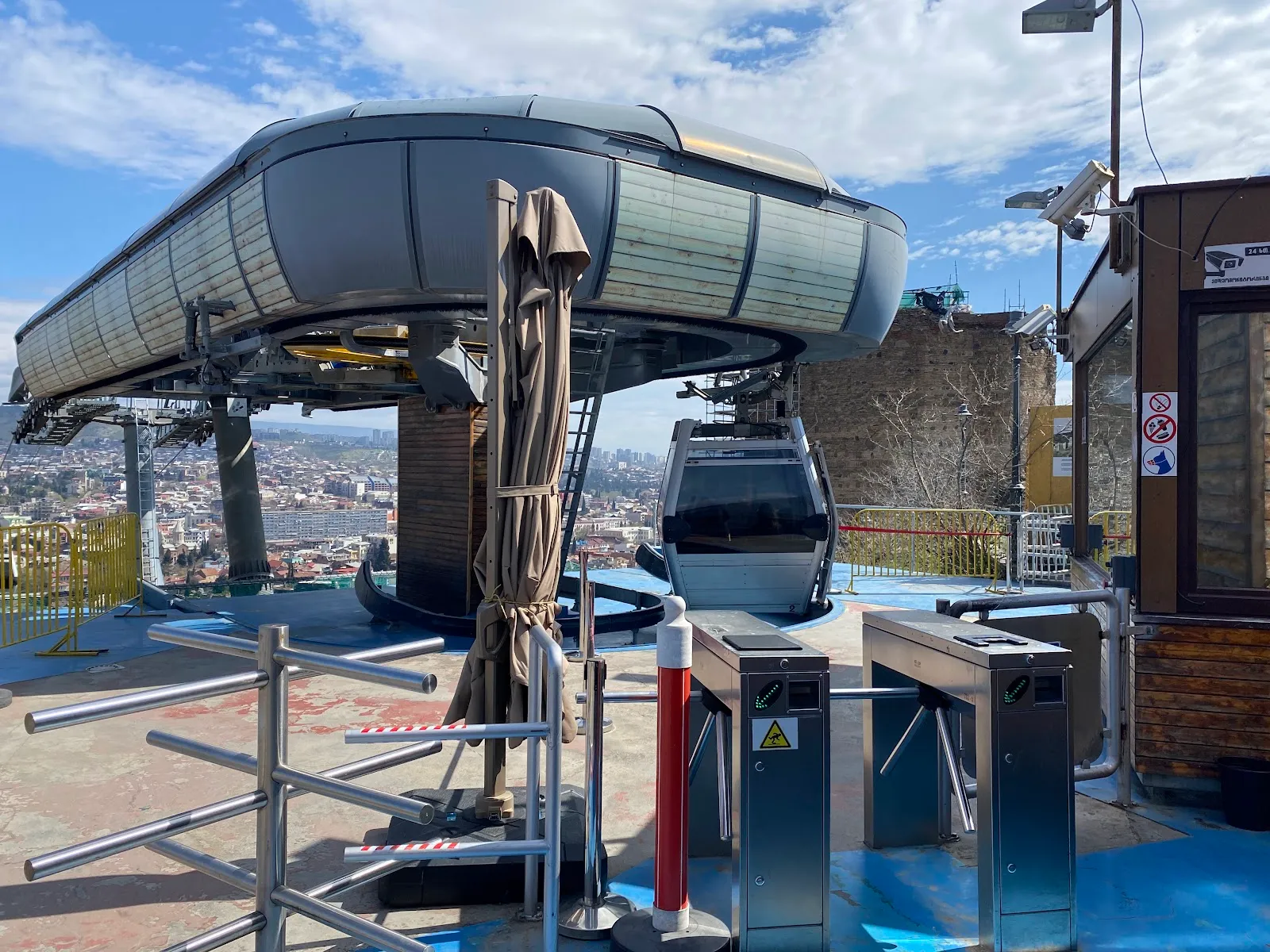
The church is close to the cable car station, so it is easy to add to a visit that also covers the walls.
Mother of Georgia and the ridge
A short walk along the ridge from the fortress leads to Kartlis Deda, the Mother of Georgia statue. The aluminium figure was made by Elguja Amashukeli and erected in 1958. It stands about 20 metres tall, dressed in traditional Georgian clothing, with a cup of wine in one hand and a sword in the other.
The statue is a common symbol of Georgian hospitality and readiness to defend. Visitors often photograph the two monuments together, so you can see both in one walk.
You can also reach the ridge from the botanical garden side, which makes it easy to build a loop with the fortress.
Getting there on foot or by cable car
The cable car leaves from Rike Park, on the far side of the river from the Old Town. The ride takes about 5 minutes, and the cars have see-through floors. A one-way ticket costs about 2.5 GEL.
On foot, the climb takes about 20 minutes and is steep. Two routes start in the Old Town: one from Abanotubani along Orbiri Street, and one by the Betlemi Street stairs from Lado Asatiani Street. Another walk starts at Meidan and crosses the Metekhi bridge.
The cable car is the easier option after a day of walking, and the climb gives you a slower view of the streets and the old houses.
Perguntas frequentes
Is there an entry fee for Narikala Fortress?
Entry to the fortress is free. The cable car costs about 2.5 GEL each way.
How long do you need at Narikala Fortress?
Plan about 30 to 60 minutes for the walls, the small church and the views.
How do you get to Narikala Fortress?
Take the cable car from Rike Park, a ride of about 5 minutes, or walk up the steep path from the Old Town, which takes about 20 minutes.
Can you visit the Mother of Georgia statue from the fortress?
Yes. A short walk along the ridge leads from the fortress to the statue.
Is the fortress open to visitors?
Renovation work has closed parts of the site in recent years, so check its current status before you go.