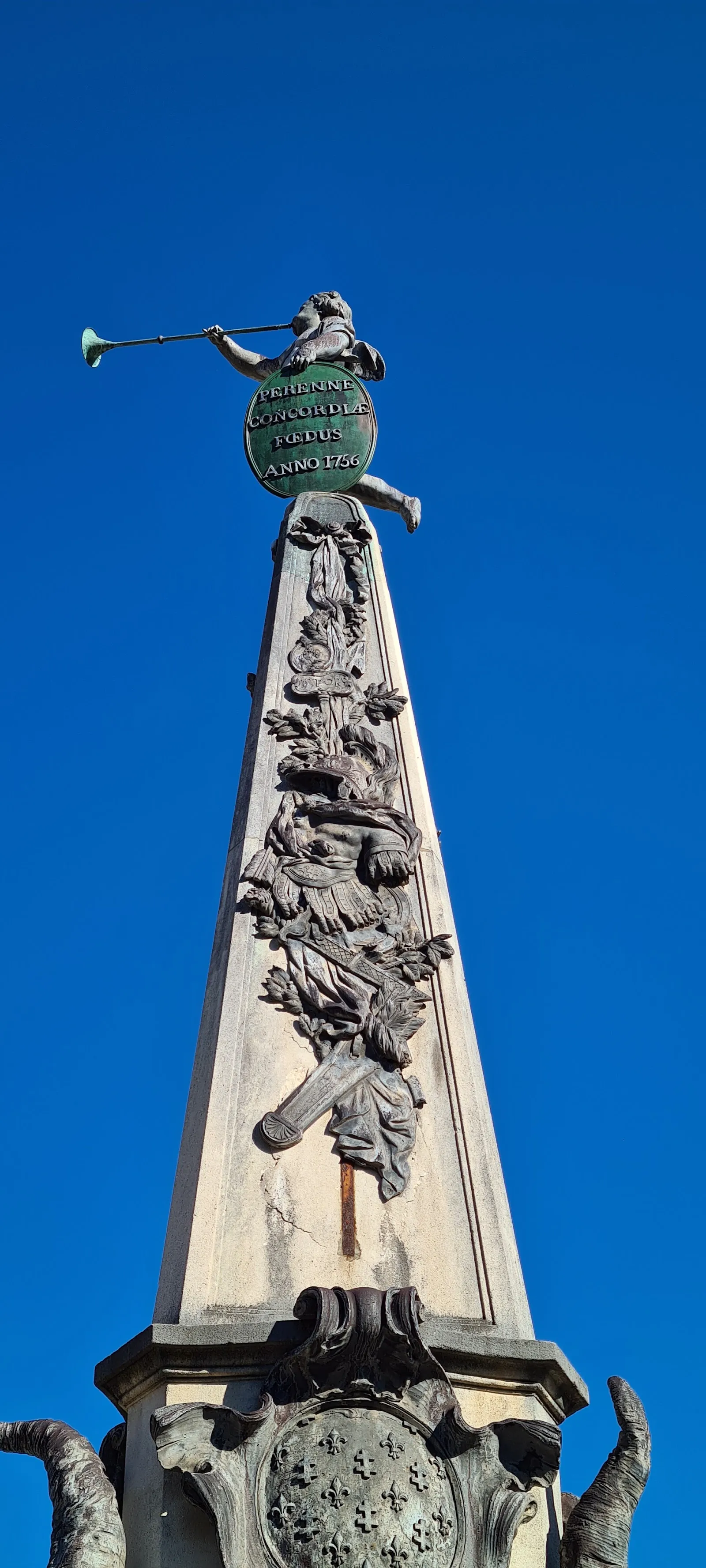
Place Stanislas is the main square of Nancy, in northeastern France, and the natural first stop in the city. It was built in the 18th century for Stanislas Leszczynski, the Polish-born Duke of Lorraine. Today it is a pedestrian square of pale stone buildings, gilded wrought-iron gates and rococo fountains, with the town hall, the opera house and the Museum of Fine Arts facing onto it. It is a UNESCO World Heritage Site. Cafés along its edges give you a seat from which to watch the stone and gold change with the light.
Who built the square and why
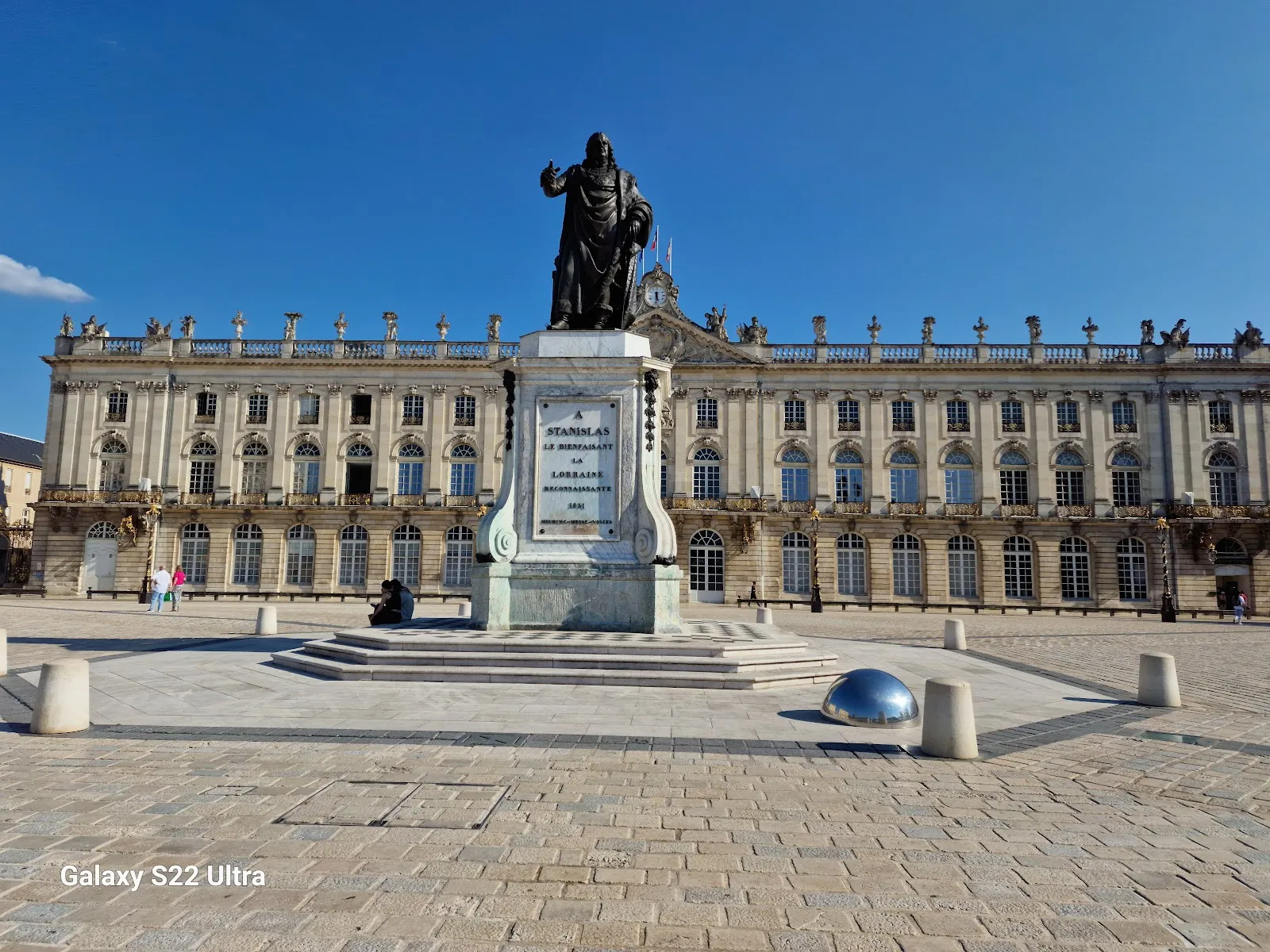
Place Stanislas was commissioned by Stanislas Leszczynski, the former king of Poland, whom Louis XV, his son-in-law, installed as Duke of Lorraine. In 1737 he decided to create a square to honour the French king. It went up in the early 1750s to designs by the architect Emmanuel Héré, with ironwork by Jean Lamour and fountains by Barthélemy Guibal.
The square was planned to join two parts of the city, the Old Town and the New Town, into one royal ensemble. It was first called Place Royale and carried a statue of Louis XV. During the Revolution the square changed names several times and the royal statue was removed. In 1831 it took the name Place Stanislas for good, and a statue of the duke, sculpted by Jacquot, replaced the king's. Lorraine became part of France in 1766, and Nancy kept its status as a regional capital.
The buildings around the square
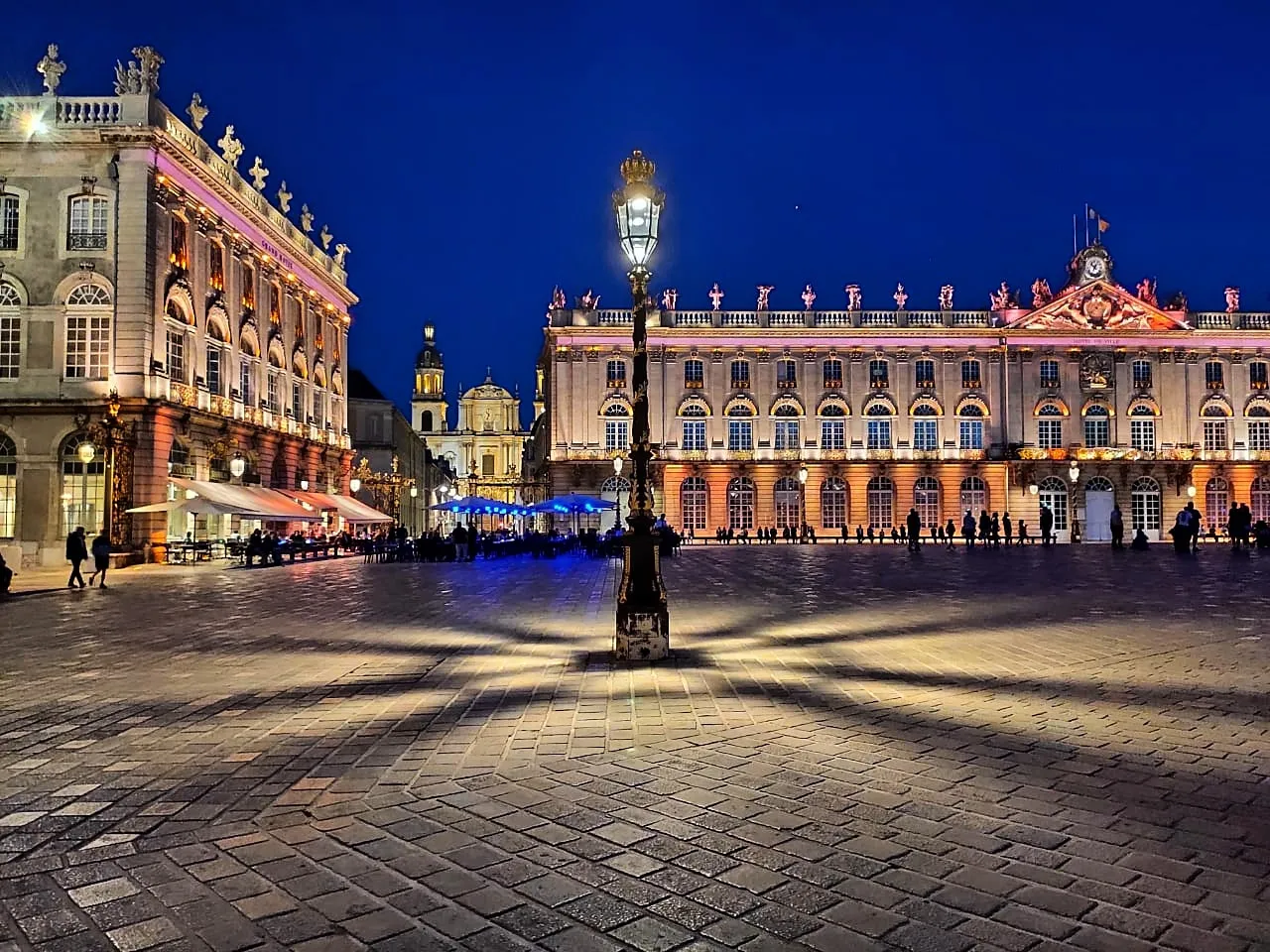
The square is lined with pale stone pavilions with balconies and balustrades. The Hôtel de Ville carries the coats of arms of both Stanislas and the city of Nancy. The Opéra national de Lorraine, the Museum of Fine Arts, the Grand Hôtel and the Pavilion Jacquet stand on the other sides. Lower buildings face the town hall. They were designed to fit the cannons on the old ramparts.
The square measures about 410 by 347 feet, roughly twice the size of a football field. The surfaces are pale and the details gilded, which is why the square seems to glow in low light. The Museum of Fine Arts is a convenient stop if you want to go inside one of the buildings.
Gates, fountains and the statue
The wrought-iron gates, black with gold leaf, are the work that made Jean Lamour's name. They connect the buildings and mark the entrances to the square. Guibal's two rococo fountains stand in the corners. One shows Neptune with his trident, with the lys-de-France on its crown. Cherubs and other sculptures decorate the fountains and the rooftops.
At the centre stands the statue of Stanislas. On the north side, a triumphal arch built in the mid-1750s to honour Louis XV opens onto a paved avenue.
The wider UNESCO ensemble
Beyond the arch lies Place de la Carrière, which was once a Renaissance square used for jousts. Héré remodelled it so that the whole area would look like a single project. Place d'Alliance completes the group. Together the three squares have been a UNESCO World Heritage Site since 1983. The square was restored and renovated in 2005, and in 2021 the French public voted it their favourite monument.
From here you can reach the rest of the historic centre on foot. Nearby are the Parc de la Pépinière, the 16th-century ducal palace, the old medieval gate and Place Saint-Epvre, where you can have a drink in the shadow of the basilica.
Around the square through the day
The square is closed to cars, and the place feels like a gathering spot for Nancy residents. Street performers often gather here, and the fountains and wide open space suit families with small children. At Christmas the winter lights and a tall tree decorate the square.
The café-restaurant Jean Lamour, at 7-9 Place Stanislas on the northwest corner by Rue Héré, has indoor and outdoor seating. Rue Héré leads north from the square past dozens of cafés, restaurants and bars.
Perguntas frequentes
Is there an entry fee for Place Stanislas?
No. It is an open pedestrian square and you can walk through it freely at any hour, day or night.
When was Place Stanislas built and by whom?
It was built in the early 1750s to designs by Emmanuel Héré, with ironwork by Jean Lamour and fountains by Barthélemy Guibal. Stanislas Leszczynski, Duke of Lorraine, commissioned it in honour of Louis XV.
Is there a light show at Place Stanislas?
Yes, in summer. A free show of about 30 minutes is projected onto the surrounding buildings in the late evening. Check the local schedule for the exact start time.
What is there to see near Place Stanislas?
The Arc de Triomphe leads to Place de la Carrière and Place d'Alliance. The Parc de la Pépinière, the ducal palace and Place Saint-Epvre are also within walking distance.
Is Place Stanislas wheelchair accessible?
The entrance is wheelchair accessible, and there is accessible parking. Parking is paid.