
Marseille Cathedral, formally Cathédrale Sainte-Marie-Majeure, stands on Place de la Major beside the waterfront, between the Old Port and the newer commercial port. Its striped exterior pairs local Cassis stone with green Florentine marble, while the interior shifts to marble, mosaics and colorful pillars. Built in the 19th century in a Romanesque-Byzantine style, it is among France’s largest cathedrals. Step inside for the domed ceilings and Mediterranean-influenced chapels, or admire the façade from the esplanade. Entry is free.
A new cathedral beside an older church
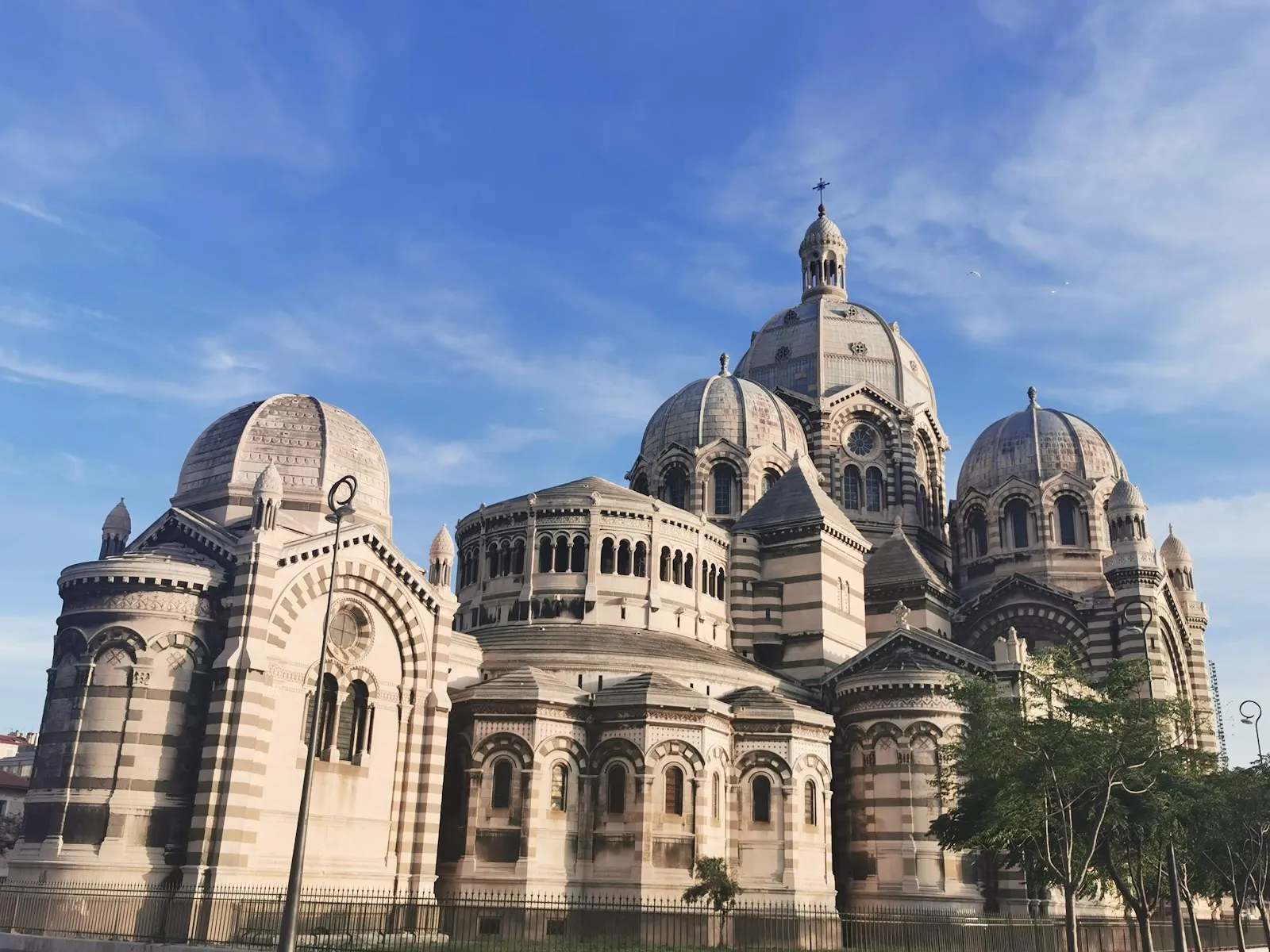
The building known today as La Major was constructed from 1853 to 1894, during a period when Marseille was growing and prospering. Napoleon III visited the city in 1852 and laid the foundation stone after encouragement from Bishop Charles Joseph Eugène de Mazenod.
The 19th-century cathedral rose on the site of an earlier Romanesque church. Parts of that predecessor were removed during construction; the older structure’s choir and one bay of its nave remain incorporated into the site. The cathedral’s history therefore spans more than one building, though the monumental structure that dominates the waterfront is largely a work of the 1800s.
Romanesque and Byzantine forms
La Major combines Romanesque and Byzantine influences. Its design is associated with Henri-Jacques Espérandieu and Léon Vaudoyer. Round arches, multiple domes and cupolas give the exterior its distinctive profile, while alternating bands of green and pale stone make the façade stand out from the surrounding port buildings.
The striped finish uses local Cassis stone and green Florentine marble. The scale is equally striking: the cathedral is about 140 metres long, and its central dome rises around 70 metres. It is one of the largest churches built in Europe during the 19th century and can be seen from parts of the Old Port.
Inside the cathedral
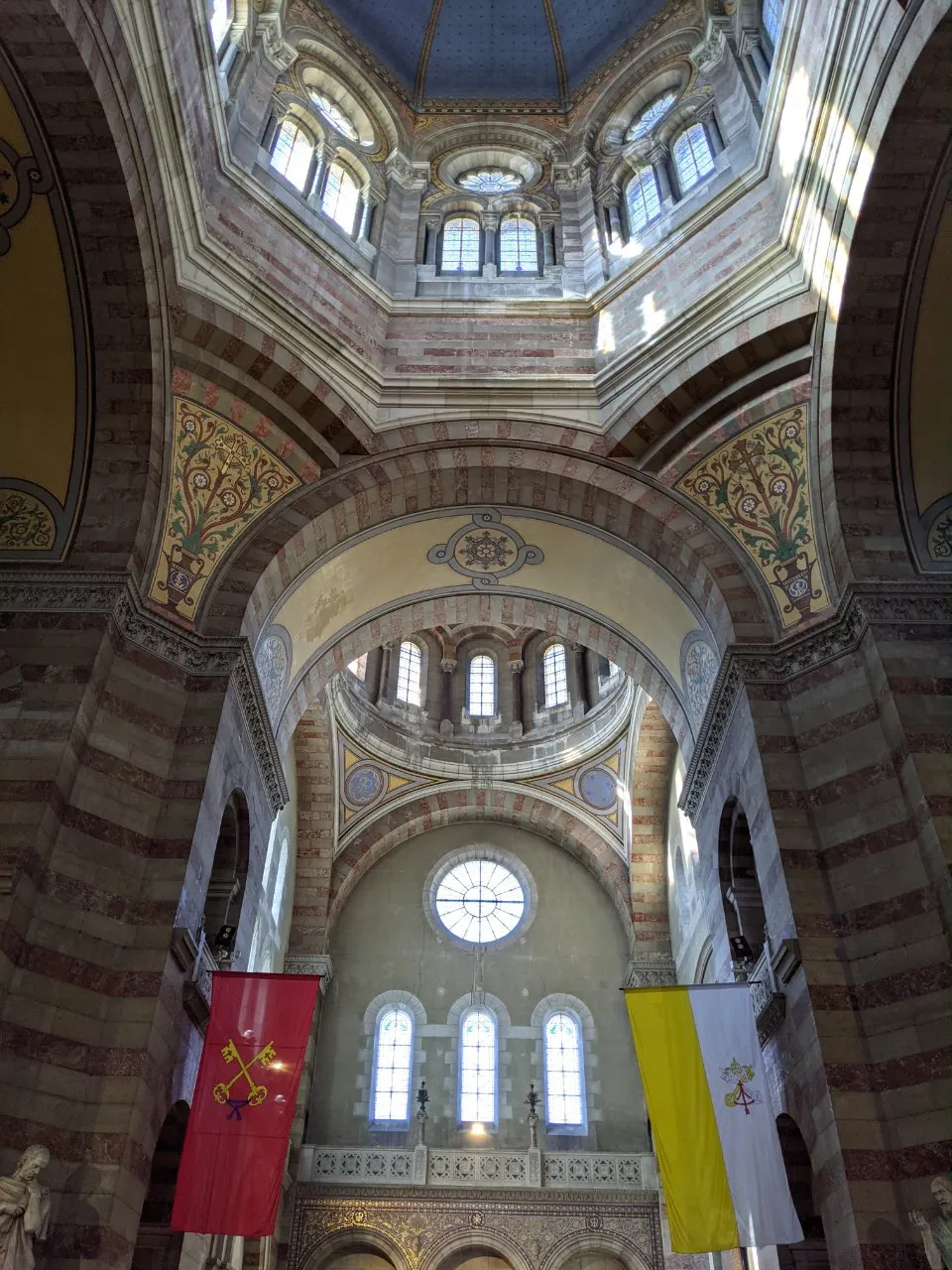
The interior offers a marked change from the exterior stonework. Marble mosaics cover parts of the floor and domed ceilings, with colorful pillars and decorated chapels around the main space. The side chapels draw on different Mediterranean influences, giving them distinct details to look for as you walk through the building.
Allow time to look beyond the central space: the chapels around the ambulatory contain further decorative work. Information about the cathedral’s construction and artworks is available through an app linked by a QR code on posters inside. A small-group tour is another option for learning about the building’s history, architecture and symbolism.
La Major is a Catholic cathedral, so treat the interior as a place of worship: keep your voice low and choose respectful clothing. The cathedral is close to MuCEM and the historic Le Panier district, making it straightforward to include with a waterfront walk.
Perguntas frequentes
Is Marseille Cathedral free to enter?
Yes. Entry is free.
Where is Marseille Cathedral?
It is on Place de la Major, beside the waterfront and near MuCEM, between the Old Port and the newer commercial port.
What architectural style is Marseille Cathedral?
The 19th-century building combines Romanesque and Byzantine influences, with a striped stone façade, domes and mosaics.
How long should you spend at Marseille Cathedral?
Allow around 30 to 60 minutes to see the interior and walk around the exterior.


