
At the Royal Albert Dock, Liverpool’s Maritime Museum traces the port’s seafaring history through ship models, maritime art, uniforms and objects recovered from wrecks. Exhibitions explore the city’s links to the Titanic and Lusitania, emigration, merchant shipping and the transatlantic slave trade. Interactive displays and family activities add ways to engage with the stories. The International Slavery Museum is in the same building, so you can explore both in one visit. Admission is free, and the museum is wheelchair accessible.
Liverpool’s port and the wider world
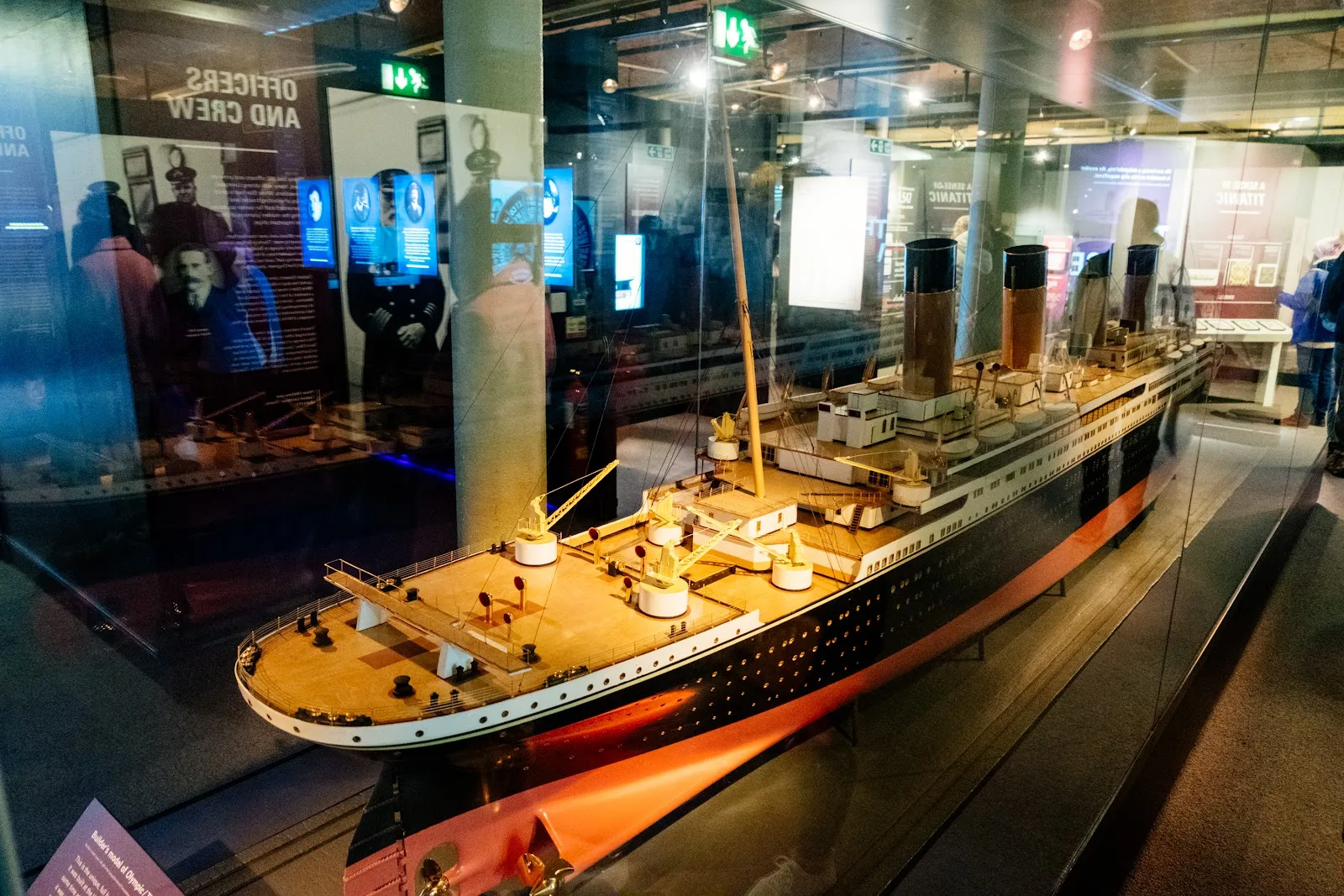
The museum follows Liverpool’s development as a major port and its connections with shipping, trade and migration. Displays cover the social and commercial history of the docks, the merchant navy and life at sea, with objects, paintings, ship models and historic vessels illustrating different parts of that story.
Liverpool was a departure point for people emigrating to North America. Exhibitions explore the journeys made through the city and the port’s links with communities beyond Britain. The museum also covers Liverpool’s role in the Battle of the Atlantic during the Second World War.
The Titanic, Lusitania and life at sea
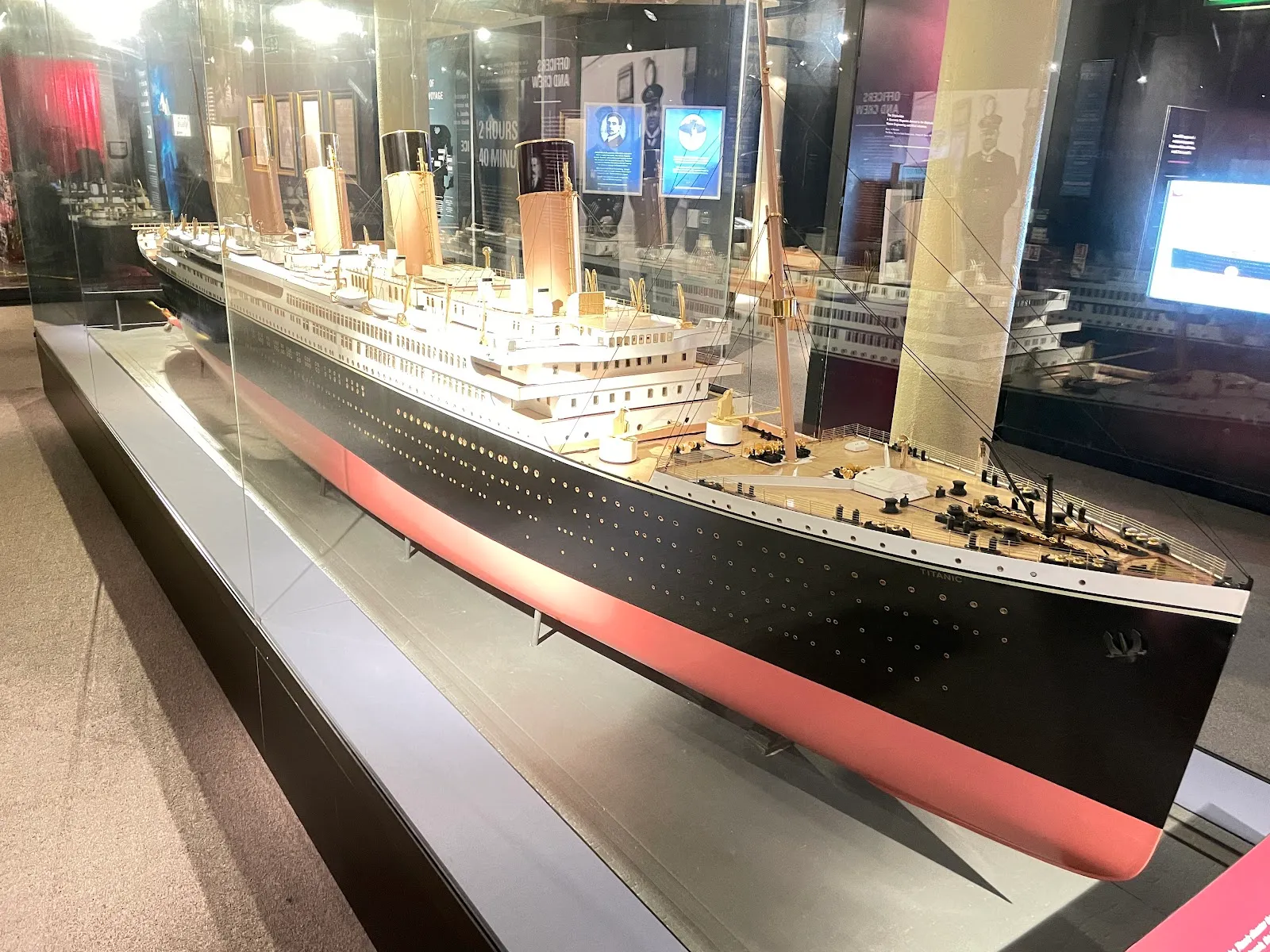
Liverpool’s connection to the Titanic runs through the stories of the people associated with the ship. The museum explores its design, construction, voyage and sinking, including the Liverpool crew members who sailed aboard it. The Lusitania and Empress of Ireland are among the other passenger liners whose tragedies are part of the museum’s maritime story.
The Life on Board gallery looks at seafaring through the experiences of passengers and crew. Elsewhere, ship models, maritime paintings, posters from the age of ocean liners, uniforms and objects recovered from wrecks show the range of material connected to Liverpool’s maritime past.
The International Slavery Museum
The International Slavery Museum shares the building and addresses Liverpool’s involvement in the transatlantic slave trade, as well as contemporary slavery and human rights. Its subject matter is difficult, and the displays tell the history of enslaved people and the trade that carried them across the Atlantic. Give this part of the visit time and approach its material with care.
Customs, docks and family activities
Customs and Excise displays examine smuggling, trade and the work of officers at sea. The Seized exhibition includes confiscated objects and hands-on elements for children. Family activities and trails may also be available, so check the museum’s website for current information before setting out.
The waterfront location makes it easy to pair the museum with a walk around Royal Albert Dock. The building also has a café overlooking the dock and a shop. If you are planning a longer museum day, allow time for the International Slavery Museum as well.
Perguntas frequentes
Is Liverpool’s Maritime Museum free to enter?
Yes. Admission is free.
How long should I allow for a visit?
Allow 1 to 2 hours for the Maritime Museum. Plan extra time if you also want to see the International Slavery Museum in the same building.
What can you see at the Maritime Museum?
Displays cover Liverpool’s port and seafaring history, including ship models, maritime art, objects from wrecks, and exhibitions on the Titanic, Lusitania, migration and life at sea.
Is the Maritime Museum wheelchair accessible?
Yes. The museum has a wheelchair-accessible entrance, seating, restrooms and parking.


