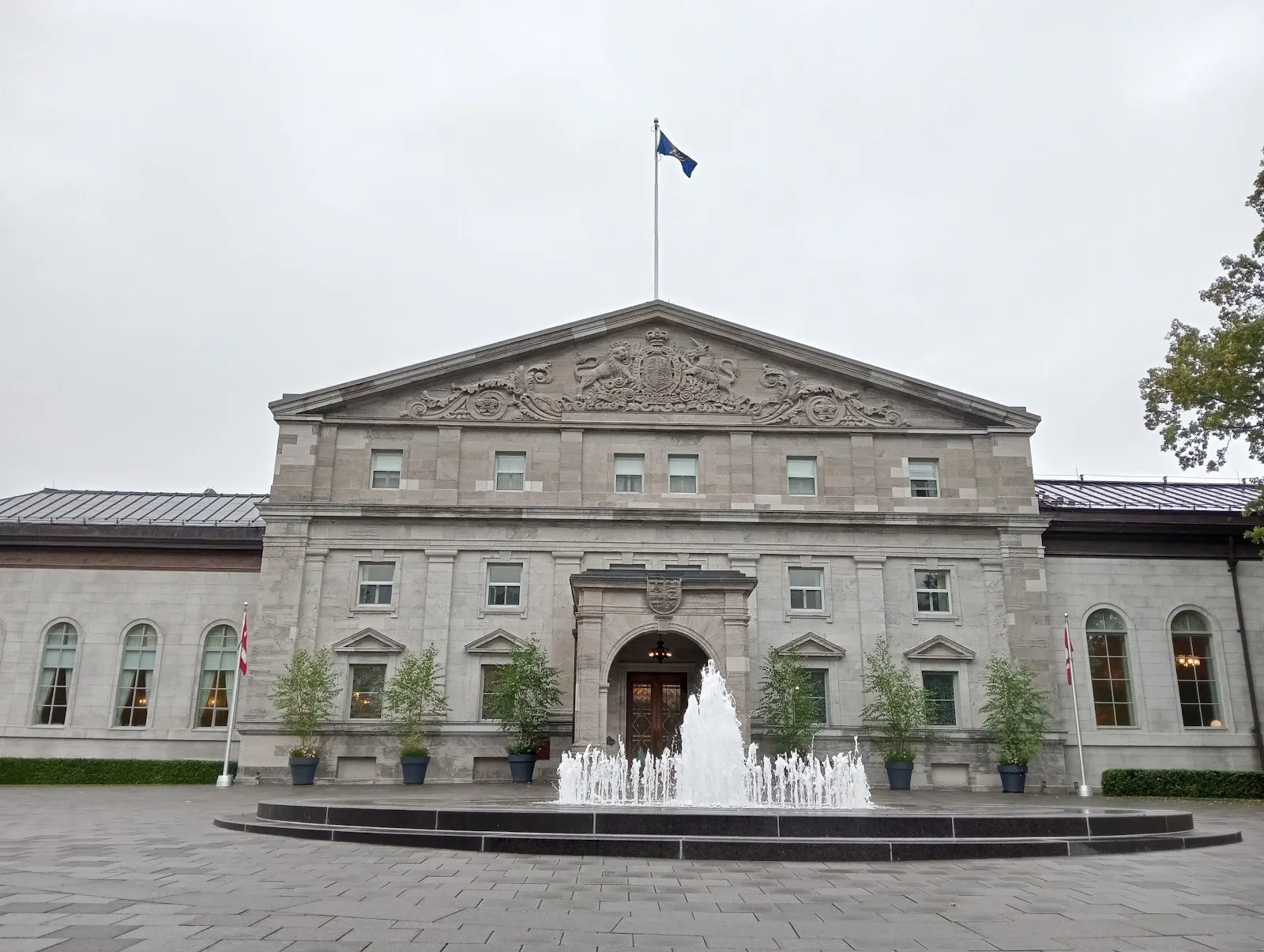
At 1 Vimy Place beside the Ottawa River, the Canadian War Museum traces Canada’s military history through objects, art and personal accounts. Its galleries move from early conflicts to modern peacekeeping, with tanks, artillery and aircraft gathered in the large LeBreton Gallery. Interactive displays and life-size settings, including a First World War trench replica, give the exhibits scale. The building’s sloping form and green roof are part of the visit too. Plan for at least two hours, and longer if you want to read the displays in depth.
Four galleries of Canadian military history
The museum follows Canada’s military history from early conflicts to contemporary peacekeeping. Its galleries consider the country’s involvement in war and the effects of armed conflict on people and society. Personal accounts, photographs, objects and works of art add human perspectives to the historical record.
The exhibits are arranged across four periods, taking in early encounters between Indigenous peoples and Europeans, later conflicts involving Britain and New France, the world wars and more recent operations. The displays present the subject as a history to examine and remember, rather than as a celebration of warfare.
Large objects and life-size displays
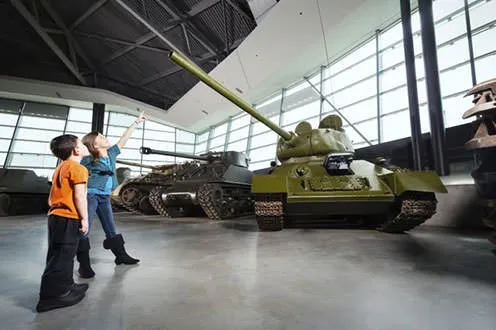
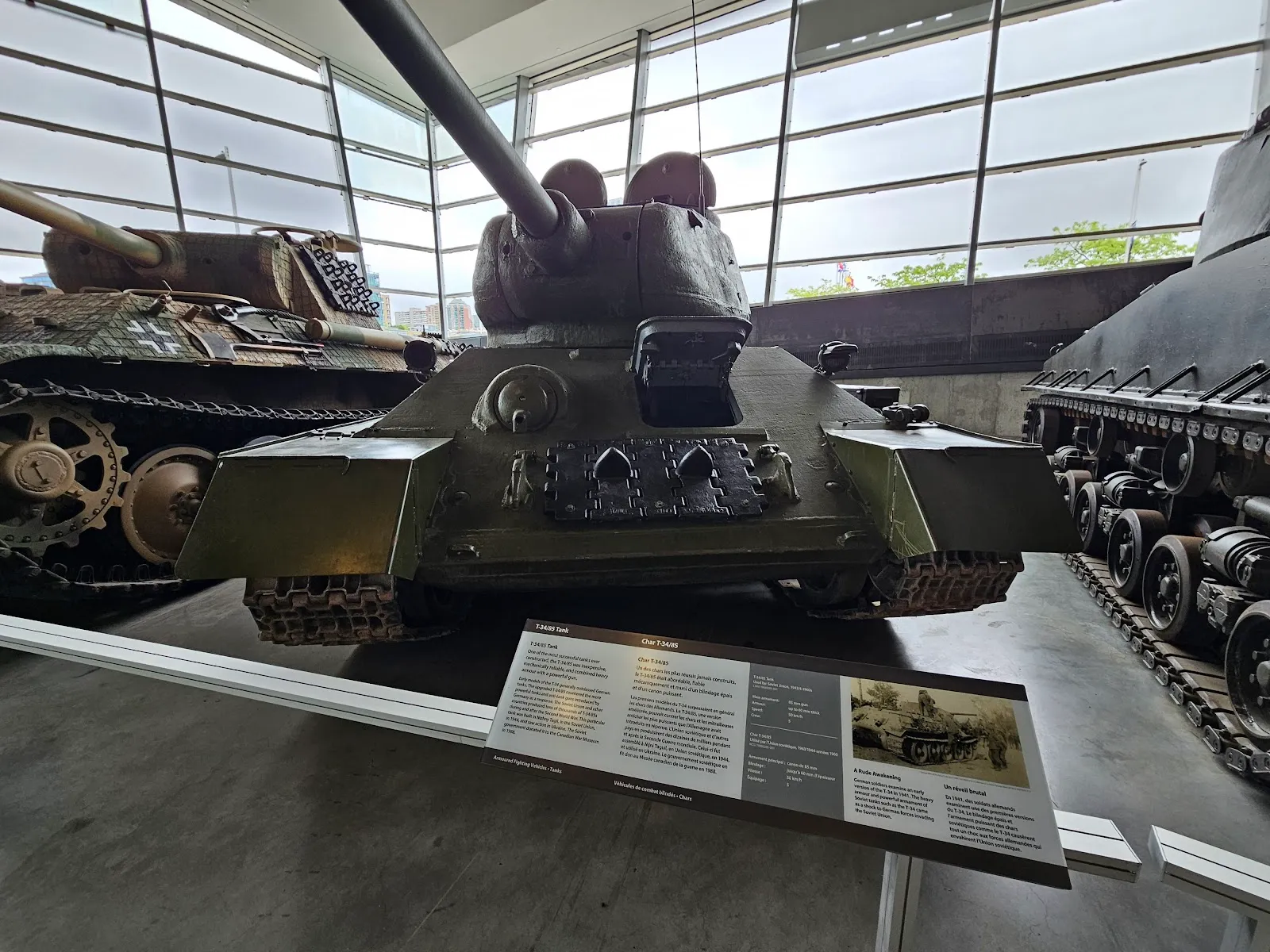
The LeBreton Gallery brings together military vehicles, tanks, artillery and aircraft. These large objects offer a change of scale from the photographs, uniforms, weapons and other artifacts in the galleries. The collection also includes motorcycles and other vehicles used in military service.
A replica First World War trench gives visitors a sense of the setting in which soldiers lived and fought. Interactive presentations appear among the historical displays, while wartime art and personal stories offer other ways into the subject. There is a great deal of information to read, so a quick walk through will leave much of the museum unexplored.
A building shaped around remembrance
Designed by Raymond Moriyama, the current museum opened in 2005 at LeBreton Flats, beside the Ottawa River. Its sloping, angular form rises from the ground, and a grass-covered roof reflects the idea of land recovering after conflict. The building’s raw concrete and changing lines give the exterior a distinct presence before you enter.
Windows also carry a message: their lights spell “Lest We Forget” and “CWM” in Morse code in English and French. Inside, a quiet memorial space has grooved concrete walls divided into rectangles that recall cemetery markers. A window illuminates the tombstone that once marked the grave of Canada’s Unknown Soldier, brought here from a cemetery near Vimy Ridge. On November 11 at 11 a.m., sunlight falls directly on the stone.
Planning a visit
Set aside at least two hours; the galleries contain enough detail and large displays to fill a longer visit. The museum is suitable for families, though the early exhibits include substantial reading. Younger children may connect more readily with the guns and tanks in the later displays. A historic board game is also part of the visitor experience.
Admission to the permanent exhibits is free on Thursdays from 4 to 7 p.m. The museum recommends booking tickets ahead. There is an underground parking garage on site. In August, working tanks are brought out for demonstrations, according to the information available for the museum.
Perguntas frequentes
How long should I spend at the Canadian War Museum?
Allow at least two hours. Reading the detailed exhibits and exploring the large vehicle displays can take longer.
When is admission free?
Admission to the permanent exhibits is free on Thursdays from 4 to 7 p.m. Timed tickets are recommended.
What can children see at the museum?
Exhibits include interactive displays, a historic board game, guns and tanks. The larger displays appear further into the visit.
Is there parking at the Canadian War Museum?
Yes. An underground parking garage is available on site.