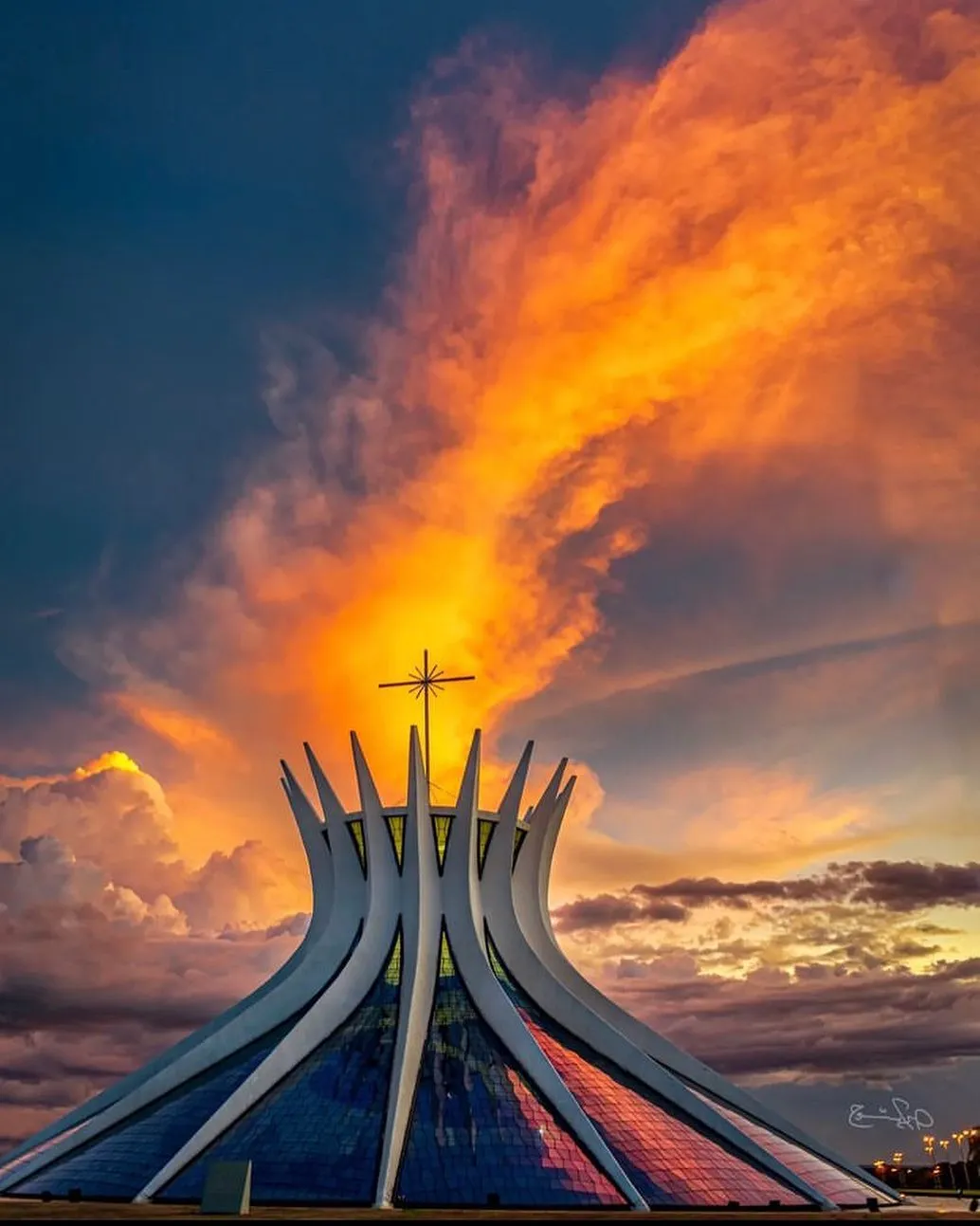
Praça dos Três Poderes is Brasília’s civic square, where the executive, legislative and judicial branches meet around one open space. The Palácio do Planalto, National Congress and Supreme Federal Court frame the plaza, with modernist buildings designed by Oscar Niemeyer and Lúcio Costa. Look for the sculptures Os Candangos, A Justiça and O Pombal, as well as the fountain and nearby Panteão da Liberdade. Come early or late in the day for a quieter walk, and consider a guided tour for context on the buildings and Brazil’s political institutions.
The three branches around the square
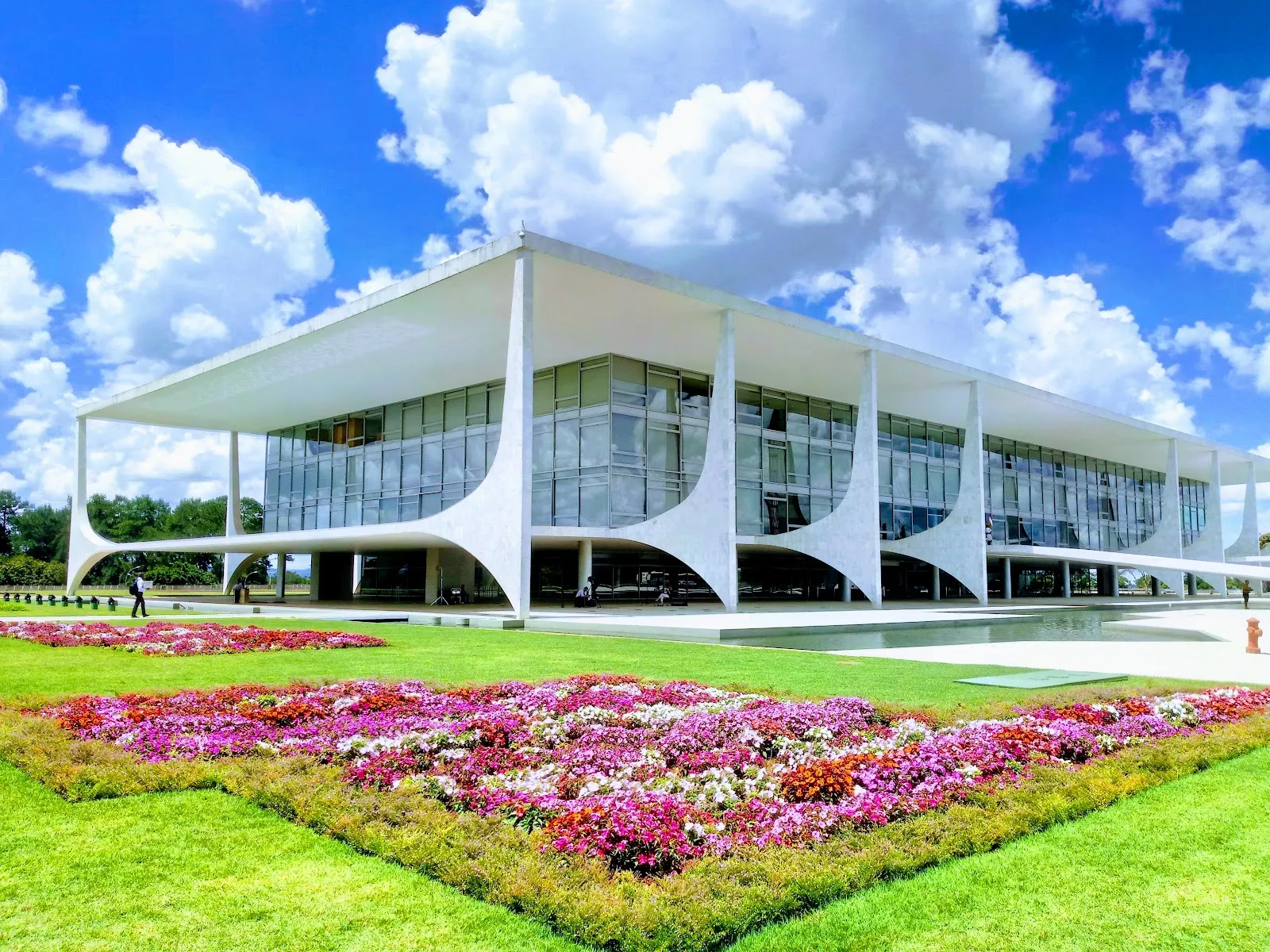
The square takes its name from the three branches of Brazil’s government: executive, legislative and judicial. Their buildings surround the plaza, with the Palácio do Planalto, the National Congress and the Supreme Federal Court forming its defining civic ensemble.
The Palácio do Planalto is the president’s official workplace, while the Supreme Federal Court is Brazil’s highest court. The National Congress houses the country’s legislature. Together, the buildings make the square a place to see Brasília’s political institutions in a single walk.
Architecture, sculptures and nearby landmarks
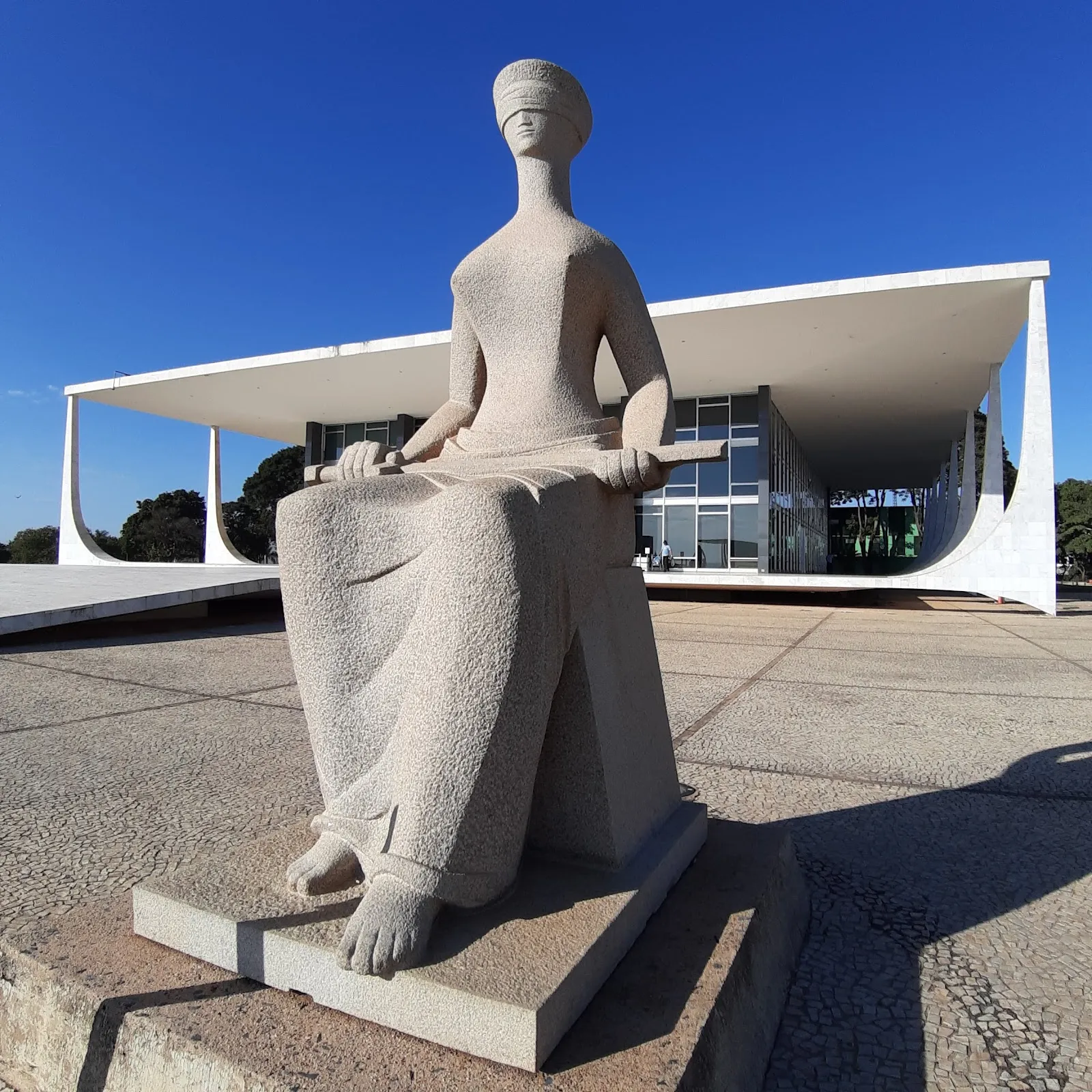
The plaza’s design is associated with Oscar Niemeyer and Lúcio Costa, whose work shaped Brasília’s modernist civic centre. The buildings sit among open space, water features and green areas. Sculptures add points of interest as you cross the square: Bruno Giorgi’s Os Candangos, Alfredo Ceschiatti’s A Justiça and Niemeyer’s O Pombal.
A fountain stands in the plaza, beside a statue described as a woman without an eye expression. Nearby, the Panteão da Liberdade honours the rebels of the Inconfidência Mineira of 1789 and President Tancredo Neves, who died in 1985 soon after taking office. The Brasília Historical Museum is also in the surrounding area.
A striking date on the city’s axis
Brasília’s layout gives the square a notable alignment: on April 21, Tiradentes Day, the sun rises between the National Congress’s two towers. Tiradentes Day marks the death of a Brazilian independence martyr. The alignment is part of the city’s planned design, linking the monumental buildings to the calendar.
Planning a visit
The plaza is open at all times, so you can choose a quieter early-morning or late-afternoon walk. Its buildings and monuments are spread around an open civic space; a guided tour can help explain the political and historical meaning of what you see. The entrance and parking are listed as wheelchair accessible. Some sections may have maintenance issues or barriers, so conditions can vary across the square.
Perguntas frequentes
What are the three powers represented at Praça dos Três Poderes?
They are the executive, legislative and judicial branches of Brazil’s government. The Palácio do Planalto, National Congress and Supreme Federal Court stand around the square.
What can you see at Praça dos Três Poderes?
The main sights include the three government buildings, sculptures such as Os Candangos, A Justiça and O Pombol, a fountain, the Panteão da Liberdade and the Brasília Historical Museum nearby.
When is a good time to visit Praça dos Três Poderes?
Early morning and late afternoon are suggested for a more peaceful visit. The square is open around the clock.
Is Praça dos Três Poderes accessible?
An accessible entrance and accessible parking are listed for the square.